
Have a Great Day: Wishes and Alternatives for the Rest of the Day
The best daily wish sounds like something you would actually say. A cheerful goodbye can suit a quick conversation, while a friend facing a difficult afternoon may appreciate something quieter. The words matter, but timing, tone, and your relationship do more work than an impressive adjective.
This guide explains what “have a great day” means, when to mention the rest of the day, and how to choose wording for work, morning texts, family, romance, or a challenging moment. You’ll find 200 ready-to-use alternatives and wishes, practical Spanish translations, replies that feel natural, and an explanation of the familiar “understandable” meme. There’s also help with grammar, punctuation, email closings, and the small mistakes that make kind words sound automatic.
Start with the situation you’re in, choose a message that fits, and personalize one detail. You don’t need a more elaborate farewell. You need one that feels right for the person receiving it.

What does “have a great day” mean?
“Have a great day” is a friendly wish that someone’s day goes well. People use it when saying goodbye, ending a message, or sending encouragement before the day begins. It expresses goodwill rather than a literal instruction, and it doesn’t require the recipient to explain how their day is going.
A cashier might say it after handing you a receipt. A colleague could add it after answering a question. Your partner might use it before you leave for work. Each exchange ends with the same small signal: I wish you well.
The phrase doesn’t, by itself, reveal romantic interest or a close relationship. Look at the rest of the conversation before reading extra meaning into a routine courtesy. A personal reference, a thoughtful follow-up, or a recurring pattern tells you more than one farewell.
Is it a greeting, a goodbye, or a wish?
Its function depends on placement. “Good morning! Hope today goes well” opens an interaction. “Thanks for your help. Enjoy your day” closes one. A message sent without any other conversation can simply be a wish. GreetingWords that begin an interaction, such as “Good morning.” FarewellWords that close an interaction, such as “Enjoy your afternoon.” Good wishAn expression of hope for someone’s experience, whether it opens or closes a conversation.
Don’t treat these labels as rules about where the expression is allowed. A complete morning message can contain both a greeting and a wish. What matters is whether your wording makes sense where you put it.
Should you say “have a good rest of your day” or “have a great rest of your day”?
Both expressions are understandable, polite wishes for the hours remaining today. “Good” sounds more restrained; “great” adds enthusiasm. “Enjoy the rest of your day” is a shorter alternative that avoids the heavier phrase “a good rest.” Choose the version that fits your voice and the tone of the conversation.
Use “have a good rest of your day” after a lunchtime appointment, an afternoon call, or a brief exchange during someone’s working day. “Have a great rest of your day” works in the same settings when a brighter tone feels appropriate. Neither phrase requires the day to have gone badly beforehand.
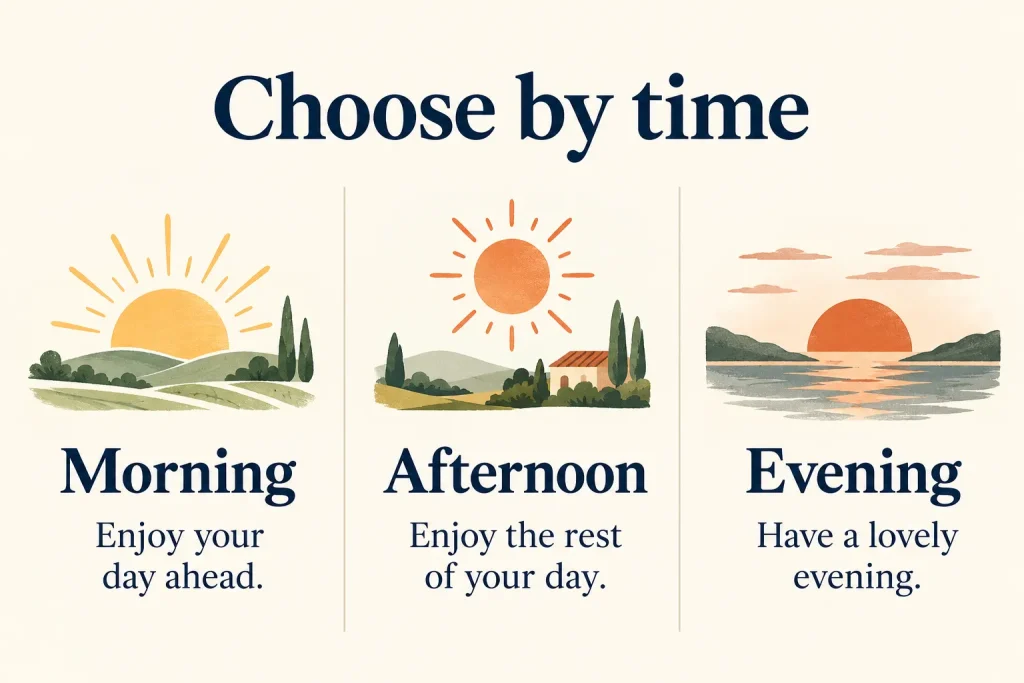
| Situation | A natural choice | Why it fits |
|---|---|---|
| Before someone starts work | Hope your day goes well. | Looks toward the day ahead. |
| After a midday appointment | Enjoy the rest of your day. | Acknowledges the remaining hours. |
| After a cheerful afternoon chat | Hope the rest of today is lovely. | Warm without sounding elaborate. |
| As someone finishes their shift | Enjoy your evening. | Refers to their next part of the day. |
| Before a late shift begins | Hope your shift goes smoothly. | Matches their schedule. |
| When the recipient’s time is unknown | Thanks again, and take care. | Avoids guessing their local time. |
“Rest of the day” can also work, especially when the day is already established in the conversation. Adding “your” makes the wish feel more directly addressed to the listener. This is a choice of phrasing, not a difference between correct and incorrect English.
Does “day ahead” work in the afternoon?
“Have a great day ahead” is easiest to interpret before the person’s main activities begin. Later on, “Enjoy your afternoon” is more precise. However, someone beginning a night shift still has a working day ahead, so the clock alone doesn’t determine the best wording.
For international messages, think about the recipient’s schedule. A greeting sent from Sydney can reach someone in Toronto during a different part of the day. If you don’t know when they will read it, a time-neutral closing is a dependable option.
How do you choose a wish that sounds sincere?
Choose a wish by checking time, relationship, and the person’s situation. Start with when they’ll receive it, adjust the warmth to how well you know them, and acknowledge any difficulty they’ve mentioned. One relevant detail makes a familiar expression feel more personal than replacing “good” with a more dramatic adjective.
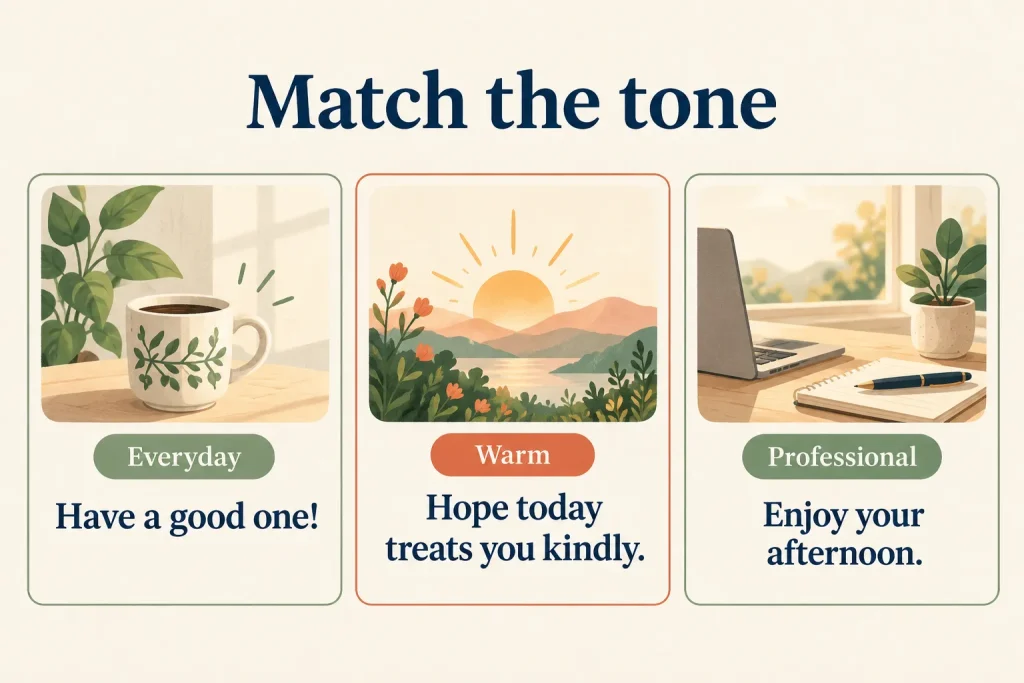
Use this three-question editing check. It’s a practical framework for this guide, rather than a formal rule of etiquette:
- When will this person read or hear the message?
- How much familiarity has our relationship established?
- What do I know about what they’re facing today?
Imagine a teammate tells you they have a difficult presentation after lunch. “Hope your presentation goes smoothly” shows that you listened. A grand wish for an extraordinary, magical afternoon adds enthusiasm, but it doesn’t add the same personal attention.
Warmth and pressure are different things
A stronger adjective doesn’t automatically make a message kinder. “Have an amazing day” can suit a celebration or a friend’s exciting plans. “Hope you get a little breathing room today” can be more thoughtful when someone feels overwhelmed.
Match the wish to the person’s circumstances. Encouragement works best when it leaves room for a difficult day to remain difficult. You can express care without asking someone to become cheerful for your benefit.
Consider these useful details before you write:
- A named event, such as an appointment, interview, or trip.
- Something the person enjoys, such as a quiet lunch or a walk.
- A reasonable hope, such as an easier commute or a calmer afternoon.
- A specific offer of help that you can actually carry out.
Does the country change the wording?
For readers in the US, Canada, the UK, and Australia, these examples provide broadly understandable English rather than a country-by-country etiquette formula. Individual preference and the setting matter. Avoid assuming that everyone in one country wants the same degree of enthusiasm.
Mirror the person’s established style. If their messages are short and understated, keep yours simple. If a close friend enjoys affectionate language and emojis, you have more room to be playful. When the relationship is new, begin with a restrained wish and let familiarity develop.
What are some everyday alternatives you can use immediately?
The most useful alternatives are short, familiar, and easy to adapt. Choose a simple farewell for a quick interaction or a warmer sentence for someone you know. These 40 options cover both. You can send one as written, or add a name or relevant detail to make it your own.
These first two collections are deliberately flexible. A phrase can fit several relationships, but your surrounding sentence determines how it lands. “Wishing you well today” after a helpful exchange feels different from the same words following a disagreement.
Twenty simple, low-pressure alternatives
- Enjoy your day. A clear choice for an ordinary goodbye.
- Have a good one. A relaxed closing for a casual exchange.
- Hope today goes well for you. A straightforward, thoughtful wish.
- Take care today. Useful when you want a gentle ending.
- Wishing you a pleasant day. A restrained choice for a polite message.
- Enjoy whatever’s next. Works when someone is moving between plans.
- Hope the day treats you well. Friendly without being especially personal.
- Wishing you an easy afternoon. Suitable when the timing is clear.
- All the best for today. A compact wish before someone gets started.
- Hope everything goes smoothly. Helpful before a busy schedule.
- Enjoy the sunshine if you get a chance. Use only when it suits the weather.
- Hope you get a proper break today. A considerate wish for a busy person.
- See you soon, and take care. Fits a goodbye when another meeting is expected.
- Wishing you a calm start. Useful before work or an appointment.
- Hope your plans go well. Refers to something they’ve already mentioned.
- Enjoy your time off. Best when the person is actually off duty.
- Hope you find a little time for yourself. A gentle personal message.
- Take it easy when you can. Leaves room for responsibilities.
- Here’s to a pleasant afternoon. A light, slightly conversational wish.
- Until next time, be well. Fits a more considered farewell.
Twenty warmer ways to wish someone well
- Hope today brings you something good. Warm without predicting perfection.
- Wishing you a day with room to breathe. Thoughtful during a busy week.
- Hope you find a reason to smile today. Suits a light, encouraging note.
- Sending a little encouragement your way. Good when you want to acknowledge effort.
- Hope your day feels lighter than yesterday. Use when you know yesterday was difficult.
- Wishing you good company and a peaceful moment. A comfortable personal wish.
- Hope something lovely surprises you today. Best for someone who likes expressive wording.
- May today bring a welcome bit of ease. Warm and slightly more formal.
- Hope you get to do something you enjoy. Puts the focus on their preferences.
- Wishing you small wins and good coffee. Use when coffee is a shared point of connection.
- Hope your favorite part of the day is still ahead. A cheerful afternoon message.
- Sending you a little sunshine this morning. A light metaphor for a friendly text.
- Hope today gives you something worth remembering. Suits a meaningful occasion.
- Wishing you more laughter than hassle. Casual, warm, and a little playful.
- Hope the ordinary moments feel good today. A quieter alternative to grand wishes.
- Wishing you a kind day. Short enough for a small card.
- Hope you feel appreciated today. Especially apt after someone has helped others.
- Here’s to good news and manageable plans. A realistic, upbeat wish.
- Hope you finish today feeling glad about something. Allows for an imperfect day.
- Wishing you a little joy along the way. Warm enough for a personal note.
To personalize one of these without making it long:
- Pick the sentence that sounds most like your normal speech.
- Add one detail the recipient has already shared with you.
- Remove any extra adjective that makes it feel less natural.
For example, “Hope everything goes smoothly” becomes “Hope the school visit goes smoothly.” That small change gives the wish a reason to exist. Don’t add a personal reference just to prove you remember something private, especially in a group message.
What should you write in a professional email or customer message?
A professional daily wish should follow the useful information, fit the relationship, and stay brief. “Enjoy your afternoon” works after a completed exchange. When a problem remains unresolved, first state the next step and expected update. A friendly closing supports a helpful message; it cannot substitute for an answer.
Suppose a client asks when they will receive a document. “I’ll send the revised version by Thursday. Thanks for your patience, and enjoy your afternoon” gives them something concrete. A cheerful sign-off without the deadline leaves the main question unanswered.
For a request that needs a structured answer, understand the purpose of a request for information before choosing the closing. The courtesy belongs after the question, context, and requested response. Keep the substance easy to find.
Twenty polished workplace wishes
- Enjoy the rest of your workday. Suits a routine exchange with a colleague.
- Wishing you a smooth afternoon. Warm enough for an established client.
- Thanks for your time today. Useful when a daily wish would feel unnecessary.
- Hope the rest of your meetings go well. Best when you know their schedule.
- Thank you again, and enjoy your day. Combines appreciation with a simple farewell.
- Wishing you a productive morning. Use when a work-focused wish fits the relationship.
- Hope your presentation goes smoothly. A specific alternative before a known event.
- Enjoy your afternoon, and thanks for the update. Acknowledges their contribution.
- I appreciate your help today. A direct, useful closing in its own right.
- Hope the rest of your shift is manageable. Thoughtful for someone working under pressure.
- Wishing you well with today’s launch. Suitable when you know the team’s plans.
- Thanks for the discussion. Take care. A restrained option after a meeting.
- Hope your visit goes well. Fits a planned site or office visit.
- Wishing you a good start to the week. Useful on the recipient’s first working day.
- Enjoy your break when it comes. Better for an ongoing shift than assuming it has ended.
- Thanks for your thoughtful feedback. More specific than a generic wish.
- Hope your next appointment goes well. Works when that appointment is already known.
- Wishing you a calm end to the day. A considerate late-afternoon sign-off.
- Thanks again. I look forward to speaking soon. Appropriate when another conversation is planned.
- Enjoy your evening when you finish. Recognizes that they may still be working.
Ten customer-service closings that leave room for help
- Thanks for visiting. Enjoy your afternoon. Fits a completed in-person interaction.
- You’re all set. Take care. Use after confirming the task is complete.
- Thanks for your patience today. Appropriate after a delay has been addressed.
- I’m glad we could get that sorted. Best when the customer agrees the issue is resolved.
- Thank you for letting us know. A useful response to feedback.
- Safe travels, and enjoy your visit. Fits a travel or hospitality setting.
- Thanks for stopping by. Have a good one. A casual retail farewell.
- I hope the rest of your day goes smoothly. A restrained wish after an inconvenience.
- We appreciate your time. Take care. Suitable for a completed call.
- Thank you again. We’re here if you need help. Use only when that support is available.
Before sending a customer closing:
- Answer the customer’s actual question.
- State any action, owner, or update still outstanding.
- Add a farewell that fits how the exchange ended.
Should you add both a daily wish and “Best regards”?
You can, but a short email rarely needs several closing lines. “Thanks again, and enjoy your afternoon” followed by your name can be enough. In a formal organization, follow the established correspondence style rather than inventing a more elaborate sign-off.
After an interview, thank the interviewer for something specific about the discussion. If you’re preparing for a technical role, LexisLyfe’s Amazon interview preparation guide covers the interview itself. A farewell should complement your preparation and follow-up, rather than become the focus of either.
What are thoughtful good morning wishes for the day ahead?
A good morning wish works best when it suits the recipient’s routine and asks for little in return. Keep a casual text short, or mention an event they’re preparing for. “Good morning, have a great day” is complete on its own; one personal detail can make it feel more attentive.

Morning messages don’t need to arrive every day to be meaningful. Consider whether the recipient enjoys regular check-ins and whether an early notification would interrupt their sleep. A scheduled text can still feel considerate if its timing works for them.
Twenty messages for a fresh start
- Good morning! Hope today starts gently for you. A quiet, caring opening.
- Morning! Wishing you good coffee and an easy commute. Use when both details fit.
- Hope you woke up feeling ready for something good. Upbeat without demanding a reply.
- Sending a little encouragement before your day begins. Useful before a busy morning.
- Good morning. I’m rooting for you today. Direct and supportive.
- Hope your first meeting goes smoothly. Personalize it to a known workday.
- Morning! Enjoy a little quiet before things get busy. Best when they have that opportunity.
- Wishing you a fresh start and a manageable plan. A realistic Monday message.
- Hope today gives you a few welcome surprises. A light wish for a friend.
- Good morning! You’ve been on my mind. Warm without adding a request.
- Hope the school run is an easy one today. Fits someone whose routine you know.
- Morning! Take today one thing at a time. Supportive when plans feel crowded.
- Wishing you a bright start and a peaceful finish. Suits a card or personal text.
- Hope your morning has room for a proper breakfast. Use with someone who appreciates practical care.
- Good morning. I hope you feel rested. Simple and personal.
- Sending you a cheerful hello before work. Fits an established morning-text habit.
- Hope today begins with something that makes you smile. A warm everyday wish.
- Morning! I’m looking forward to catching up later. Best when you have arranged to talk.
- Wishing you steady energy for what matters today. Encouraging without promising an easy day.
- Good morning. Be kind to yourself as you get started. A gentle reminder for someone close.
Ten wishes before a big event
- Hope your interview gives you room to show what you know. More specific than a general good wish.
- Wishing you a confident start to your first day. Fits a new job or course.
- Hope the journey is smooth and the arrival feels good. A thoughtful travel message.
- You’ve prepared carefully. I’m cheering you on today. Acknowledges real effort.
- Hope your appointment brings the clarity you need. Avoids predicting the result.
- Wishing you a steady hand and a clear head today. Suits a performance or practical task.
- Hope your opening day feels like a good beginning. A personal business-launch wish.
- Sending encouragement for your exam this morning. Keeps the focus on support.
- Hope the move goes as smoothly as it can. Leaves room for an imperfect process.
- I hope you finish today proud of the effort you made. Values effort without guaranteeing success.
To write your own morning message:
- Begin with the greeting you would normally use.
- Name the event only if you know the person wants it acknowledged.
- End with encouragement, rather than a request for an immediate update.
A useful distinction is between interest and monitoring. “Thinking of you before the interview” offers support. “Tell me as soon as it finishes” adds a task. Ask for updates only when your relationship and the circumstances make that comfortable.
What can you say for the rest of the afternoon or evening?
For a later-day wish, name the part of the day that remains or the activity the person is about to begin. “Enjoy the rest of your afternoon” feels precise after lunch. Near bedtime, a wish for rest makes more sense than enthusiasm about a whole day still to come.
You don’t need to correct yourself if you say “Enjoy your day” at three in the afternoon. The listener can understand the intended wish. More specific wording is useful when you want to acknowledge a shift ending, a long journey, or a difficult morning.
Twenty afternoon wishes
- Enjoy the rest of your afternoon. A versatile midday farewell.
- Hope the next few hours go smoothly. Useful after a busy exchange.
- Wishing you an easier second half of the day. Fits someone who has described a hard morning.
- Hope you get a moment to reset after lunch. A practical wish for a busy friend.
- Enjoy what’s left of the sunshine. Use when the weather makes it relevant.
- Hope the rest of today is kind to you. Warm without being intense.
- Wishing you a calm stretch before dinner. Best when you know their routine.
- Hope your afternoon plans work out well. Acknowledges something already discussed.
- Take care for the rest of today. A simple personal goodbye.
- Hope the afternoon brings a little breathing room. Useful during a crowded week.
- Enjoy the quieter part of your day, if you get one. Leaves room for a busy schedule.
- Hope your last meeting finishes on time. A specific workplace wish.
- Wishing you a pleasant ride home later. Fits a known commute.
- Hope you find time for that walk. References a plan they mentioned.
- May the afternoon feel less rushed. Warm and slightly more expressive.
- Hope the school pickup goes smoothly. Useful when you know the family routine.
- Enjoy the rest of your day off. Appropriate when they are off work.
- Hope the rest of your shift passes comfortably. A considerate message for a working friend.
- Wishing you a good finish to today’s plans. Works before the day winds down.
- Hope something nice is waiting after work. A cheerful late-afternoon note.
Ten evening wishes
- Enjoy your evening. A clear, friendly closing.
- Hope you get to switch off for a while. Suits the end of a demanding day.
- Wishing you a peaceful night. A restrained, caring wish.
- Hope dinner is good and the evening is easy. Warm enough for someone close.
- Enjoy the rest of your night out. Use when they are still enjoying plans.
- Hope you get the rest you need. Gentle and practical.
- Have a lovely evening with everyone. Fits known family or social plans.
- Wishing you a quiet end to a busy day. Acknowledges the effort already made.
- Sleep well when you get home. Useful after a late shift or journey.
- Hope tomorrow feels a little easier. Best when today has been difficult.
When you’re unsure which time reference fits:
- Use the recipient’s local time, if you know it.
- Consider their working hours or immediate plans.
- Choose “Take care” if a specific time would be a guess.
What should you write to a friend, family member, or partner?
A personal wish can include affection, a shared reference, or a detail about the recipient’s plans. Match the closeness you already have. A friendly message doesn’t need romantic language, and a romantic message doesn’t need a grand declaration. The best version sounds recognizable as something you would say to that person.
These messages can be used for her, for him, or for a partner of any gender. Choose according to the relationship and the person’s preferences. Gender alone doesn’t tell you whether someone likes sweet language, humor, encouragement, or a very short text.
Twenty wishes for friends and family
- Hope today gives us something good to laugh about later. Fits a friendship built on humor.
- Thinking of you before your busy day begins. Warm without asking for anything.
- Hope you get a little time for your favorite things. Personalize it to their interests.
- Wishing you an easy school day and a good lunch. A simple family message.
- Hope your errands leave room for something fun. Useful for an ordinary weekend.
- I’m rooting for you and your very long to-do list. Light encouragement for a busy friend.
- Hope the drive is easy and the playlist is excellent. Fits someone heading out on a trip.
- Sending a friendly nudge of encouragement your way. A gentle check-in.
- Hope you get to celebrate a small win today. Leaves the definition of success to them.
- Wishing you a day with fewer interruptions. Thoughtful for someone trying to concentrate.
- Hope your lunch break includes good company. A warm workplace-adjacent wish.
- You’ve got a friend in your corner today. Direct reassurance.
- Hope the weather cooperates with your plans. Good when you know they’ll be outdoors.
- Wishing you an afternoon as good as our last catch-up. Uses a shared positive memory.
- Hope you find the book you were looking for. A specific wish can be very small.
- Sending love for the day ahead. Fits an affectionate family relationship.
- Hope your first day back feels manageable. Useful after a break or absence.
- Wishing you a good day with your favorite people. A personal weekend message.
- Hope today is a little less chaotic than the group chat. Use with friends who share the joke.
- Can’t wait to hear what made you smile today. Best when a later conversation is welcome.
Twenty affectionate wishes for a partner
- Hope you have a great day, love. I’m thinking of you. A familiar romantic message.
- Can’t wait to hear how your day went. Simple interest can carry affection.
- Wishing my favorite person a gentle start. Best when that style feels natural between you.
- Hope you feel as loved today as you are. A warmer option for a card.
- Good luck this morning. I’m proud of your effort. Acknowledges preparation.
- Sending you a kiss before the busy part begins. Fits an established affectionate relationship.
- Hope your afternoon is easier than your morning. Use when you know the morning was hard.
- I’m looking forward to being home with you later. A grounded, personal wish.
- Hope something today reminds you how capable you are. Encouragement without a promise.
- Wishing you a day with room for yourself, too. Thoughtful for a partner who cares for others.
- You’re on my mind between all the ordinary things. A quiet affectionate note.
- Hope your meeting goes well. I’ll be cheering from here. Personalizes support.
- Enjoy your adventure today, sweetheart. Best when they have something exciting planned.
- I hope your coffee is good and your worries are smaller. A light romantic wish.
- Thinking of your smile as I start my day. Suitable when you both enjoy sweet messages.
- Hope you get a peaceful moment before work. Practical affection.
- Wishing you a little joy until I see you again. Fits time spent apart.
- Hope today gives you something you’ll want to tell me about. Invites connection without a deadline.
- I love sharing the ordinary days with you. Useful when a daily wish feels too generic.
- Take care of yourself today, my love. A simple caring farewell.
Before adding affection to a message:
- Use a name or term of endearment the person already welcomes.
- Keep private jokes out of public or workplace channels.
- Remove anything that creates an expectation they haven’t agreed to.
Avoid sending an increasingly intense version because someone hasn’t answered. A kind wish is an offering. Give the recipient room to respond in their own time, or simply receive it without replying.
What can you say when someone is having a difficult day?
When someone is struggling, acknowledge what they’ve told you before offering encouragement. A wish for ease, rest, or support can fit better than a demand for positivity. Keep your message realistic, avoid predicting the outcome, and offer practical help only if you’re able and willing to follow through on it.

“You’ll have the best day ever” may clash with a friend’s actual experience. “I know today is a lot. I can bring dinner if that helps” recognizes the situation and offers something useful. You don’t need to make their emotions disappear to show care.
Fifteen supportive wishes without forced cheerfulness
- I know today is hard. I’m here with you. Acknowledges difficulty directly.
- Hope you get a little breathing room this afternoon. Wishes for a manageable improvement.
- No need to reply. I’m thinking of you. Removes an immediate social task.
- Wishing you an easier hour ahead. Keeps the hope small and realistic.
- You don’t have to make today impressive. Useful when achievement pressure is part of the problem.
- Hope someone makes things a little easier for you today. A gentle expression of care.
- I’m sorry this is so much to carry. Fits a situation they’ve already described.
- Would it help if I handled dinner tonight? Send only if you can do it.
- Wishing you a quiet moment whenever one becomes possible. Doesn’t assume rest is immediately available.
- I’m here if talking would help. Leaves the choice with them.
- Hope the next step feels manageable. Encourages without asking for a whole good day.
- You’re allowed to take this one piece at a time. Fits someone who welcomes reassurance.
- Sending care, without any expectation of an update. Makes your intention clear.
- I hope you get the support you need today. A realistic wish during a difficult period.
- We can sit together without having to fix anything. Offer only if that companionship is possible.
Five faith-based wishes for someone who welcomes them
- May God give you peace for what today holds. Suits a shared faith context.
- Praying you find strength for the next step. Be truthful about the prayer you’re offering.
- May your day include a moment of grace. A gentle religious wish.
- Keeping you in my prayers this morning. Best when that language is welcome.
- Wishing you a peaceful day, held in God’s care. An affectionate faith-based message.
Religious wording can be meaningful when it reflects a shared understanding. If you don’t know the person’s beliefs, use a secular wish for care or peace. The aim is to support the recipient in language they can comfortably receive.
To make a supportive message useful:
- Acknowledge the difficulty without minimizing it.
- Offer a specific, realistic form of help or a quiet wish.
- Leave them free to accept, decline, or respond later.
How do you say “have a great day” in Spanish?
For an informal wish to one person, “¡Que tengas un buen día!” is a useful Spanish equivalent. Use “¡Que tenga un buen día!” when addressing one person formally, and “¡Que tengan un buen día!” for several people using ustedes. The verb ending changes with the person you’re addressing and the register.
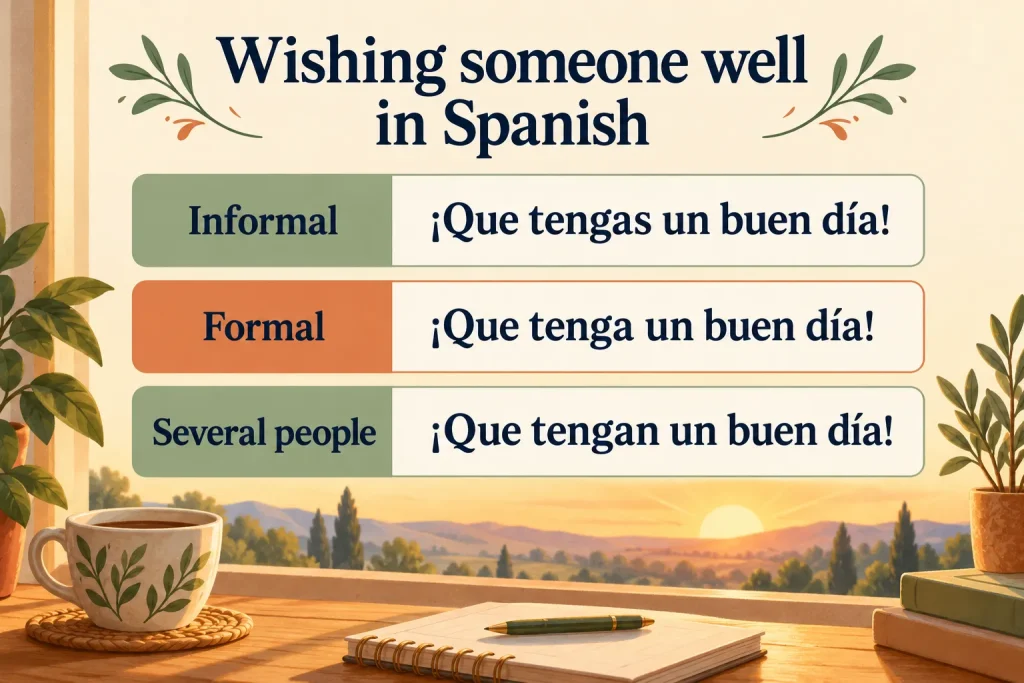
These forms are documented in SpanishDictionary.com’s guide to wishing someone a good day. English speakers don’t need to translate “great” with the strongest available adjective every time. A natural everyday good wish can preserve the intention of the English phrase.
| Audience | Spanish wish | Use |
|---|---|---|
| One person, informal tú | ¡Que tengas un buen día! | A friend or someone you address informally. |
| One person, formal usted | ¡Que tenga un buen día! | A person you address formally. |
| Several people, ustedes | ¡Que tengan un buen día! | A group addressed with ustedes. |
| One person, informal, another option | ¡Que pases un buen día! | A natural alternative using pasar. |
The distinction between tú and usted depends on the relationship and local usage. Don’t choose a form solely from someone’s age. Follow the way they address you, the setting, and any preference they express.
Is “buenos días” the same thing?
“Buenos días” is a morning greeting. It isn’t the same construction as wishing someone a good day when you part. You can begin a conversation with the greeting and use a good wish when it ends, just as you can in English.
Notice the spelling: “que” in these wishes has no written accent, while “día” does. Keeping the opening and closing exclamation marks gives you standard Spanish punctuation. You can write the sentence without exclamation marks when you want a quieter tone.
What can you say back in Spanish?
“Gracias, igualmente” is a concise way to thank the speaker and return the wish. “Gracias, tú también” fits an informal exchange with one person. As with the original farewell, choose a reply that matches how the two of you address each other.
Before sending a translated wish:
- Decide if you’re addressing one person or a group.
- Choose the appropriate informal or formal form.
- Check accents and punctuation before copying the message.
What does the “understandable” meme mean, and when does humor fit?
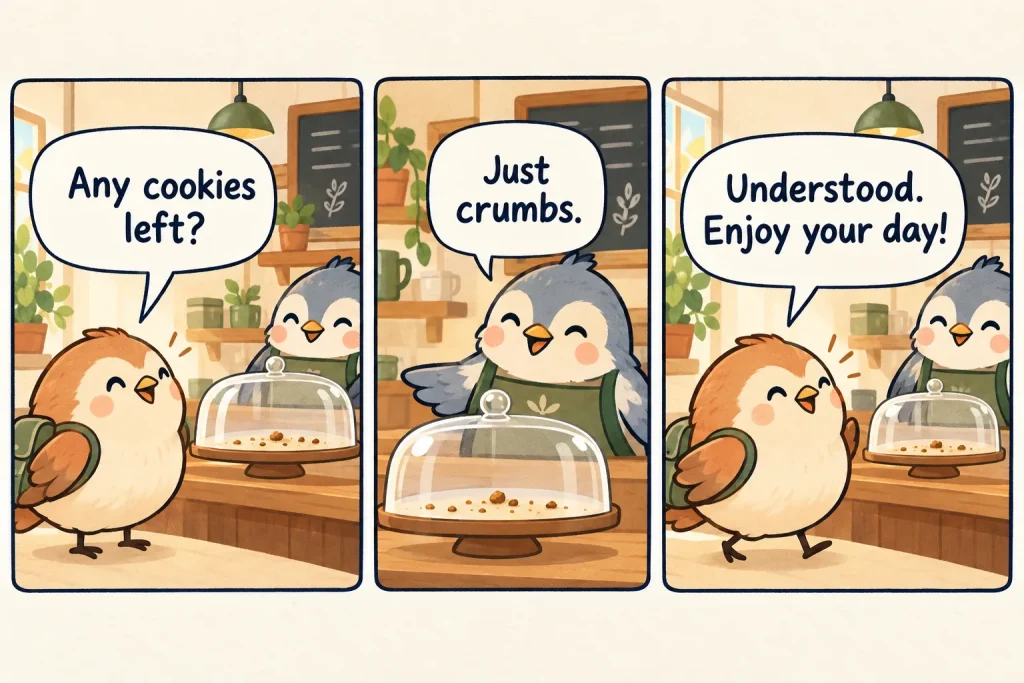
The “understandable, have a great day” meme turns an absurd refusal into an unexpectedly polite exit. Its humor comes from calmly accepting an explanation that doesn’t make sense. It can work as a low-stakes joke between people who recognize the reference, but it can sound dismissive in a serious conversation.
Know Your Meme traces the familiar Shaquille O’Neal image to a Twitter post on February 26, 2017. Its entry documents the exaggerated image style and the phrase’s later variations. The wording is associated with a meme, so it can carry an ironic tone beyond its literal courtesy.
Ten original funny wishes and captions
- May your coffee stay warm and your meetings stay short. A light workplace-adjacent joke.
- Wishing you a day with no mysterious printer noises. Best for someone who knows the problem.
- Hope your plans behave better than the office Wi-Fi. Use in a casual relationship.
- May your snacks outlast your to-do list. A playful message for a busy friend.
- Here’s to green lights and correctly fitted lids. A small everyday wish.
- Hope today contains fewer passwords than yesterday. Good for a familiar technology joke.
- May your lunch survive the journey to lunchtime. Fits someone with an early-snacking habit.
- Wishing you a meeting that could actually stay an email. Keep it out of sensitive work exchanges.
- Hope your socks match and your plans don’t multiply. A gentle, silly greeting.
- May your biggest surprise today be finding extra fries. A low-stakes wish for a food-loving friend.
These lines are original wording for this guide, rather than quotations attributed to a famous person. If you prefer a well-known quotation, verify its wording and attribution before putting a name beneath it. A repeated caption on a quote image isn’t enough evidence of authorship.
Choosing a meme, GIF, or greeting image
A “have a great day meme” suits a different exchange from a sincere support message. Pick an image that still makes sense to the recipient without a long explanation. A quiet text can be more useful than an animated greeting if the person is busy or doesn’t enjoy GIFs.
For a personal message, consider:
- Whether the joke is about a harmless situation rather than the recipient.
- Whether the wording could be mistaken for irritation or dismissal.
- Whether motion, tiny lettering, or visual clutter makes it hard to read.
- Whether the recipient enjoys receiving images in that conversation.
When publishing on a website, treat an image search result as a discovery route, not evidence of permission to reuse the artwork. The reviewed Pngtree asset page displays different licensing and attribution conditions. Check the exact asset and intended use before downloading it for a commercial page.
If you’re buying a phrase shirt rather than sending a message, LexisLyfe’s TeePublic buyer checks offer a related starting point. Product selection is a separate task from choosing the right words for a greeting.
How should you respond when someone wishes you a good day?
“Thanks, you too!” is a friendly, concise reply to a daily wish. “Thank you, same to you” is another clear option. You don’t need an elaborate response or a new topic. Acknowledge the kindness, return the wish if it applies, and let the conversation end naturally when that fits.

An EnglishLearning discussion about these replies illustrates the uncertainty some learners feel about “you too.” It’s useful as an example of conversational questions, rather than evidence of how every English speaker responds.
| What they say | A suitable reply | Why |
|---|---|---|
| Enjoy your day. | Thanks, you too! | Returns the same wish. |
| Have a lovely evening. | Thank you. You as well. | A slightly more restrained reply. |
| Hope your interview goes well. | Thanks, I appreciate it. | Acknowledges a wish specific to you. |
| Enjoy your meal. | Thank you! | Avoids assuming they’re eating too. |
| Hope you get some rest. | Thanks, that’s kind of you. | Accepts the concern without an explanation. |
Is “you too” rude?
The words alone don’t make a reply rude. Your tone, timing, and the surrounding interaction influence how it lands. Adding “thanks” makes your appreciation explicit, which is useful when you want to sound warmer or when the relationship is unfamiliar.
Don’t turn a routine response into a test of your conversational ability. If you accidentally return a wish that doesn’t apply, a quick smile or correction is enough. You can say, “Thanks, I mean it!” and move on, rather than explaining the mistake at length.
Are these expressions grammatically correct?
The standard daily wish is an imperative-form clause used to express goodwill. “Hope you have a great day” is a familiar conversational version of “I hope you have a great day.” Punctuation and sentence structure can change the tone, but an exclamation mark isn’t required for the wish to be friendly.
Cambridge’s explanation of imperative clauses describes their base verb form and the way the subject is generally understood rather than stated. That structure helps explain the grammar here. The social meaning comes from how the expression is used in the interaction.
“Hope you have” versus “hope you’re having”
Use hope you have when looking toward the person’s day or remaining plans. Hope you’re having refers to their experience as it is happening. Both can work in an afternoon message; the difference is the perspective you’re taking.
“Hope you had a good day” looks back after the relevant part of the day has ended. It can be a warm opening to an evening conversation. If you want an answer, ask “How was your day?” rather than expecting the person to treat a wish as a question.
“May you have” and other formal versions
“May you have a wonderful day” is grammatical and gives the wish a more ceremonial feel. It can suit a card, blessing, or deliberately expressive note. For a quick email to a colleague, “Enjoy your afternoon” is shorter and easier to fit into an ordinary exchange.
“Wishing you a pleasant day” is a conventional message fragment. It doesn’t need to become a full sentence in a card or sign-off. Choose it because you like its tone, rather than because you think longer wording is automatically more correct.
Punctuation and capitalization
| Wording | What to notice |
|---|---|
| Good morning! Enjoy your day. | Two clear sentences. |
| Thanks, Maya. Enjoy your afternoon. | The comma separates the name being addressed. |
| I hope your day goes well. | A period gives a quieter tone. |
| Enjoy your day! | An exclamation mark adds visible enthusiasm. |
| Thank you for your help. Have a lovely evening. | Clearer in formal writing than joining both sentences with a comma. |
Use ordinary sentence capitalization in a message. Title case can belong in an article heading, but it isn’t necessary in a text. Multiple exclamation marks and all-capital letters can add intensity that the relationship doesn’t call for.
What mistakes make a kind wish sound awkward?
A daily wish can sound awkward when it ignores the person’s situation, arrives at the wrong moment, or substitutes for an answer. Keep the wording proportionate, check the time reference, and avoid assuming feelings or outcomes. The goal is a considerate exchange, not the most original farewell in the conversation.
Watch for these common problems:
- Using a cheerful closing immediately after dismissing a complaint.
- Calling a routine professional courtesy proof of romantic interest.
- Telling someone to be positive after they’ve shared bad news.
- Adding intimate terms to a relationship that hasn’t established them.
- Repeating the same wish several times in one short exchange.
- Treating a delayed reply as rejection of your kindness.
- Adding a famous name to an unverified quotation.
- Copying an image’s text without checking whether it is readable or accurate.
Better wording for tricky situations
| Situation | Less helpful wording | A more considerate option |
|---|---|---|
| An order is still delayed | Have the best day ever! | I’ll update you tomorrow. Thank you for your patience. |
| A friend feels overwhelmed | Just make today amazing. | I know it’s a lot. Can I take one errand off your list? |
| A new professional contact | Have a beautiful day, darling. | Thanks for your time. Enjoy your afternoon. |
| An uncertain outcome | Everything will be perfect today. | I’m thinking of you and hoping things go well. |
| Someone is grieving | Smile and enjoy every moment. | Thinking of you today. There’s no need to reply. |
Before you send a message that feels slightly wrong, read it aloud. If you wouldn’t say it in the same situation, simplify it. A familiar sentence can be more effective than an unusual synonym that makes the exchange feel performed.
How can you turn a daily wish into a thoughtful action?
A thoughtful action makes a good wish concrete. Listen for what the person needs, choose something small you can actually do, and follow through without demanding appreciation. You can also make your own day more manageable by choosing one priority and one realistic pause, while allowing for circumstances outside your control.
This isn’t a promise that a routine will produce happiness or fix a hard situation. It’s a way to give a kind intention somewhere practical to go. Offering a ride, sharing useful information, or making space to listen can communicate more than an increasingly elaborate message.
A small plan for your own day
- Choose one task that would make the day feel usefully spent.
- Leave room for a meal, pause, or enjoyable activity that is realistic for you.
- Reassess later without treating unfinished plans as a personal failure.
If a morning goes badly, the rest of the day doesn’t need to become a recovery project. You can make one manageable choice without insisting on a complete turnaround. Sometimes a good next step is enough.
A small plan for helping someone else
- Ask or listen for what would be useful, instead of assuming.
- Offer one specific action with a clear, realistic limit.
- Do what you offered and leave the recipient free to respond naturally.
A message such as “I can pick up groceries between four and five if that helps” is easy to assess. “Let me know if you need anything” can still be kind, but it asks the recipient to identify and organize the help. Specificity gives them less work.
Frequently asked questions
These quick answers cover the questions that come up when choosing, interpreting, or replying to a daily wish. Use them as starting points rather than fixed scripts. The same sentence can feel different in a text, workplace email, card, or spoken goodbye because the surrounding exchange supplies part of its meaning.
Conclusion
A good daily wish fits the recipient’s time, your relationship, and what they are facing. Keep a routine farewell simple, personalize a message with one relevant detail, and use gentler language when someone needs support. If you’re unsure what to say back, a brief thank-you and returned wish are enough.
Choose the line you can say naturally, then let it do its small job. “Enjoy the rest of your day” can close a conversation warmly. A specific wish can show that you listened. A practical offer can turn that care into something the other person can use.