White Heart Meaning: Emoji, Friendship, Love, and Messages from a Girl
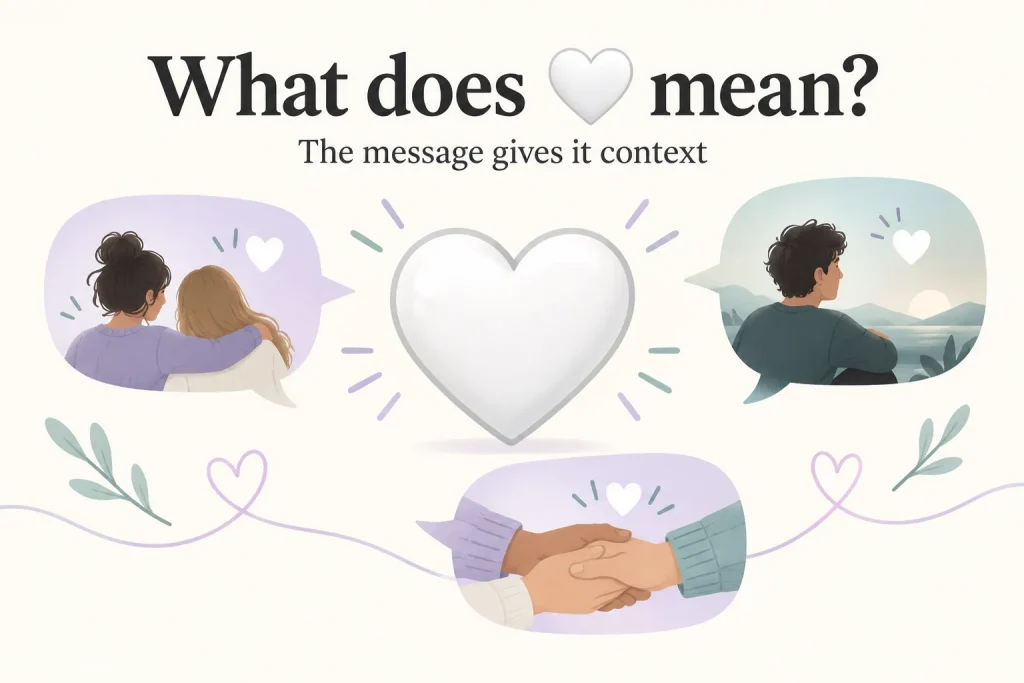
The white heart meaning is love, care, or affection, with uses that also include friendship, sympathy, remembrance, and a white-themed aesthetic. A 🤍 from a girl can be friendly or romantic. The emoji alone cannot tell you which.
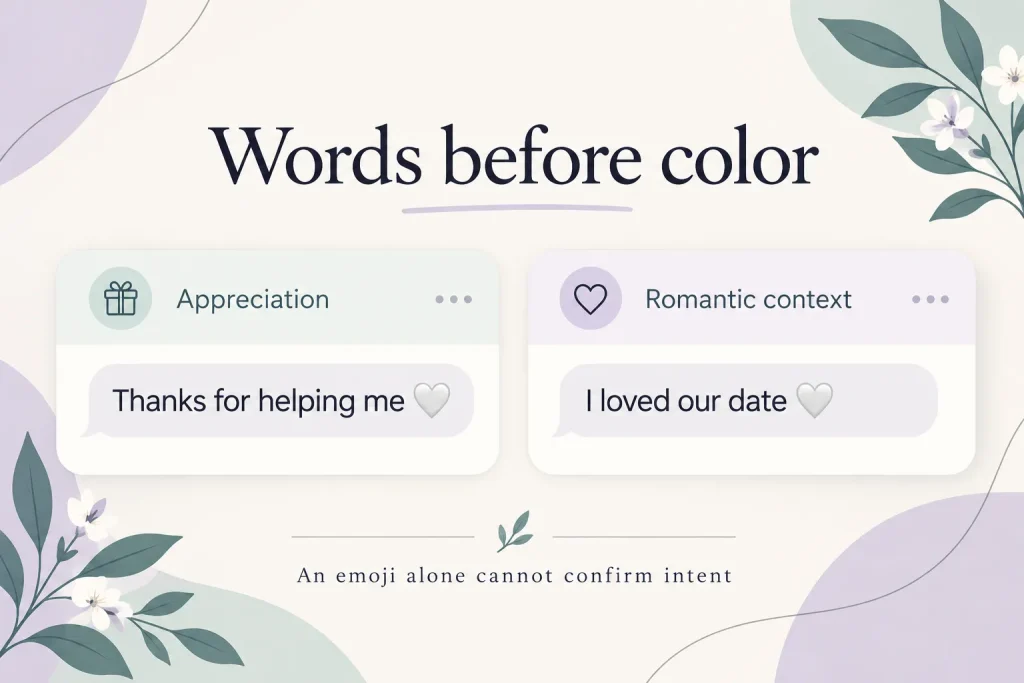
A heart at the end of “Thanks for helping” does different work from one beside “I loved our date.” The words establish the situation; the heart adds feeling. Even then, a short message can leave room for misunderstanding, especially when you don’t know someone’s usual texting style.
This guide explains the white heart emoji in messages from friends, partners, crushes, and family. You’ll find examples for grief, wedding captions, public comments, and everyday chats, plus comparisons with other hearts and replies you can adapt. There’s also a way to weigh ambiguous messages without treating them as secret codes, and help copying 🤍 or distinguishing it from ♡.
What does a white heart mean?
The white heart emoji 🤍 can express love, affection, appreciation, or support. It also appears in condolences, memorial posts, wedding messages, and captions featuring white objects. Its meaning depends on the exchange, so read it as an emotional addition to a message rather than a precise statement about someone’s feelings.
Emojipedia’s White Heart entry identifies love and affection, references to someone passing away, and appreciation for things associated with white among its uses. Those are descriptions of usage, not instructions every sender follows.
Start with the topic of the message. A heart attached to a wedding announcement has a different setting from a heart sent after a difficult conversation.
| Message or setting | Plausible meaning | What remains uncertain |
|---|---|---|
| “Thanks for listening 🤍” | Appreciation and care | Whether there is romantic interest |
| “I love you 🤍” from a partner | Affection in an established relationship | The color’s personal significance |
| “Good luck today 🤍” | Encouragement | Whether the sender uses it with everyone |
| “Remembering you 🤍” on a tribute | Remembrance and love | Any religious intention |
| A white outfit caption | Appreciation or a matching color | Whether it carries a deeper message |
| “Congratulations to you both 🤍” | Celebration | Whether the color was deliberate |
Three useful distinctions keep the interpretation grounded:
- Meaning: the feeling or idea someone may be expressing.
- Tone: how the message feels, such as warm, gentle, or reassuring.
- Intent: what the sender wants to communicate or do next.
AffectionWarmth toward a person, which can occur in romantic, family, and friendship relationships. SupportA sign of care or solidarity, especially beside words of encouragement. Aesthetic useA heart chosen partly for its appearance, including in a white or neutral color scheme.
One message may combine these functions. Someone can like the white heart’s appearance and mean their affectionate words sincerely. Decoration and emotion can coexist.
What does a white heart mean from a girl?
A white heart from a girl can communicate affection, friendship, gratitude, encouragement, or romantic interest. There isn’t a separate female definition of 🤍. To understand her message, consider what she actually wrote, your relationship, and the wider exchange. One heart doesn’t establish a crush, commitment, rejection, or a change in boundaries.
This question feels personal because the answer can matter. A message from someone you like may invite more analysis than the same symbol from a cousin. That makes it useful to separate what the message says from what you hope it means. Think of the first as evidence and the second as expectation.
When the message fits friendship or gratitude
A friendly interpretation fits when the conversation already concerns help, encouragement, shared plans, or appreciation. Examples include:
- “You saved me with those notes 🤍” after you helped with classwork.
- “Hope the interview goes well 🤍” before an important appointment.
- “Thanks for bringing everyone together 🤍” after a group outing.
These examples express warmth without explicitly proposing romance. They also don’t rule romance out. The honest reading is narrower: she is being appreciative or caring in that exchange.
If you’re unsure how to respond, answer the words. “Glad the notes helped. Good luck tomorrow!” works without requiring you to define the relationship.
When the surrounding message is romantic
A white heart can accompany a clearly romantic message. The clearer evidence comes from the words or agreed situation:
- “I loved our date 🤍” explicitly refers to a date.
- “I want to be more than friends 🤍” states a relationship preference.
- “Happy anniversary, love 🤍” belongs to an established romantic setting.
Let explicit statements carry more weight than color. “I only see us as friends 🤍” remains a friendship boundary. A heart doesn’t reverse that sentence.
If she says, “I had a lovely evening 🤍,” you can acknowledge the evening and suggest another meeting if you want one. Her response to a clear invitation may give you more useful information than further emoji analysis.
Messages from a guy, partner, or ex
The same care applies regardless of gender. A white heart from a guy can be affectionate, friendly, supportive, or decorative. A partner may simply prefer it to red; an ex may be kind without seeking reconciliation.
| Sender | A grounded starting point | A useful response |
|---|---|---|
| Friend | Read the actual topic first | Respond to the thanks, news, or plan |
| Crush | Treat warmth as warmth until intent is clearer | Make a clear, low-pressure invitation if interested |
| Partner | Use your shared history | Respond in your normal affectionate style |
| Ex | Keep existing boundaries in view | Address the words without assuming reconciliation |
| Someone new | You know little about their habits | Keep your reply proportionate |
If an ex writes “Hope you’re doing okay 🤍,” the message communicates a check-in. It does not, by itself, ask to restart the relationship. You can appreciate the gesture while keeping whatever distance you need.
White hearts in friendship and family messages
In friendship and family conversations, 🤍 can add care, gratitude, reassurance, or affection. It works beside messages about shared experiences and everyday kindness as well as important moments. The relationship supplies the context: a sibling’s heart after a thank-you doesn’t need the same interpretation as a message from a new date.
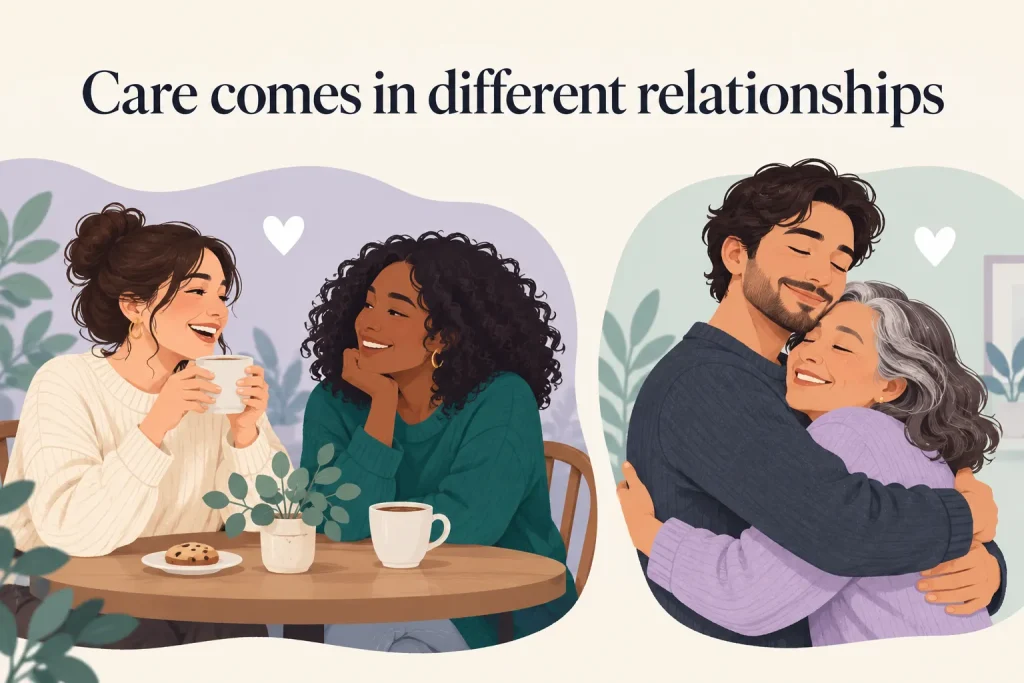
A close friend may use 🤍 because it feels natural, matches their style, or has become part of your shared way of talking. You don’t need to assign each heart color a distinct level of closeness.
For example, these original messages name the reason for the affection:
- “Thanks for staying on the phone while I waited 🤍.”
- “Proud of the work you put into this 🤍.”
- “Made it home. Loved seeing everyone 🤍.”
Specific words make appreciation easier to understand. “Thanks for picking me up” tells someone what mattered. A heart can reinforce that thanks without doing all the communication itself.
Don’t measure the strength of a friendship by emoji frequency. Someone who writes a thoughtful message without hearts may be expressing care just as clearly. Likewise, a person who adds hearts to most chats hasn’t necessarily promised unusual intimacy to each recipient.
White heart meaning in sympathy, remembrance, and support
In a condolence or memorial message, a white heart can express sympathy, love, remembrance, or solidarity. It can also accompany support during a difficult period that involves no bereavement. Look for the subject of the post or conversation before interpreting 🤍 as mourning, and use clear words when offering comfort yourself.

Emojipedia’s editorial discussion of the white heart describes its use in grief, condolences, peace-related messages, and celebrations. That range explains why the same character can appear in emotionally different settings.
Writing a condolence message
A short, sincere sentence can do more than a string of symbols. If you knew the person who died, a personal memory may be appropriate. If you didn’t, acknowledge the loss without pretending to understand the mourner’s experience.
Possible wording includes:
- “I’m so sorry about your grandfather. Thinking of you 🤍.”
- “I remember how warmly she welcomed everyone. I’m sorry for your loss 🤍.”
- “No need to reply. I just wanted you to know I’m thinking of you 🤍.”
A heart isn’t a demand for a response. Someone grieving may appreciate a message and still have no energy to answer it.
Avoid promising help you cannot provide. If you can offer something concrete, say what it is: “I can bring dinner on Thursday if that would help.” The recipient can then decide without having to invent a task for you.
Peace, faith, and personal symbolism
A white heart beside a dove or a prayerful message may contribute to a peaceful or spiritual tone. However, 🤍 is not a reliable identifier of someone’s religion, beliefs, or understanding of an afterlife.
Take the person’s own language as your guide. If you don’t know their beliefs, “Thinking of you” communicates care without adding a religious assumption. A symbol’s association with peace in one message doesn’t make every use of it a peace statement.
Weddings, white objects, and aesthetic captions
In wedding posts and aesthetic captions, 🤍 can express celebration or affection while matching the subject’s color. A white dress, flowers, snowy scene, or neutral outfit can explain the choice. That visual connection doesn’t establish a special relationship code, and the caption may be heartfelt even when the color also suits the photograph.
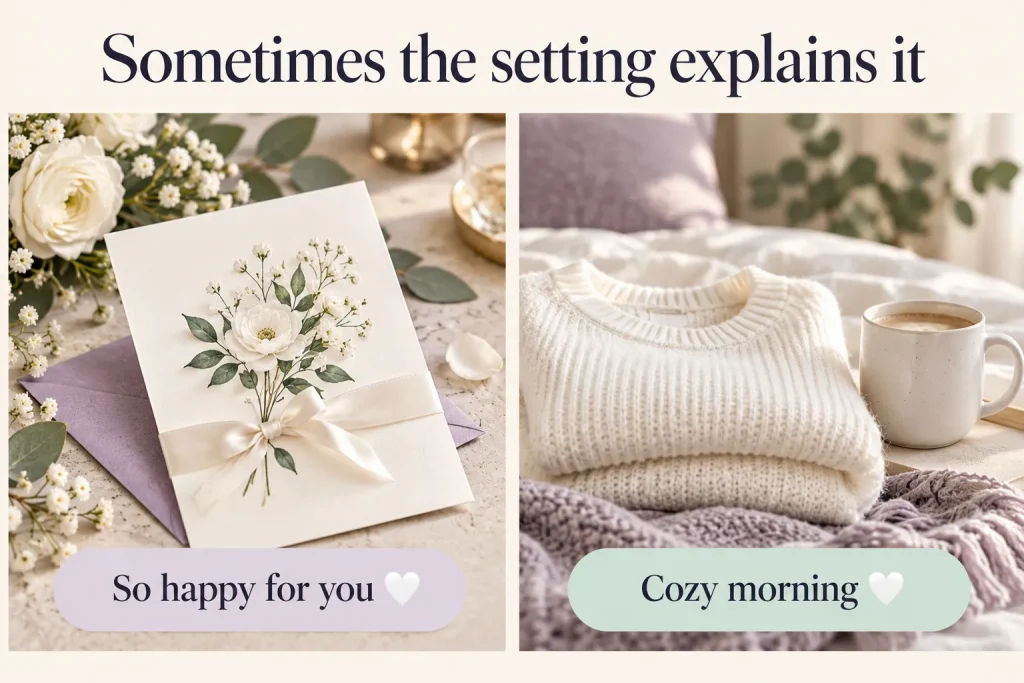
Consider “Finally found the dress 🤍.” The heart may celebrate the purchase and echo the dress’s color. Under a wedding photograph, it may congratulate the couple. Beside a mug and sweater, it may simply fit a cozy image.
Here are useful caption directions:
- Celebrate: “So happy we could be there for your day 🤍.”
- Appreciate: “A little corner of home I love 🤍.”
- Describe: “Fresh snow before everyone wakes up 🤍.”
Pairs of emoji add context, but they don’t create a universal sentence. EmojiTerra provides examples and related characters; the interpretations below are illustrative readings rather than fixed translations.
| Combination | A plausible reading | Context to check |
|---|---|---|
| 🤍🕊️ | Peace, remembrance, or support | Is the post a tribute or a peaceful message? |
| 🤍💍 | Engagement or wedding celebration | Has someone announced a marriage-related event? |
| 🤍✨ | Affection, excitement, or visual styling | What is being celebrated or shown? |
| 🖤🤍 | A monochrome theme or shared colors | Does the caption name a team, theme, or group? |
| 🤍🤍🤍 | Repetition for emphasis or decoration | What do the accompanying words say? |
Repeated hearts don’t establish a stronger commitment. Three hearts may look enthusiastic, but they aren’t a measurable promise of three times the affection.
White heart vs. red heart and other heart emojis
White and red hearts can both express love and affection. Some people perceive 🤍 as softer or visually quieter, while ❤️ can look more direct or vivid. These are possible impressions, not an official ranking. Other heart colors also take meaning from personal habits, captions, shared associations, and the surrounding conversation.
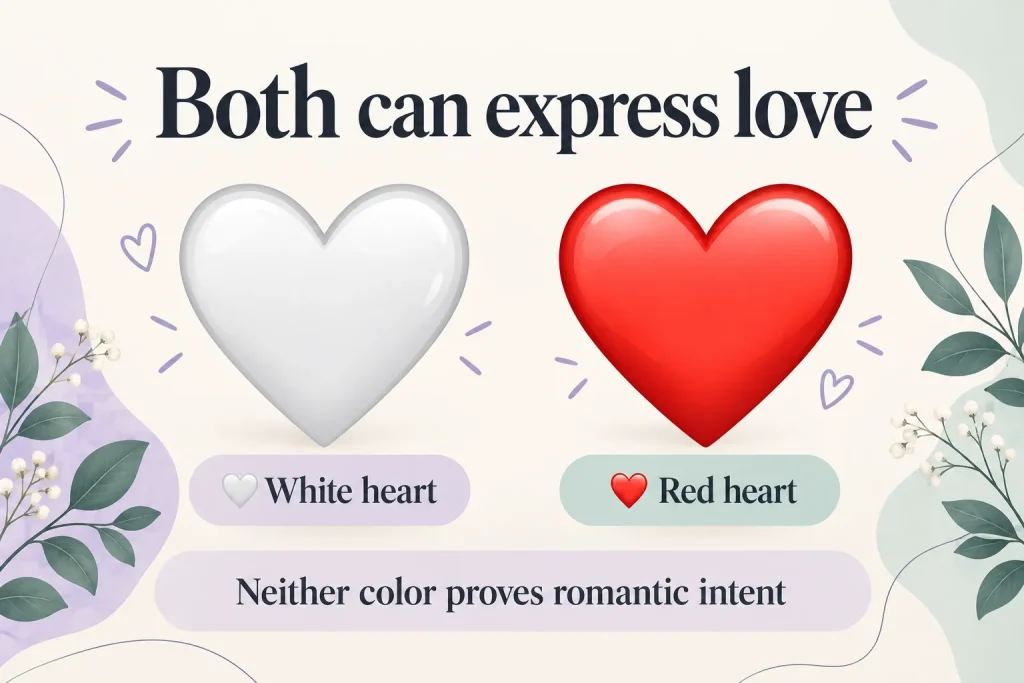
A change from ❤️ to 🤍 may catch your attention, especially in a relationship. But the change alone doesn’t tell you why it happened. The person might be matching a picture, choosing a favorite symbol, or making no deliberate distinction.
| Heart | Possible use in a message | What color alone cannot establish |
|---|---|---|
| 🤍 White | Affection, support, remembrance, visual theme | That the relationship is exclusively platonic |
| ❤️ Red | Love, affection, appreciation | That every use is romantic |
| 🩷 Pink | Affection, sweetness, visual styling | A precise stage of dating |
| 💛 Yellow | Friendly warmth or a color reference | That romance is impossible |
| 💙 Blue | Care, solidarity, or shared colors | A promise of loyalty |
| 🖤 Black | Affection, grief, humor, or a dark theme | A person’s mental state |
| 💜 Purple | Affection, a favorite color, or group associations | A universal sexual message |
These are examples of possible uses, not a decoder. There is no dependable heart-color ladder that moves from friendship to dating to commitment.
If someone has explicitly explained a personal code to you, that shared agreement matters within your conversation. It doesn’t become a rule for everyone else. A couple may choose white hearts as their signature without changing what the symbol means in another person’s family chat.
How to interpret an ambiguous white heart message
Interpret an ambiguous white heart by checking the words, relationship, sender’s habits, and purpose of the exchange. These clues can support a plausible reading, but they cannot confirm private intent. If the difference would affect your next step, ask a clear question rather than assigning certainty to a single character.
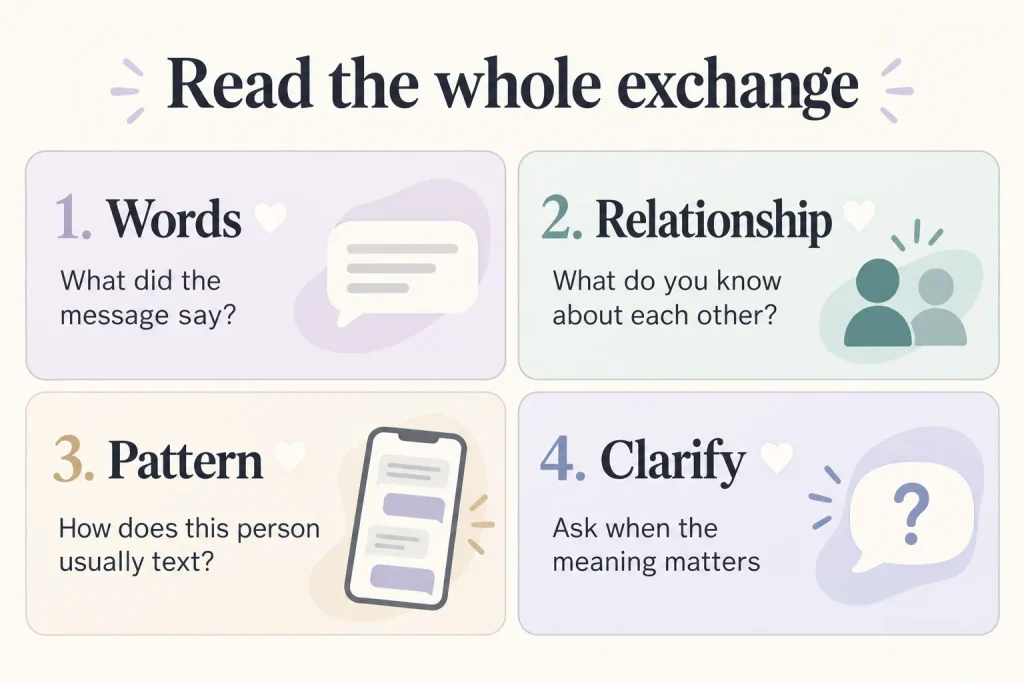
Use this Words, Relationship, Pattern, Clarify checklist as an editorial aid. It isn’t a validated test or a way to calculate someone’s feelings.
- Read the words. Is the sender thanking you, offering support, discussing a date, or reacting to a photo?
- Consider the relationship. What have you explicitly agreed about your connection and boundaries?
- Check the pattern you already know. Is this their familiar sign-off, or have they explained why they use it?
- Clarify when it matters. Ask about the actual issue, such as whether an invitation is a date.
Don’t investigate someone’s private conversations to establish a pattern. Use what you already know from your own exchanges or public behavior, and accept that some uncertainty may remain.
Worked examples: plausible reading versus unsupported leap
The aim is to choose a sensible response, not to produce a verdict about another person’s mind. A useful reading can remain provisional.
| Message | Supported reading | Unsupported leap |
|---|---|---|
| “Thanks for sending the file 🤍” | They are thanking you warmly | They want a relationship |
| “I’d like to take you on a date 🤍” | They have proposed a date | They have promised exclusivity |
| “Always remembering Dad 🤍” | A personal tribute | Every white heart means death |
| “We’re better as friends 🤍” | They have stated a friendship boundary | The heart secretly cancels the boundary |
Research also gives a reason to avoid overconfidence. A 2017 study by Hannah Miller and colleagues examined emoji interpretation with 2,482 participants. In that study, surrounding text did not substantially remove variation in interpretation. The work predates 🤍 and does not measure this particular emoji.
The practical lesson is limited but useful: context helps you form a reading; it doesn’t guarantee shared understanding. Treat this as guidance for a conversation, not a claim that looking at enough clues will reveal the answer.
That same habit helps with abbreviations. Our guide to WTW meaning in text explains why the full exchange matters when interpreting a short message.
How to reply to a white heart emoji
Reply to what the person communicated: acknowledge thanks, return affection you want to express, offer support, or answer the invitation. You can mirror 🤍 if it feels natural, but you don’t owe anyone a matching heart. When the meaning matters, a short sentence can make your own intention clearer.
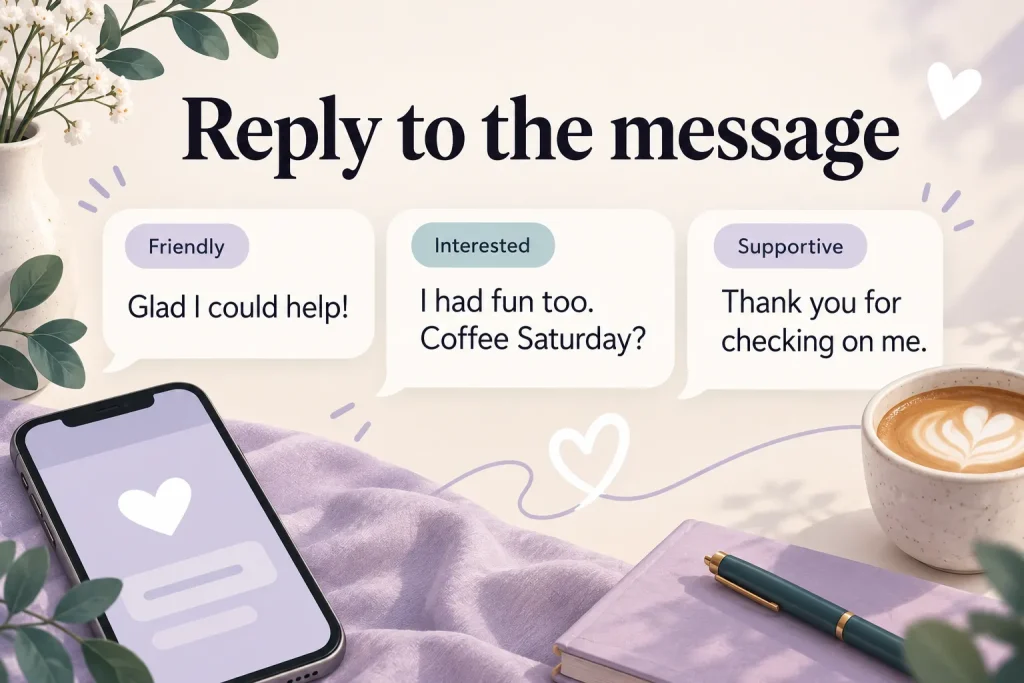
Match your words to your actual feelings. You can be kind without suggesting romance, and interested without pretending a heart has already settled the question.
Friendly replies
For thanks or encouragement, keep the reply connected to the topic:
- “Glad I could help!”
- “Thank you. That means a lot.”
- “You’re welcome 🤍. Let me know how it goes.”
A cheerful closing can also work. For more wording choices, see our have a great day wishes and alternatives and choose something that fits the moment.
Replies when you’re interested
If you want to keep a promising conversation going, name a next step instead of sending a larger collection of hearts:
- “I had fun too. Coffee on Saturday?”
- “I’d like to see you again. Are you free this weekend?”
- “That made me smile 🤍. Want to talk later?”
An invitation should leave room for an honest answer. If the person declines, accept the response. Their earlier emoji doesn’t create an obligation to reciprocate your interest.
Replies when you want to keep things platonic
A white heart cannot reliably communicate a boundary on its own. If the conversation needs clarity:
- Acknowledge the person without interpreting their emoji for them.
- State your own position plainly: “I value our friendship, and I want to keep it platonic.”
- Keep later messages consistent with that boundary.
You don’t need a relationship discussion for every friendly heart. Use this approach when there is an actual misunderstanding or a clear romantic invitation to answer.
Replies to comfort or condolences
A brief response is enough if you want to acknowledge support:
- “Thank you for thinking of me.”
- “I appreciate you checking in.”
- “I’m not ready to talk yet, but thank you 🤍.”
You can also reply later. Care doesn’t need to become a conversation immediately, especially during grief or a difficult day.
What 🤍 means on Instagram, TikTok, Snapchat, and WhatsApp
Across social apps, a white heart can accompany affection, appreciation, support, or a visual theme. The setting changes the available clues: a public comment responds to a post, while a private message belongs to an exchange. Don’t assume an app gives a manually typed 🤍 a single, platform-specific relationship meaning.
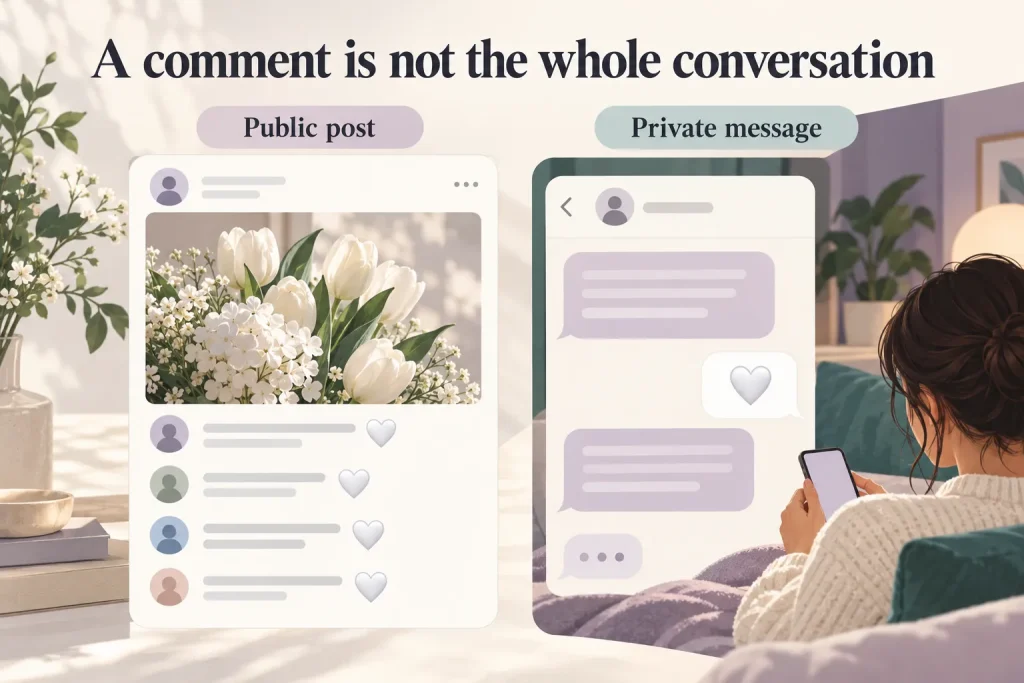
Public hearts under a photograph may praise the photograph, congratulate its subject, or join the tone of other comments. A private heart can feel more personal, but that doesn’t establish romance either.
| Setting | Read this alongside the heart | A common interpretive mistake |
|---|---|---|
| Instagram caption or comment | The photograph and caption | Assuming a comment is a private declaration |
| TikTok comment | The video and conversation topic | Treating a creator’s playful code as universal |
| Snapchat chat | The actual message and shared history | Confusing a typed heart with an app-generated indicator |
| WhatsApp or text message | Previous messages and the question being answered | Reading the heart separately from the sentence |
| Group chat | Who or what the reply addresses | Assuming the sender singled you out |
Typed emoji and app features are different things. If you’re asking about a badge, reaction setting, or friendship indicator, check that feature’s current documentation. This article explains the character 🤍 rather than every interface that might display a heart.
Work chats and unfamiliar audiences
In professional exchanges, choose language that makes the practical message clear. Consider your team’s established tone and how well you know the recipient.
- With an unfamiliar client: “Thank you for sending this. I’ve received it.”
- With a colleague: “Thanks for covering the meeting. I appreciate it.”
- With a close teammate in a casual chat: use the warm style you both already share.
The same care helps across the US, Canada, the Philippines, India, the UK, and Australia. Nationality isn’t a decoder for an individual’s intent. Ask when clarity matters instead of assigning a country-wide meaning to one person’s message.
Copy and paste 🤍, character facts, and display problems
You can copy the white heart directly: 🤍. Its Unicode code point is U+1F90D, and it joined Unicode 12.0 and Emoji 12.0 in 2019. The outline heart ♡ is a different character, called White Heart Suit. Similar appearances do not make the two symbols technically interchangeable.
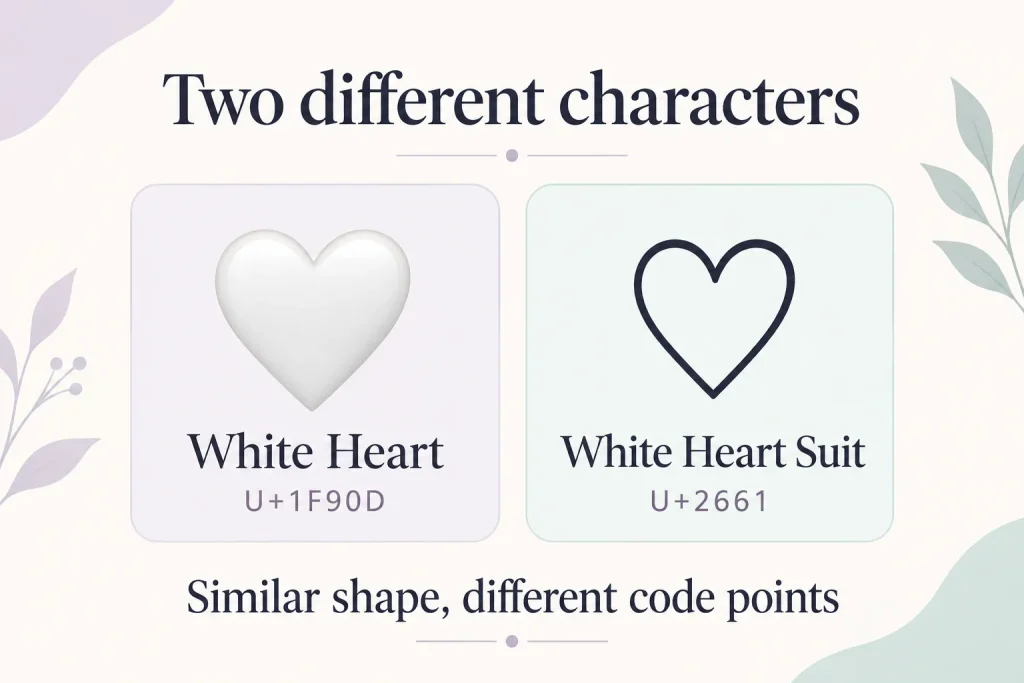
Unicode’s Emoji 12.0 additions chart lists white heart at 1F90D. The Unicode Miscellaneous Symbols chart lists ♡ at U+2661. Unicode identifies characters; it doesn’t define your sender’s private feelings.
| Detail | White Heart | White Heart Suit |
|---|---|---|
| Character | 🤍 | ♡ |
| Code point | U+1F90D | U+2661 |
| HTML decimal reference | 🤍 | ♡ |
| HTML hexadecimal reference | 🤍 | ♡ |
| Character distinction | White Heart emoji | Separate outline heart symbol |
Copying the character into a message
Use a simple copy-and-paste process:
- Select this character: 🤍.
- Copy it using your device’s normal copy command.
- Paste it into your message.
- Read the complete message before sending it.
If your keyboard supports emoji search, try “white heart.” Search behavior and labels can vary, so copying the character is a useful alternative when you cannot find it.
Troubleshooting a box or unexpected appearance
A blank box can indicate a font or rendering problem, but the symbol alone doesn’t identify the cause. Try these checks:
- Copy 🤍 into another app on the same device.
- Check whether the problem affects one app or several.
- Install appropriate app or system updates if available.
- Use clear wording while the display problem remains unresolved.
Different shading, a gray edge, or a different shape doesn’t establish a different emotional meaning. Vendors can draw the same character differently. Avoid making relationship judgments from a screenshot’s particular artwork.
Making messages accessible
Keep the essential information in words:
- State the thanks, invitation, sympathy, or other message in text.
- Use the heart as an addition to that sentence.
- Avoid long repeated emoji strings that may make the message harder to read or hear.
Someone may not see the same rendering you see. A message such as “I’m thinking of you 🤍” remains understandable without relying entirely on color or shape.
Checking a heart after copying from a website
If the exact character matters in a design or document:
- Compare it with the character you intended to use.
- Check the code point when using a character inspection tool.
- Preview the final text in its destination app or page.
This matters particularly when choosing between 🤍 and ♡. Their visual similarity can hide a technical difference, even though people may use either to convey affection.
Common mistakes when interpreting a white heart
The main mistake is turning a possible meaning into a definite conclusion. A white heart can accompany friendship, romance, grief, or decoration, and there is no reliable way to rank feelings by color or quantity. Use the explicit message and any stated boundaries as your starting point, then clarify unresolved questions.
Watch for these shortcuts:
- “She sent 🤍, so she wants to date.” Warmth doesn’t establish a dating intention.
- “He used white instead of red, so he cares less.” Color doesn’t measure affection.
- “White always means friendship.” Partners can use it too.
- “A memorial use makes every white heart about death.” The surrounding subject matters.
- “Three hearts mean a serious commitment.” Repetition has no dependable relationship value.
- “A viral chart explains everyone’s messages.” A local convention may not travel beyond its group.
- “The heart outweighs a stated boundary.” Clear words about consent or friendship remain clear words.
Ask about the situation you need to understand, rather than demanding a translation of the emoji. “Did you mean dinner as a date?” is easier to answer than “What exactly does your white heart mean?”
Don’t treat uncertainty as evidence of dishonesty. People can choose symbols casually, change their favorites, or struggle to explain a choice they made without much thought. You can still decide how to respond based on your own preferences and the conversation you actually have.
Frequently Asked Questions
The questions below address common uncertainties about white hearts in texts and posts. Each answer describes a possible use or a verifiable character fact, rather than claiming access to a sender’s intentions. If an answer would change an important relationship decision, speak with the person instead of relying on a symbol.
Conclusion
The white heart emoji can express affection, friendship, support, remembrance, or appreciation for a visual theme. From a girl, guy, friend, or partner, it gains meaning through the exchange. Read the words, respect stated boundaries, and use a clear question when a distinction matters more than a heart can communicate.
Reply to the message you received. You don’t need to solve a hidden color code before saying thank you, returning affection, offering comfort, or asking someone on a date.