Kawaii Outfits: Cute Outfit Ideas and How to Style Them
Kawaii outfits turn cuteness into a complete visual language. A good look may use pastel color, a playful print, rounded shapes, bows, lace, character accessories, or soft textures, but the result still needs balance, comfort, and a clear point of view. You can dress this way with a full Sweet Lolita coordinate, an oversized hoodie and sneakers, or a mostly neutral outfit finished with one heart-shaped bag.
This guide explains what kawaii fashion means, how it differs from Harajuku style and cosplay, and how to build wearable looks from clothes you may already own. You’ll find 30 outfit formulas, a simple color system, fit and proportion advice, seasonal options, school and workplace ideas, budget guidance, inclusive styling notes, shopping checks, and answers to common questions. The goal is not to follow a costume recipe. It is to create an outfit that feels deliberately cute, suits the setting, and still feels like you.
What are kawaii outfits?
Kawaii outfits are looks designed around a cute, playful, or charming mood. They often combine soft colors, decorative details, youthful motifs, rounded silhouettes, and expressive accessories. The style comes from Japan, yet it now includes many distinct substyles and global interpretations. A kawaii outfit can be maximal, minimal, dark, sporty, elegant, or casual.
The Japanese word kawaii commonly means “cute” or “charming.” Japan’s government has described kawaii as a cultural idea that has spread across borders, while Tokyo’s official travel guide connects colorful kawaii looks with Harajuku’s long-running street-fashion scene. The Museum at FIT also places kawaii culture beside Lolita, Gothic Lolita, Decora, and other Japanese subcultural styles. These sources support a useful distinction: kawaii is a broad aesthetic value, not one required uniform.
That breadth matters when you get dressed. A pink bow alone can make a plain cardigan feel sweeter. A black dress with lace, heart hardware, and platform shoes can look dark and cute. A roomy sweatshirt printed with a smiling food character can create a casual kawaii outfit without any skirt, pastel wig, or elaborate makeup.
The practical definition is simple: a kawaii outfit uses intentional visual cues to communicate cuteness while functioning as real clothing. Those cues can come from color, shape, texture, motif, styling, or behavior. You do not need every cue at once.
Kawaii fashion is broader than pastel clothing
Pastels are popular because soft pink, baby blue, mint, lavender, butter yellow, cream, and white naturally create a gentle mood. Still, color alone does not decide whether an outfit feels kawaii. A black-and-white look may read as kawaii through a scalloped collar, puff sleeves, rounded shoes, ribbon details, and a tiny character bag. Red, navy, brown, gray, and even neon shades can work when the shapes and motifs support the concept.
The strongest outfits usually repeat one visual idea. If a cherry-red bow appears in your hair, repeat that red in the socks, bag charm, or print. If the outfit centers on clouds, use a cloud graphic once and echo its soft curves through a puffy sleeve or rounded bag. Repetition makes separate garments look like a coordinated set.
Kawaii, Harajuku, Lolita, and cosplay are not synonyms
These terms overlap, but they describe different things:
| Term | What it means | Typical visual signals | Useful distinction |
|---|---|---|---|
| Kawaii | A broad Japanese idea of cuteness used in fashion, design, characters, and daily life | Soft or playful details, charming motifs, expressive styling | An aesthetic quality, not one fixed dress code |
| Harajuku fashion | Street and subcultural fashion associated with Tokyo’s Harajuku area | Can include Decora, Lolita, goth, punk, colorful layers, or experimental styling | A place-linked fashion ecosystem that includes cute and non-cute styles |
| Lolita fashion | A structured Japanese fashion subculture influenced by Victorian and Rococo dress | Bell-shaped skirt, blouse, petticoat, lace, headwear, coordinated accessories | Has clearer coordinate conventions than general kawaii fashion |
| Cosplay | Dressing as a specific character or recognizable character type | Character-accurate costume, wig, props, makeup | The goal is character portrayal rather than everyday personal style |
Tokyo’s official guide describes Harajuku as home to looks ranging from cute and casual to goth and more extreme subcultures. That makes “Harajuku” too broad to use as a synonym for “kawaii.” Likewise, wearing a character T-shirt is ordinary fashion styling; reproducing that character’s complete design is cosplay.
You can borrow kawaii elements without claiming membership in a specific subculture. If you want to wear Lolita, learn the community’s coordinate conventions and terminology. If you simply like bows, pastel sweaters, cute bags, or character motifs, you can use them freely in a personal outfit.
How do you build a kawaii outfit?
Build a kawaii outfit by choosing one anchor piece, matching its mood with two supporting details, and finishing with practical shoes and a bag. Keep the color palette to two or three main colors. Check the silhouette from a distance, then remove any detail that competes with the focal point.
This approach works because it gives every item a job. The anchor attracts attention. Supporting pieces repeat its color, shape, or theme. The base pieces make the outfit wearable. Accessories finish the idea instead of starting several new ideas at once.
The Anchor, Echo, Balance framework
Use this three-part framework each time you style a look:Anchor The item that sets the mood, such as a strawberry cardigan, lace blouse, printed skirt, character hoodie, or heart-shaped bag. Echo One or two details that repeat the anchor’s color, motif, texture, or shape. Examples include red hair clips with a strawberry print or pearl earrings with a pearly bag. Balance Simple pieces that give the eye somewhere to rest, such as plain jeans, a cream blouse, white socks, or neutral shoes.
Original styling insight: most unsuccessful beginner outfits do not lack cute pieces. They lack a visual hierarchy. When every garment is equally loud, the viewer cannot tell what the outfit is about. Anchor, Echo, Balance creates that hierarchy without removing personality.
A seven-step method you can repeat
- Choose the setting and weather before choosing the aesthetic.
- Pick one anchor piece you genuinely want to wear.
- Select a base bottom or dress that fits comfortably when sitting and walking.
- Limit the palette to one dominant color, one supporting color, and one accent.
- Add one echo near the face and another near the shoes or bag.
- Test the outfit with the coat, backpack, or practical layer you will actually carry.
- Photograph the full look in ordinary light and remove one competing detail if needed.
The setting comes first because an outfit that causes discomfort will not feel successful, however cute it looks in a mirror. A school outfit must work with a backpack. A city outfit needs walkable shoes. A summer look needs breathable fabric. A winter coordinate needs enough room under the coat.
Use the 60-30-10 color rule as a starting point
A practical palette divides the outfit into roughly 60 percent dominant color, 30 percent supporting color, and 10 percent accent color. The numbers are a visual guide, not a measurement requirement.
For example, wear a cream dress as the dominant color, a pink cardigan as the supporting color, and cherry-red bows as the accent. In a dark look, use black for the dominant share, lavender for the support, and silver for the accent. For a neutral outfit, use beige, ivory, and one bright character color.
Repeating the accent color twice is often enough to make the outfit look planned. Try a red barrette with red socks, a blue bag charm with blue eyeliner, or a mint print with mint laces. If the accent appears everywhere, it stops acting as an accent.
Check proportion before adding more accessories
Proportion describes how the visual weight of your top, bottom, shoes, and accessories relates. An oversized hoodie already creates volume on top. Pairing it with wide pants can work, but the look may need a visible waist, a shorter hem, or shoes with enough visual weight. A full skirt creates volume below the waist, so a fitted cardigan or tucked blouse often keeps the shape clear.
Use these quick checks:
- If the top is oversized, show a clean break at the hip or wrist.
- If the skirt is full, keep the shoulder line neat or intentionally rounded.
- If the shoes are chunky, repeat their weight with a jacket, bag, or darker color.
- If the outfit has several small accessories, group them around one area rather than scattering them evenly.
- If the print is large, give it more plain space around it.
A mirror shows details; a phone photo shows the overall silhouette. Step back or take a full-length picture. If you notice the outfit before you notice a single confusing item, the balance is probably working.
30 kawaii outfit ideas you can recreate
The easiest kawaii outfit ideas begin with familiar clothes and add one clear cute signal. The following formulas range from subtle everyday looks to recognizable Japanese fashion substyles. Treat each formula as a starting point, then adjust the hem length, sleeve coverage, footwear, and color palette for your comfort and setting.
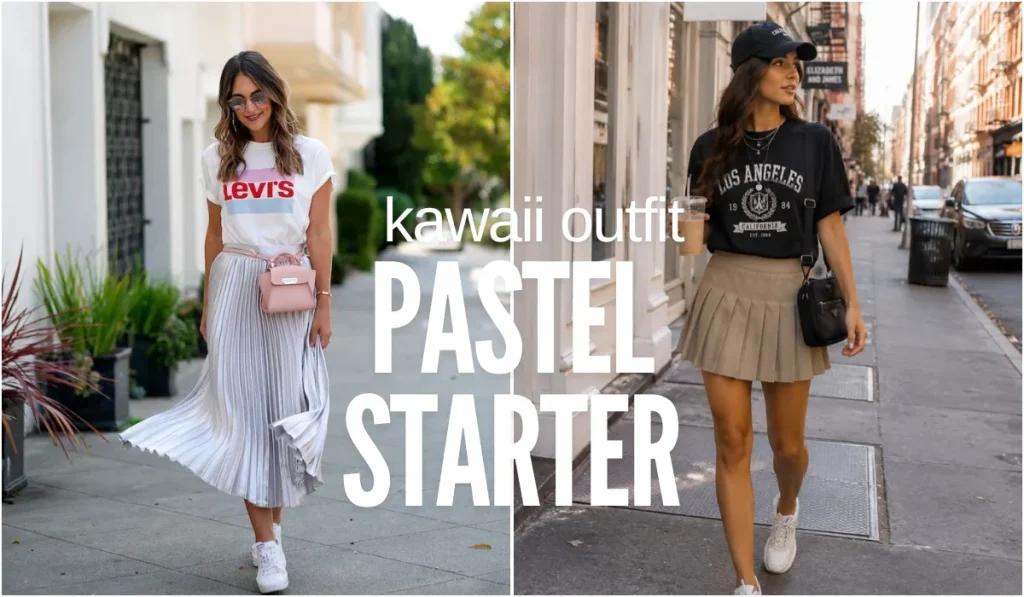
1. Pastel graphic tee with a pleated skirt
Pair a soft graphic tee with a plain pleated skirt, ankle socks, and white sneakers. Tuck the front of the shirt to define the waist, or wear it loose for a relaxed shape. Echo one color from the graphic in a hair clip or small bag.
This formula is beginner-friendly because every piece can return to a non-kawaii outfit. Choose a print you actually enjoy, not a random “cute” graphic. The personal connection makes the look feel less generic.
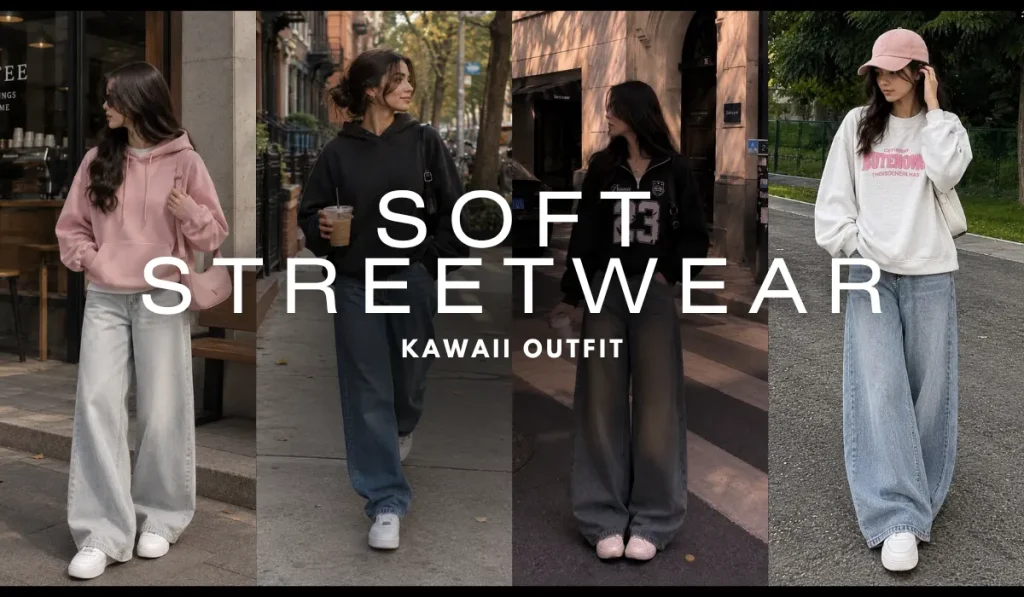
2. Oversized hoodie with wide-leg jeans
A lavender, pink, cream, or character hoodie works with medium-wash jeans and pastel trainers. Roll or push up the sleeves slightly so the outfit does not hide every body line. A small shoulder bag adds contrast to the loose silhouette.
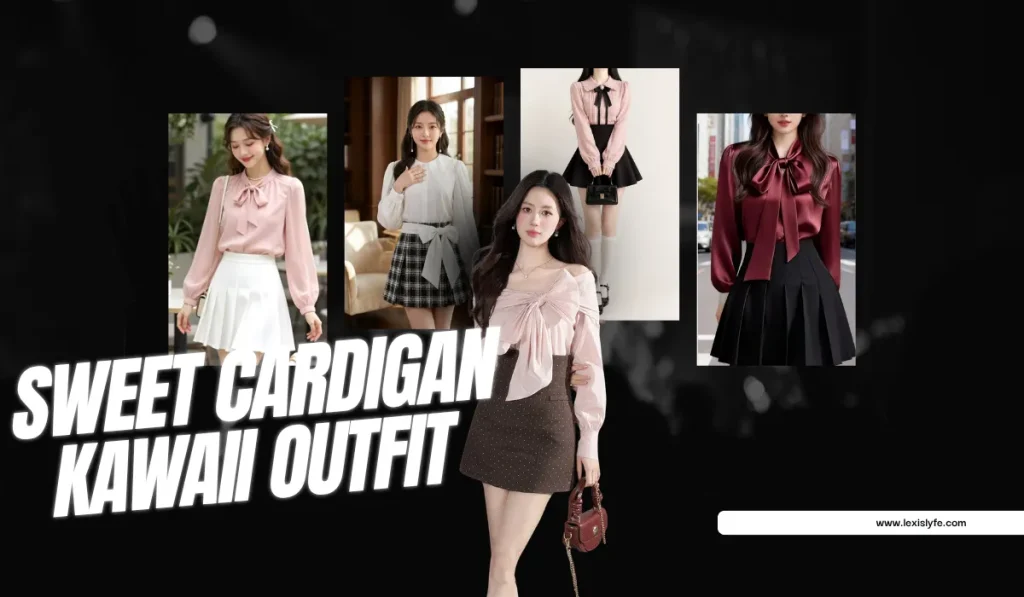
3. Bow blouse with an A-line skirt
Choose a blouse with one strong detail, such as a ribbon tie, Peter Pan collar, puff sleeve, or scalloped edge. Add a solid A-line skirt and rounded Mary Jane shoes. Keep the bag simple if the blouse already has lace or ruffles.
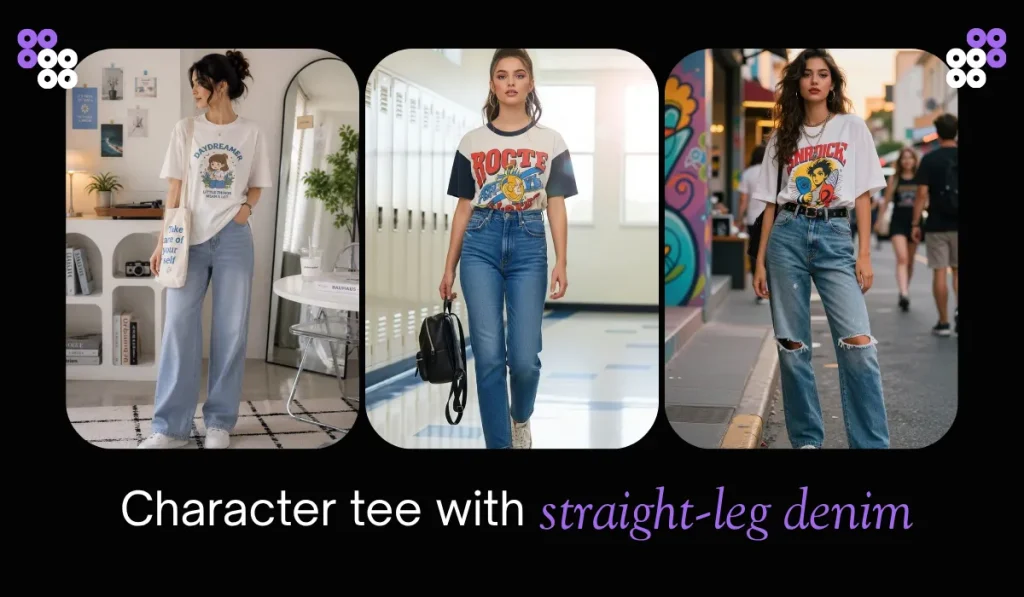
4. Character tee with straight-leg denim
Wear a licensed or artist-made character tee with straight jeans, colorful socks, and a mini backpack. The denim provides Balance, while the print acts as the Anchor. A matching keychain is enough Echo.
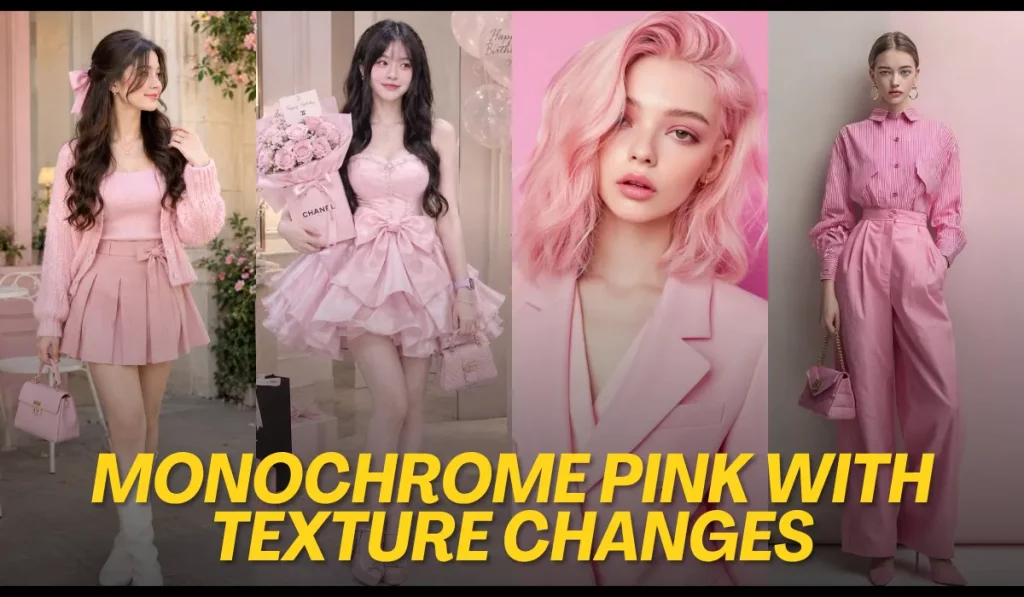
5. Monochrome pink with texture changes
Build the look from several pinks rather than trying to match one exact shade. Combine a fuzzy knit, smooth trousers or skirt, and a glossy or beaded bag. Texture prevents a single-color outfit from looking flat.
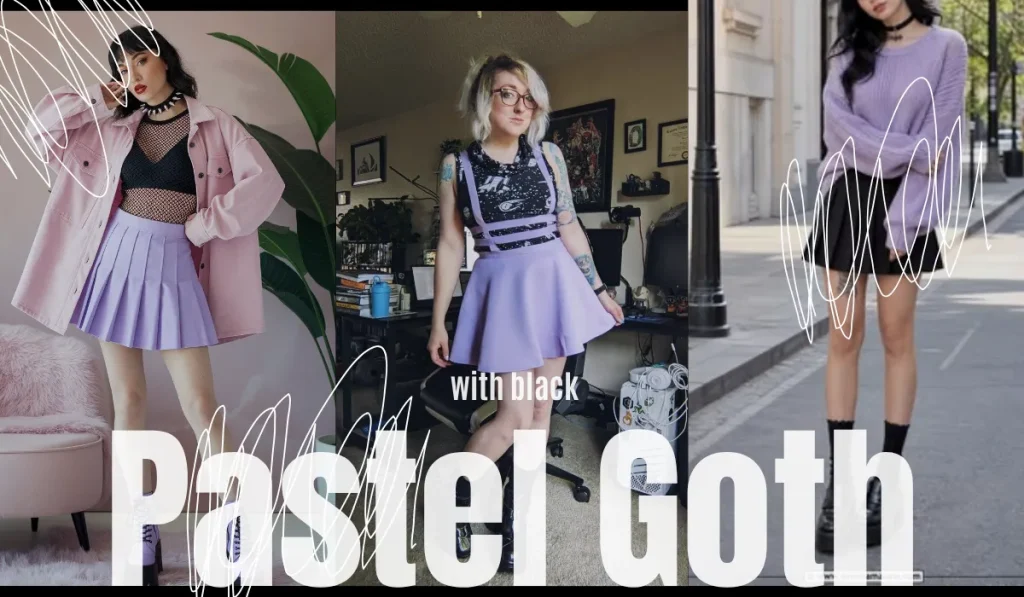
6. Pastel goth with black as the base
Start with a black lace or mesh-layered top and black shoes. Add a lavender skirt, pink bag, or pale graphic. Silver hardware and heart motifs can connect the dark and cute sides of the look.
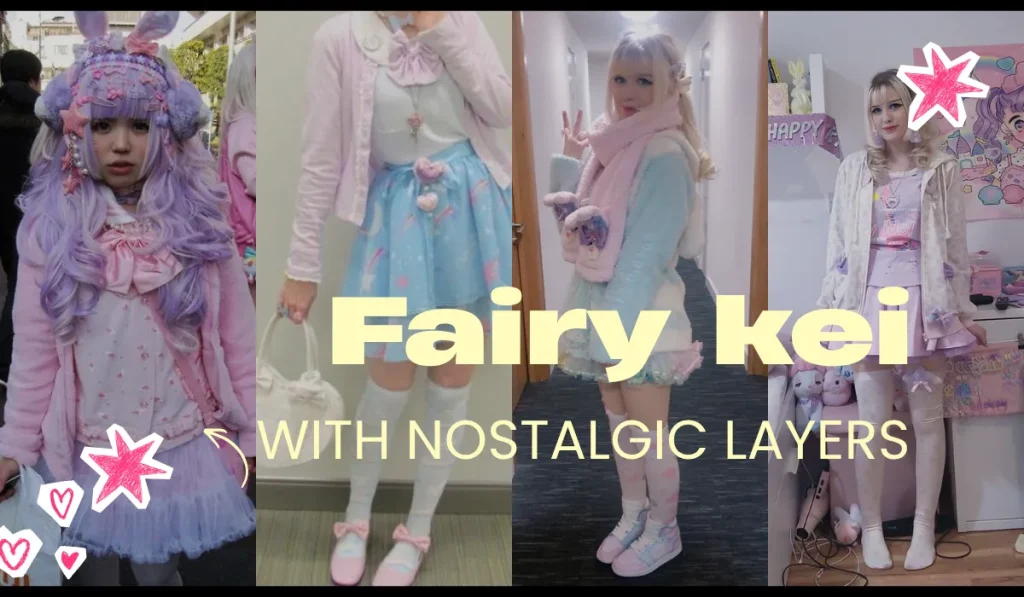
7. Fairy kei with nostalgic layers
Combine a roomy pastel sweater, tulle or tiered skirt, colorful socks, and retro-inspired sneakers. Fairy kei often feels dreamy and nostalgic, so soft toy motifs, stars, rainbows, and vintage-looking graphics fit naturally.
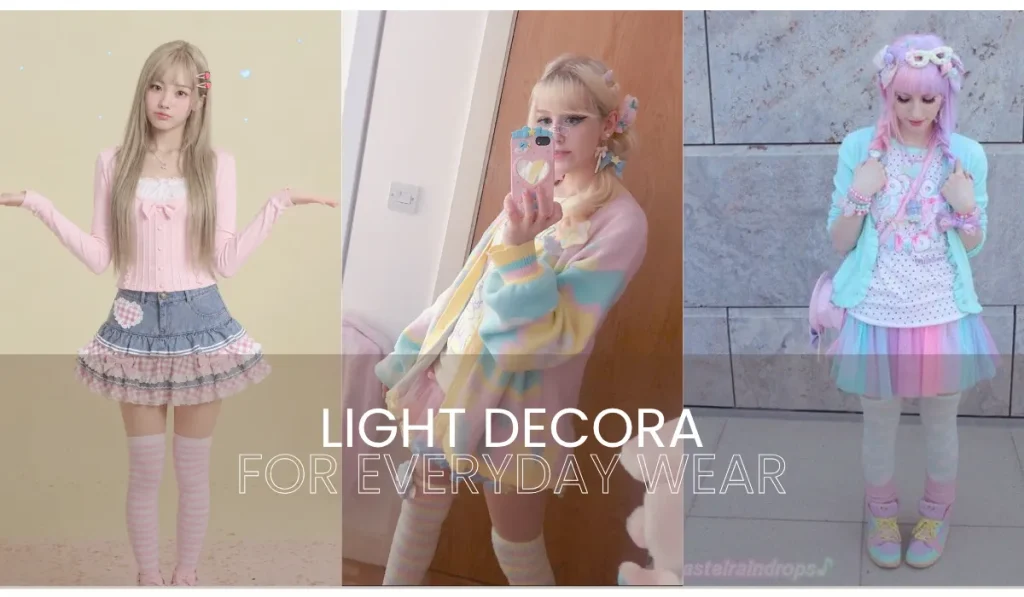
8. Light Decora for everyday wear
Choose a colorful tee and denim skirt or shorts, then group several clips on one side of your hair. Add bracelets or a charm bag, but keep the rest of the outfit visually quiet. This references Decora’s accessory layering without attempting a full maximal coordinate.
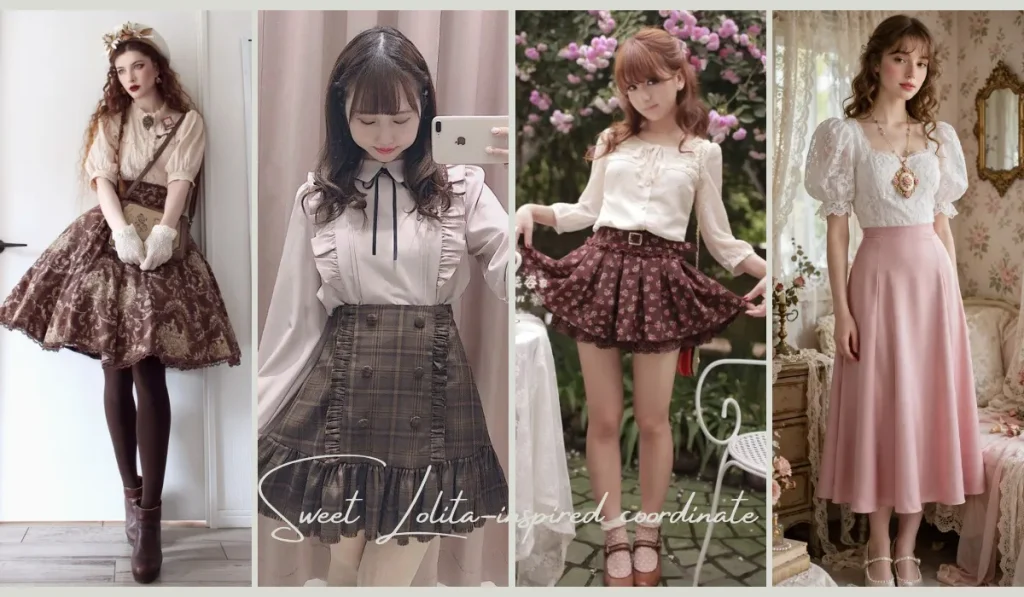
9. Sweet Lolita-inspired coordinate
For a true Lolita coordinate, use a blouse, properly shaped petticoat, knee-length bell skirt or dress, appropriate legwear, headwear, and coordinated shoes. For a general kawaii look merely inspired by the mood, choose a modest ruffled blouse and fuller skirt without labeling it a complete Lolita coordinate.
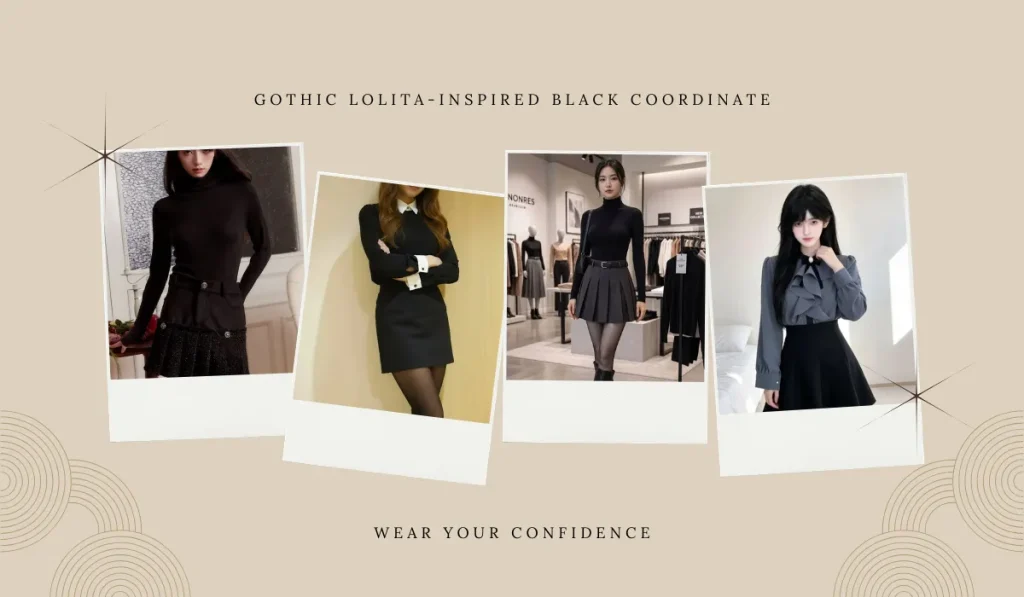
10. Gothic Lolita-inspired black coordinate
Use a high-neck blouse, structured black skirt, opaque tights, and black Mary Janes. Deep red, navy, antique gold, or white can serve as the accent. Elegant lace and a controlled silhouette matter more than adding many spooky motifs.
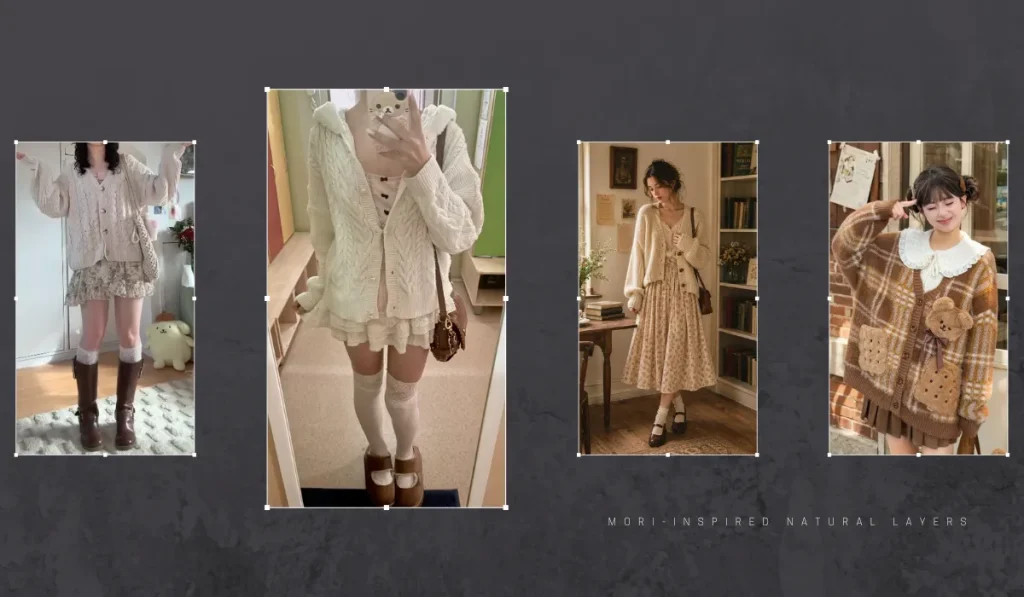
11. Mori-inspired natural layers
Combine a cream cardigan, loose cotton or linen dress, textured socks, and brown flats. Choose embroidered flowers, mushrooms, leaves, or woodland animals as small motifs. Keep the palette earthy and soft rather than sugary.
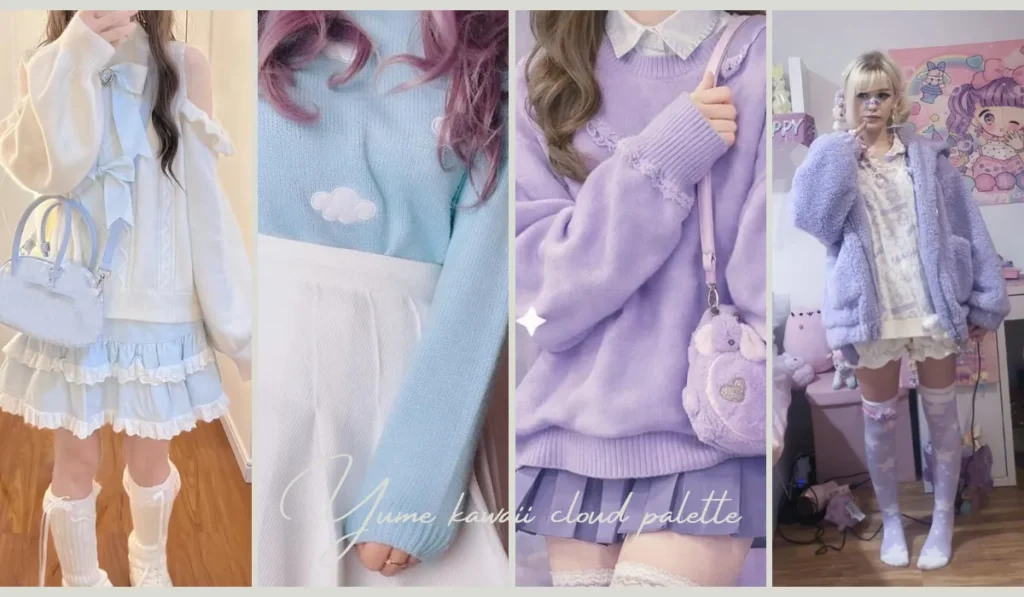
12. Yume kawaii cloud palette
Wear a baby-blue or lavender knit with a pale skirt, iridescent bag, and cloud or star accessories. The dreamy effect comes from low-contrast color and light-reflective details. One holographic item is usually enough.
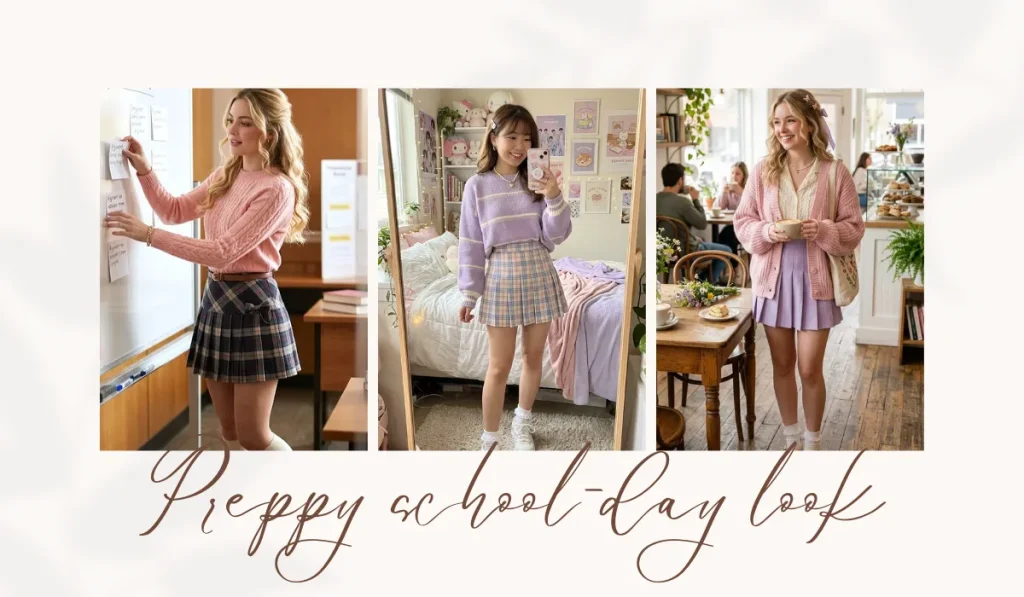
13. Preppy school-day look
Try a pastel polo or cardigan with a plaid skirt, loafers, and crew socks. If your school has a dress code, adapt the formula with full-length trousers, a longer skirt, or a plain cardigan. Use a pin or bag charm as the playful element.
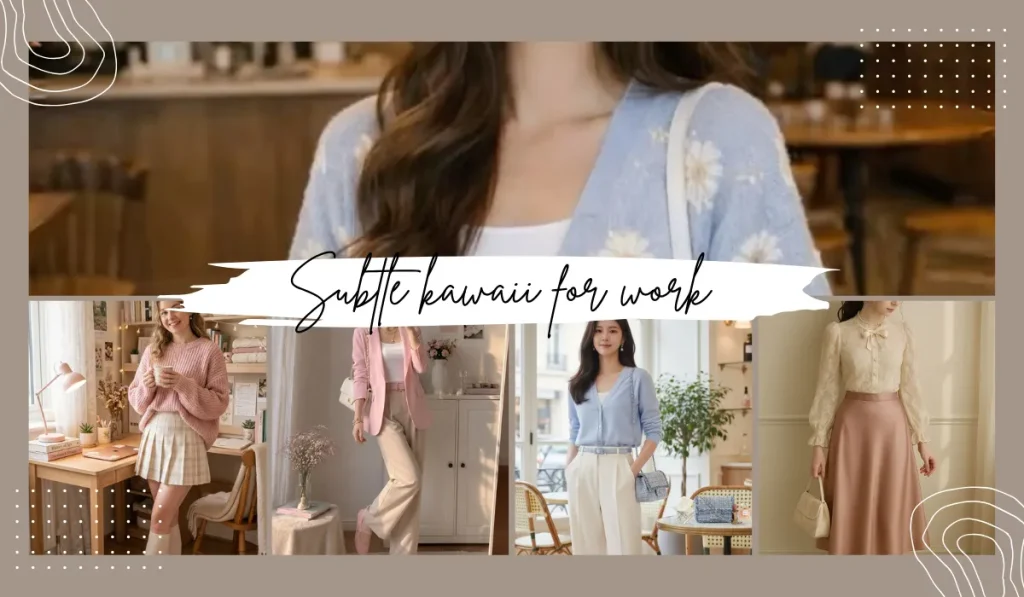
14. Subtle kawaii for work
Pair a soft blouse with tailored trousers or a midi skirt. Add a bow barrette, scalloped flat, pearl detail, or tiny character charm kept inside the bag. Choose one signal that remains visible and professional within your workplace.
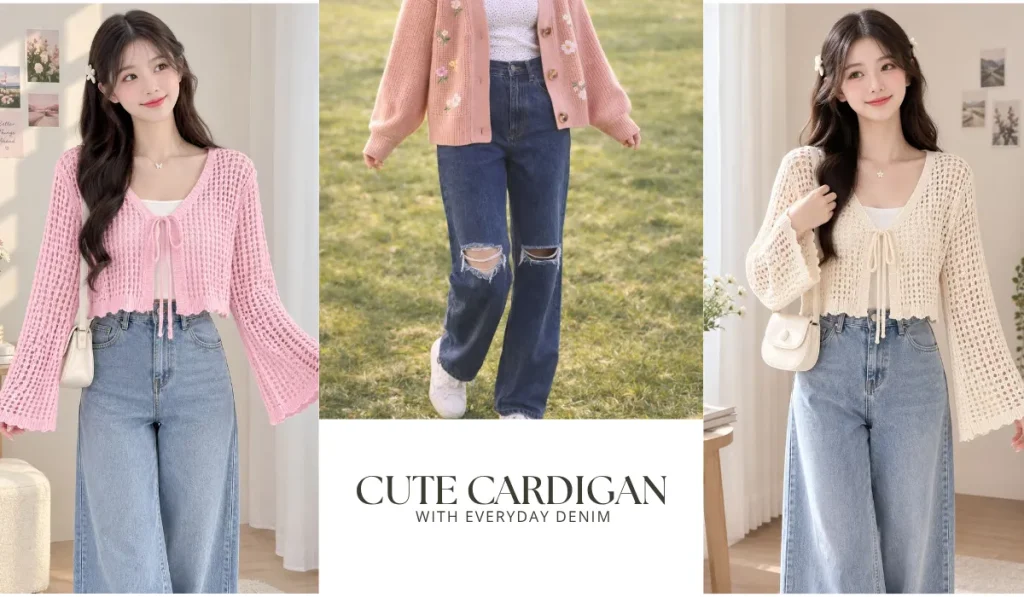
15. Cute cardigan with everyday denim
Button a cropped or regular cardigan over a plain tank or tee and wear it with your best-fitting jeans. A heart bag, cherry earrings, or printed socks can provide the theme. This is one of the easiest formulas for adults who want a quiet look.
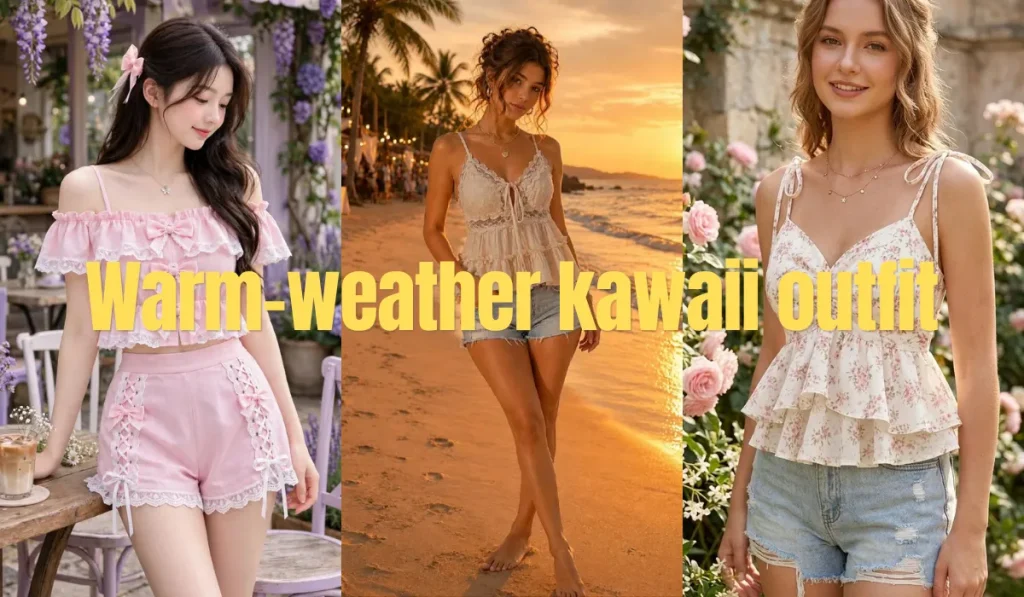
16. Warm-weather ruffle top and shorts
Use a breathable cotton ruffle top with relaxed shorts and canvas shoes. Keep heavy lace, thick synthetic layers, and oversized plush accessories away from hot-weather outfits. A small fruit clip or woven pastel bag adds charm without trapping heat.
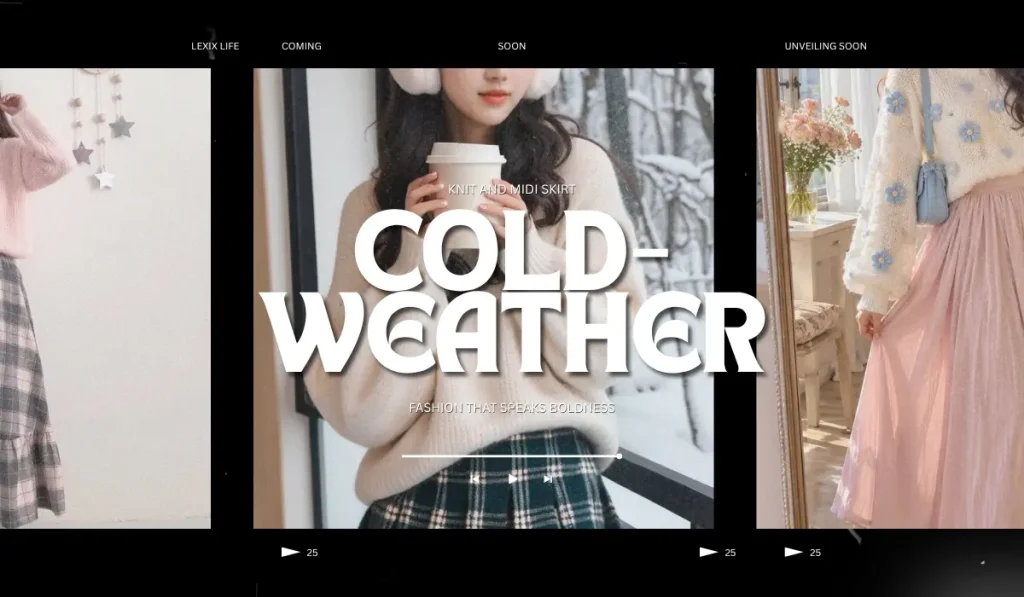
17. Cold-weather knit and midi skirt
Layer thermal tights under a midi skirt, then add a chunky sweater, insulated boots, and a coat with room through the sleeves. Let the scarf, earmuffs, or mittens carry the cute color story. The outerwear should look like part of the coordinate because it covers most of the outfit outdoors.
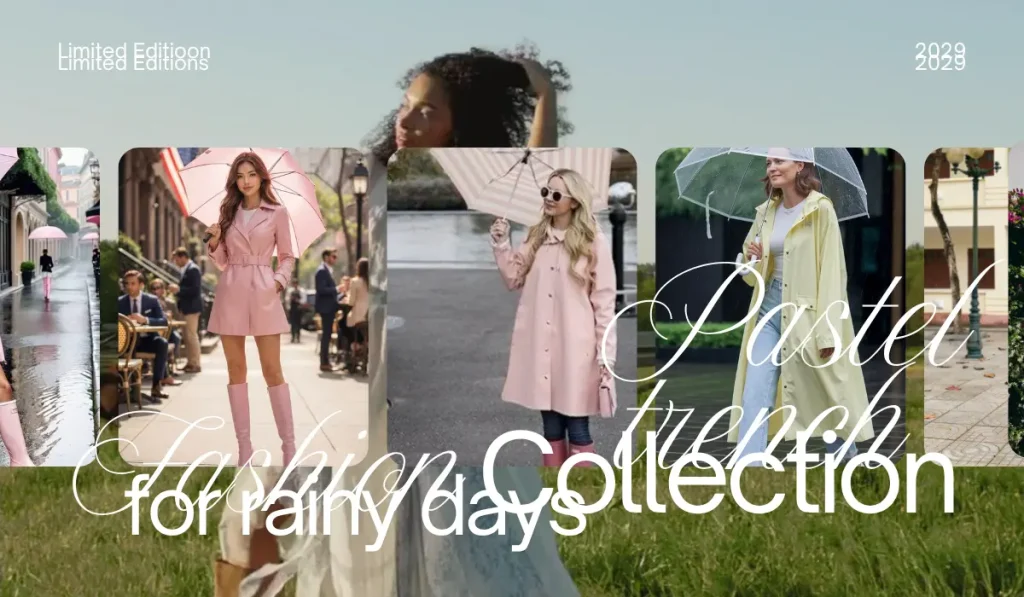
18. Pastel trench for rainy days
A water-resistant pastel trench can serve as the Anchor. Add straight trousers, slip-resistant shoes, and a colorful umbrella. Keep delicate bows and paper accessories protected. A vinyl charm or waterproof bag tag handles rain better.
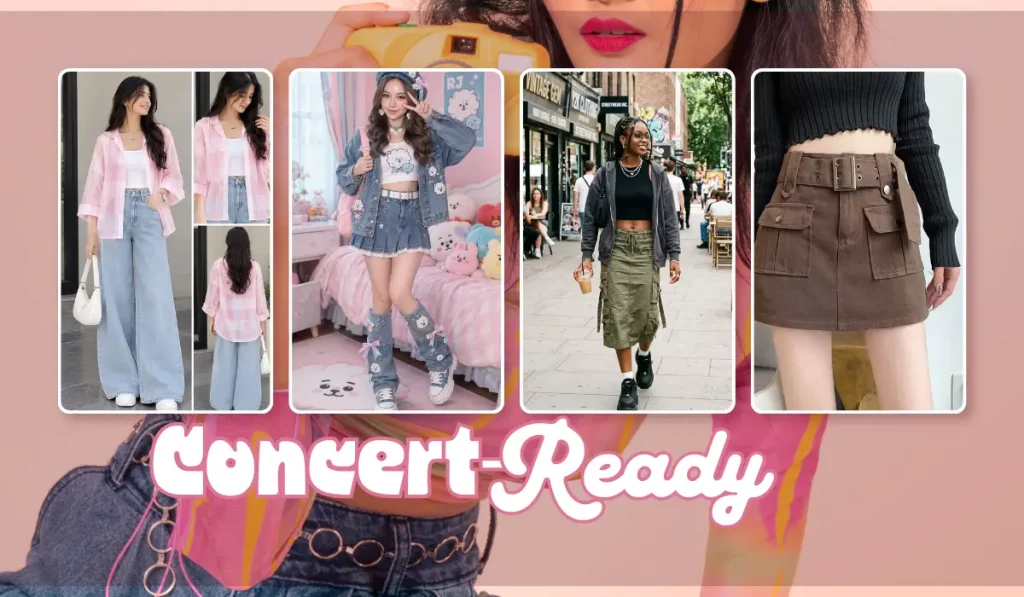
19. Concert-ready graphic layers
Wear a fitted tee or breathable base under an open overshirt, cropped hoodie, or mesh layer. Add a cargo skirt or loose trousers and stable platform sneakers. Use a small crossbody bag that meets the venue’s size policy.
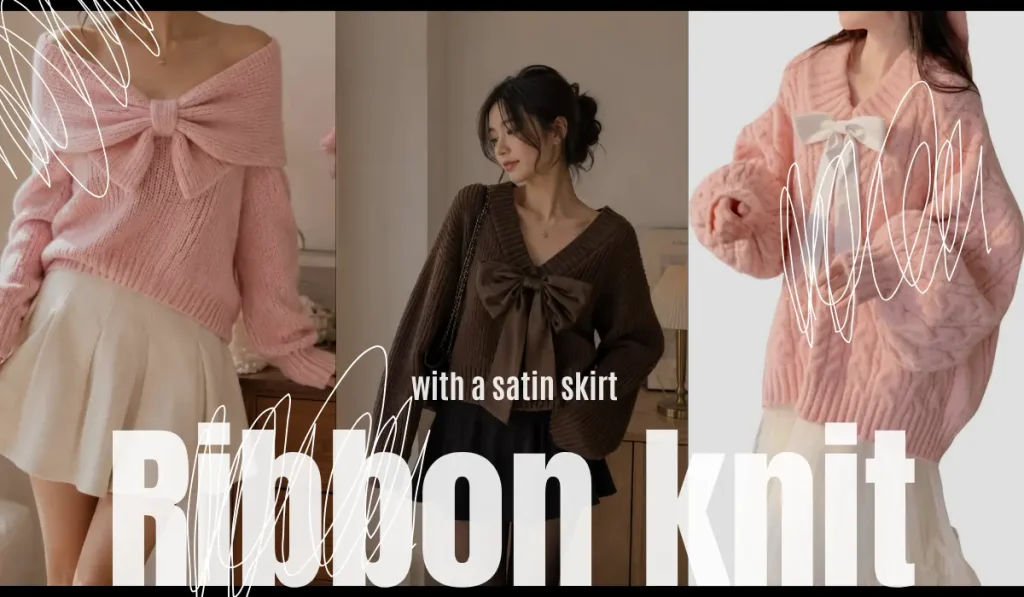
20. Ribbon knit with a satin skirt
A fine knit with a ribbon neckline looks polished with a satin midi skirt and low heels or flats. Repeat the ribbon color in a pearl bag or small earrings. The shine gives the outfit a special-occasion finish without requiring elaborate layers.
21. Cafe look with a collared blouse
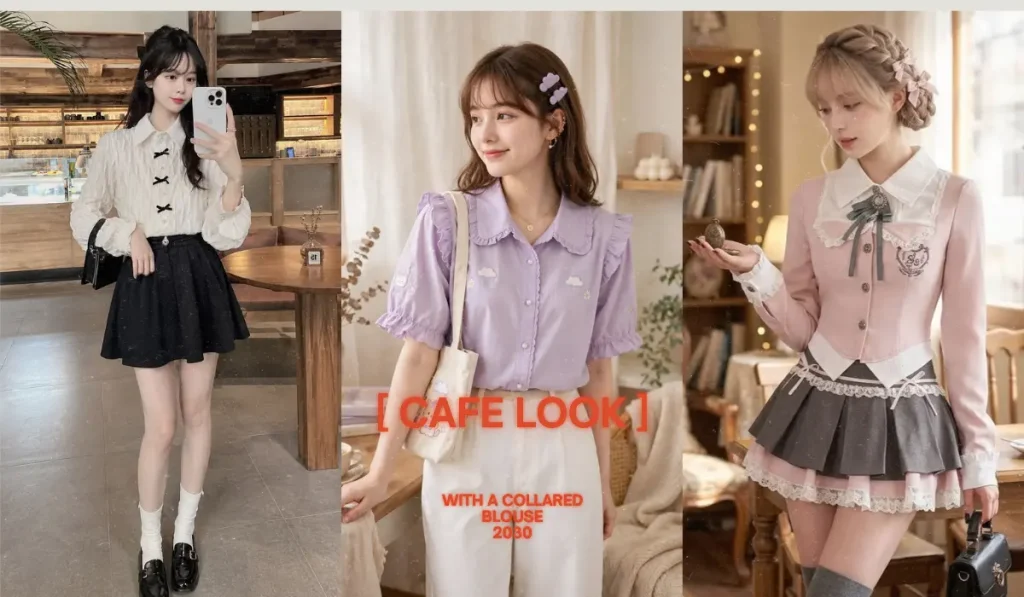
Combine a rounded-collar blouse, corduroy or wool skirt, tights, and ballet flats. Warm cream, cocoa brown, dusty pink, and berry red create a cafe-friendly palette. A structured mini bag keeps the outfit tidy.
22. Travel outfit with removable layers
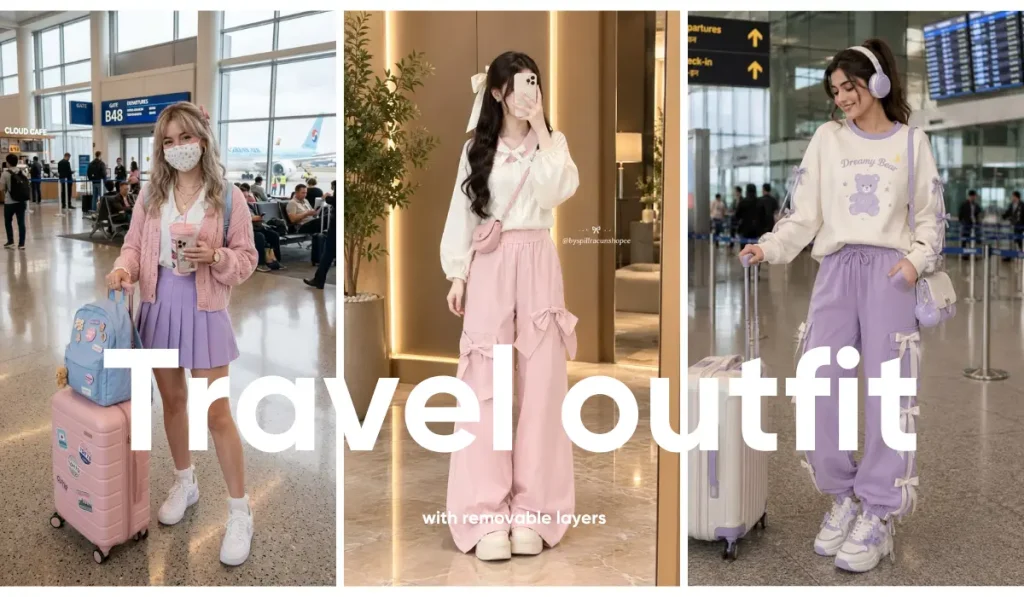
Wear a soft zip hoodie over a breathable tee with relaxed pants and supportive shoes. Attach one charm to a secure crossbody bag. Keep hair accessories flat enough for headphones and choose wrinkle-resistant fabrics.
23. Plus-size look with a clear focal line
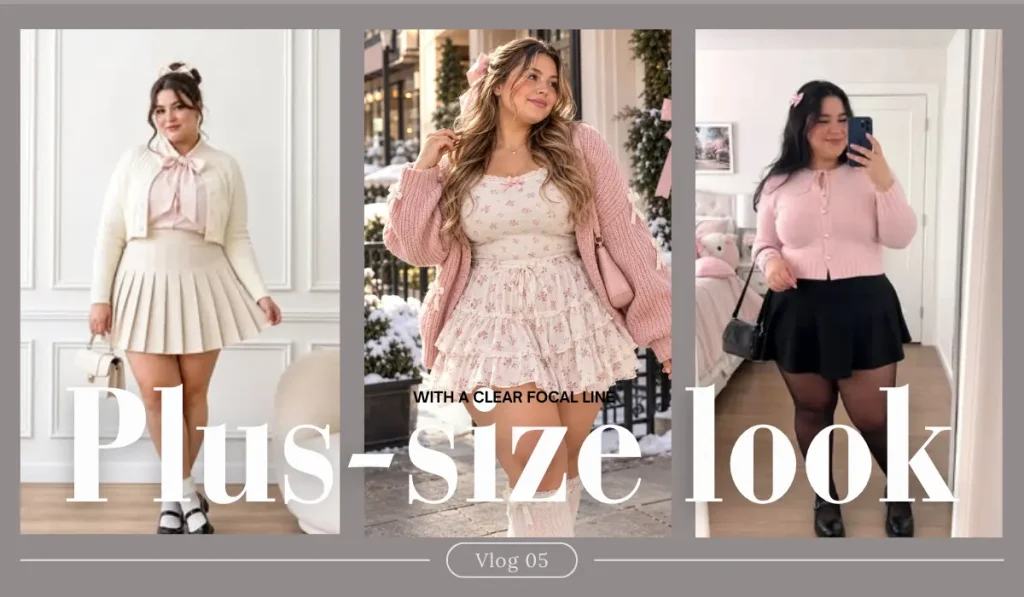
Try a cropped or waist-length cardigan over a high-rise A-line skirt, then add stable platform shoes or rounded flats. The shorter top is one option, not a rule. If you prefer long layers, create a clear vertical line with an open cardigan, matching top and bottom colors, or a centered print.
24. Masculine kawaii with a pastel overshirt
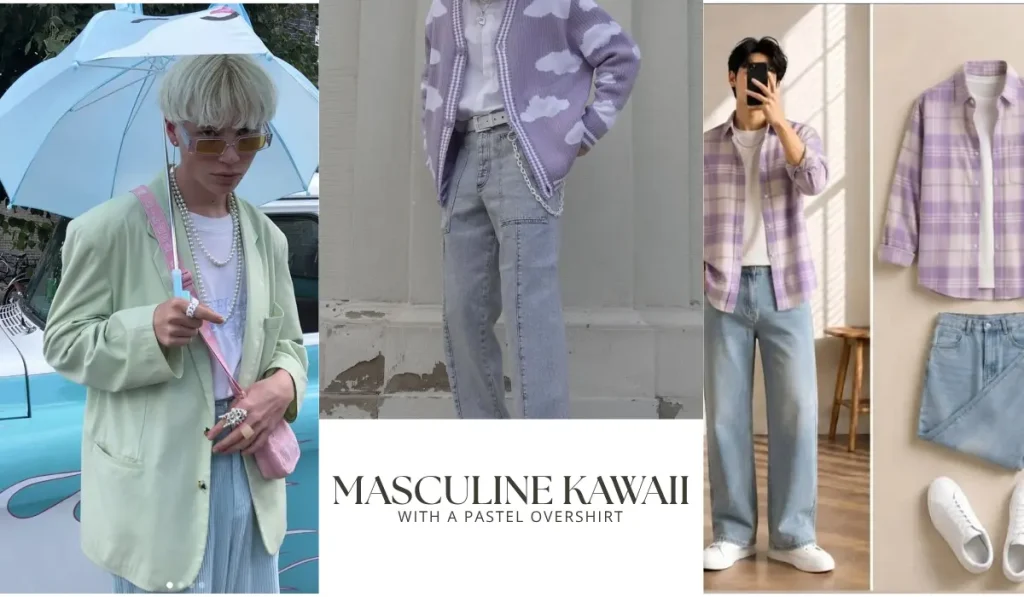
Layer a mint, lavender, or pink overshirt over a plain tee and relaxed trousers. Add cute enamel pins, patterned socks, a character cap, or a compact shoulder bag. Boxy shapes and playful details can share the same outfit.
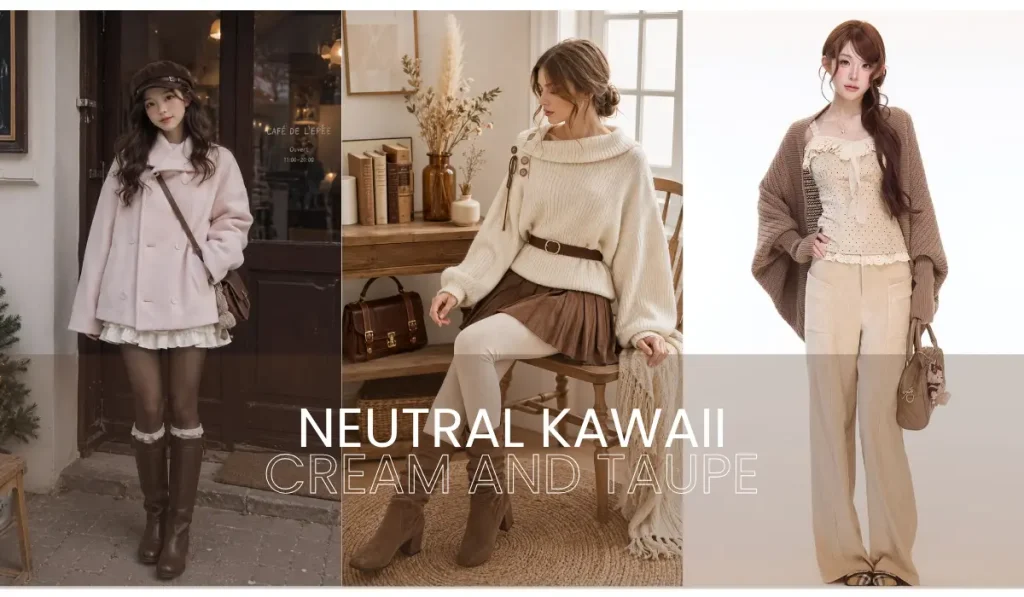
25. Neutral kawaii in cream and taupe
Use a cream knit, taupe skirt or trousers, brown shoes, and one plush keychain. Look for rounded collars, scalloped hems, soft ribbing, and tiny embroidery. Shape and texture carry the cute mood when the palette stays neutral.
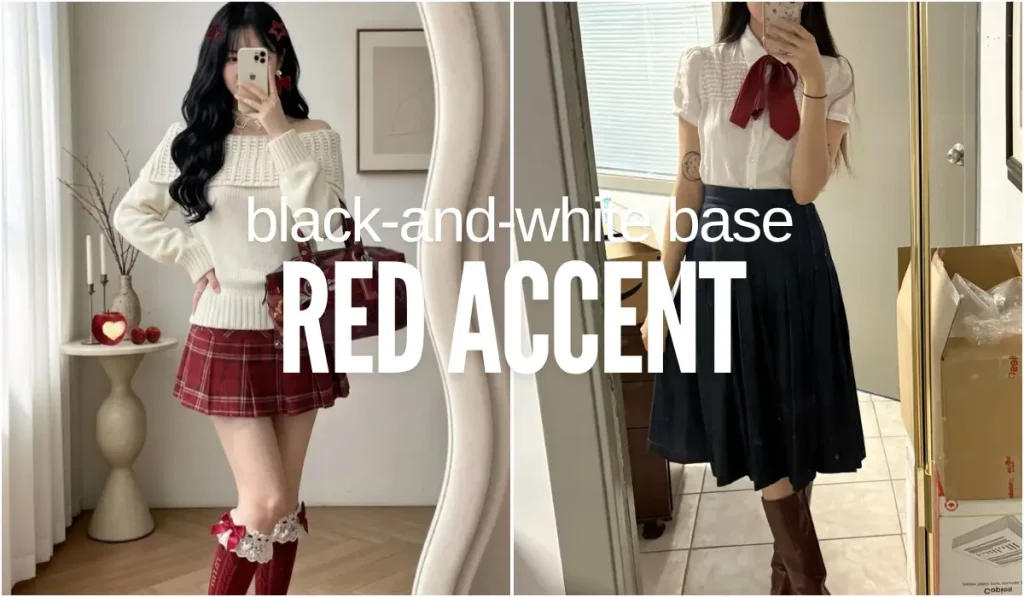
26. Red accent on a black-and-white base
Pair a white blouse with a black skirt or trousers. Add a red bow, red socks, and perhaps a cherry motif. Because the base has high contrast, keep the red accents small and deliberate.
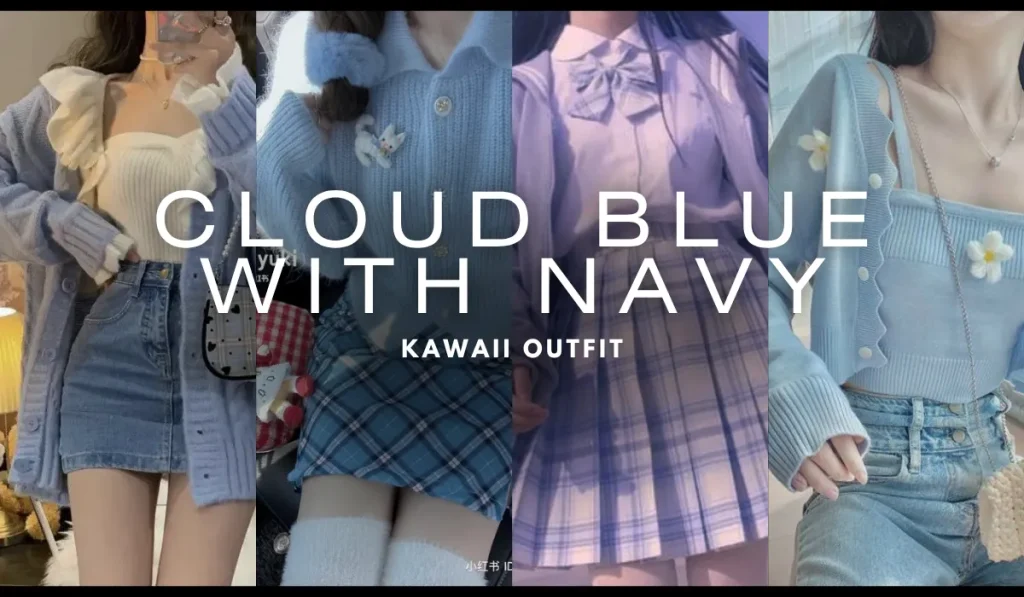
27. Cloud blue with navy
Wear a pale blue sweater with navy trousers or a skirt, then repeat the blue in clips or socks. Navy is softer than black while still providing enough contrast to define the silhouette.
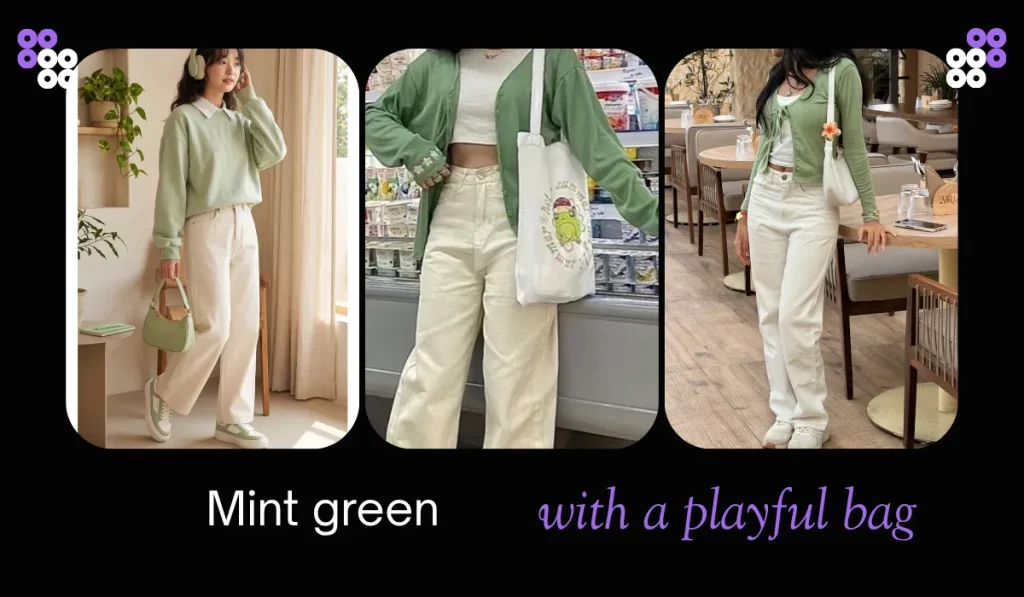
28. Mint green with a playful bag
Combine a mint cardigan, cream jeans, and a frog, leaf, or food-themed bag. Keep shoes neutral so the novelty bag remains the focal point. This works well for spring and casual daytime plans.
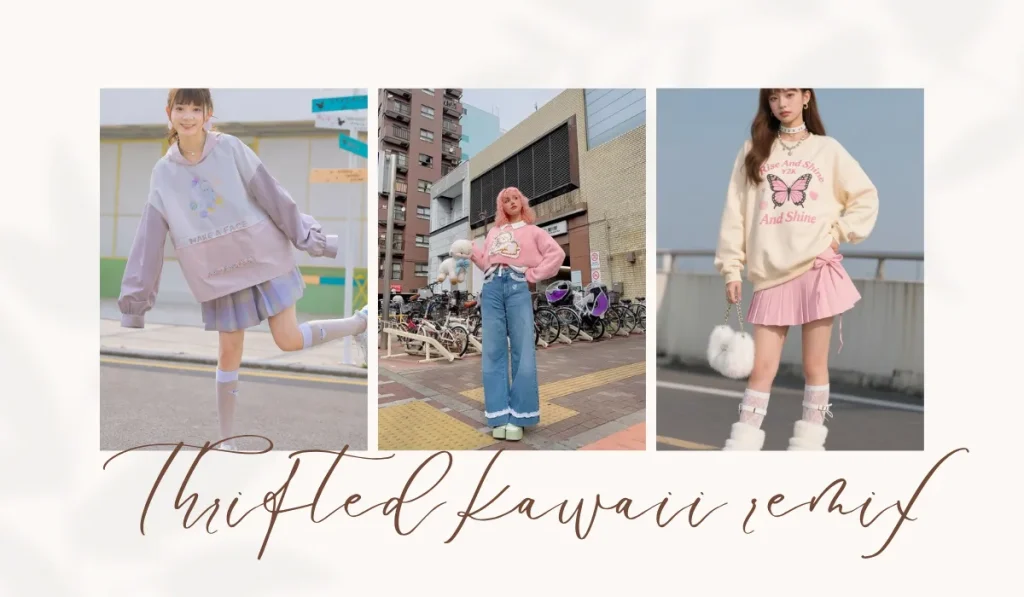
29. Thrifted kawaii remix
Start with an existing pair of jeans or skirt. Add a secondhand pastel knit, then replace plain buttons, attach a removable ribbon, or add a brooch. Check care labels and fabric condition before buying. Small alterations can create a more personal result than purchasing an entire themed set.
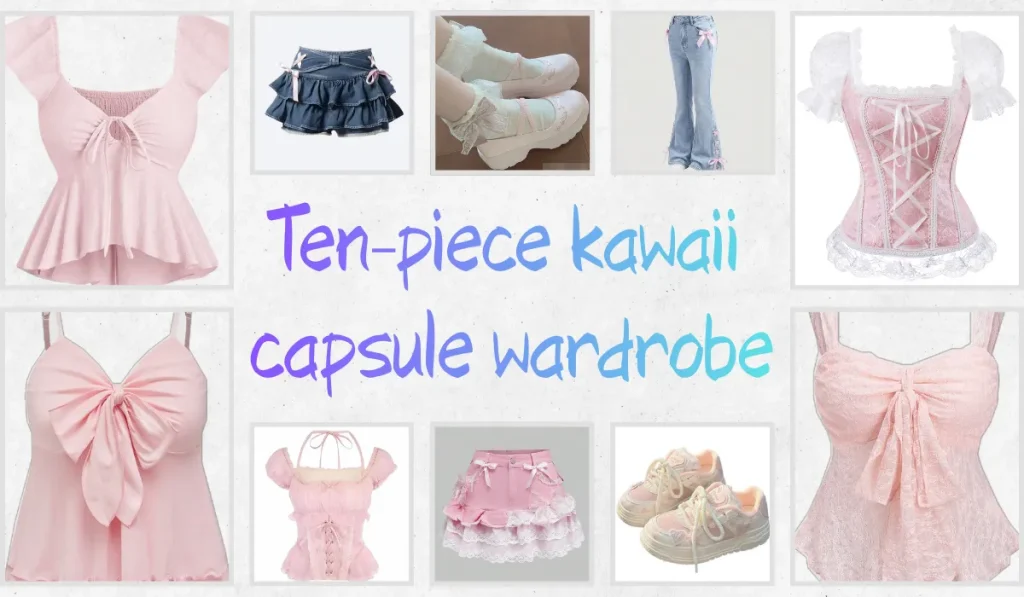
30. Ten-piece kawaii capsule wardrobe
Choose five tops, three bottoms, and two pairs of shoes in one controlled palette. Let two tops and one accessory carry strong prints. The rest should mix easily. A capsule reduces decision fatigue and reveals which pieces you actually wear.
Which kawaii substyle fits you?
Choose a kawaii substyle by matching its visual intensity, silhouette, and maintenance level to your daily life. Fairy kei and Decora suit color lovers; Sweet Lolita favors structured coordination; pastel goth mixes cute and dark signals; casual kawaii works with ordinary basics; neutral kawaii relies on shape and texture.
| Substyle | Palette | Key pieces | Styling intensity | Good starting point |
|---|---|---|---|---|
| Casual kawaii | Pastels, denim, white, soft neutrals | Graphic tee, cardigan, skirt or jeans, sneakers | Low | One printed top and matching accessory |
| Fairy kei | Powder pastels, rainbow accents | Vintage-style sweater, tulle, leg warmers, sneakers | Medium | Pastel knit with an airy skirt |
| Decora | Bright color, rainbow, neon | Layered clips, jewelry, prints, colorful socks | High | Cluster clips in one area over a simple base |
| Sweet Lolita | Pink, sax blue, cream, red, print palettes | Dress or skirt, blouse, petticoat, headwear, legwear | High and structured | Research full-coordinate conventions before buying |
| Gothic Lolita | Black, white, jewel tones | Structured dress or skirt, blouse, lace, opaque legwear | High and structured | Begin with silhouette and fabric quality |
| Pastel goth | Black with lavender, pink, mint | Dark base, platforms, cute-dark motifs, silver hardware | Medium | Black outfit with one pastel garment |
| Yume kawaii | Lavender, baby blue, pink, iridescent accents | Cloud or star motifs, dreamy knits, light layers | Medium | Low-contrast pastel palette |
| Neutral kawaii | Cream, beige, taupe, brown | Rounded knits, scallops, embroidery, plush charm | Low | Texture plus one small motif |
Do not force yourself into one label before you have worn the clothes. Save ten outfits you like, then identify the repeated features. You may discover that you enjoy the colors of fairy kei, the shoes of pastel goth, and the simple shapes of casual streetwear. That combination is useful information, even if it does not match a named category.
A quick substyle decision guide
Choose casual kawaii if you want easy laundry, familiar shoes, and pieces that work in several settings. Choose fairy kei if you enjoy layered pastel color and nostalgic graphics. Explore Decora if accessories are the main way you express yourself. Study Lolita if you like a defined silhouette, coordinated detail, and an established fashion community. Try pastel goth if you already own black clothing but want a softer accent. Choose neutral kawaii if your wardrobe is beige, brown, cream, or gray and you prefer subtle signals. Low commitment Accessories, socks, bags, graphic tees, and removable bows. These change the mood without rebuilding your wardrobe. Medium commitment Coordinated skirts, cardigans, specialty shoes, color-matched layers, and themed bags. High commitment Structured subculture coordinates, specialty undergarments, wigs, elaborate headwear, or garments that require careful maintenance.
The right level is the one you can wear, care for, and afford without resentment.
How to choose kawaii colors without looking overloaded
A controlled kawaii palette uses one dominant color, one support color, and one small accent. Pastels are common but optional. The outfit looks coherent when at least one color repeats in two locations and the highest-contrast detail appears near the intended focal point.
Color overload usually comes from too many unrelated temperatures and saturation levels. A dusty pink cardigan, neon green bag, icy blue skirt, warm orange shoe, and purple headband may all be cute individually, yet they do not automatically form a unified look. Decide whether the palette is soft, bright, dark, warm, cool, or neutral first.
Five dependable palettes
- Strawberry cream: ivory, soft pink, cherry red.
- Cloud day: white, baby blue, navy.
- Lavender night: black, lavender, silver.
- Pistachio cafe: cream, mint, cocoa brown.
- Peach soda: peach, pale yellow, white, with a tiny coral accent.
Use print colors as a built-in palette. If a skirt contains cream, blue, and red, repeat two of those colors in the blouse and shoes. Avoid adding a fourth strong color unless the outfit is intentionally maximal.
How contrast changes the mood
Low contrast feels dreamy, gentle, and blended. Medium contrast feels clear and wearable. High contrast feels graphic, dramatic, or doll-like. A cream blouse with a pale pink skirt is low contrast. A pink cardigan with blue jeans is medium contrast. A white blouse with a black dress and red bow is high contrast.
Contrast belongs in the styling plan because it controls where the eye goes. Place higher contrast near your face if you want attention there. Place it in shoes or socks if you want to ground a top-heavy look. Spread equal contrast everywhere only when maximalism is the purpose.
How to mix prints, lace, bows, and character details
Mix decorative elements by repeating one theme and varying the scale. Pair one large print with one small detail, or one ornate garment with simple supporting pieces. When lace, bows, prints, charms, and novelty bags all appear together, group them under one color story or motif.
Begin with the pattern hierarchy. A printed skirt may be the largest visual event. Choose a blouse that repeats its background color, then use one small bow in a color from the print. If the skirt already has bows, lace, and characters, a plain shoe often completes the outfit better than another themed item.
Print-mixing rules that stay readable
- Combine one large motif with one small motif.
- Repeat at least one color across both prints.
- Separate busy prints with a solid cardigan, belt, or waistband.
- Keep character franchises to one main family per outfit unless deliberate mash-up styling is the concept.
- Use stripes, gingham, dots, and tiny florals as supporting patterns because they read more quietly than large illustrations.
A small gingham bag can work with a strawberry skirt because both share picnic imagery. Star socks can work with a cloud sweater because both share a sky theme. Random motif mixing is possible in Decora and other maximal styles, but it still benefits from color repetition.
How many bows are too many?
There is no universal number. Look at placement and scale. Three tiny bows clustered in the hair may read as one accessory group. Three large bows on the head, chest, and shoes become three competing focal points.
If every bow asks for attention, reduce either the size, contrast, or number. Keep the strongest bow near the area you want to emphasize. Treat printed bows as part of the fabric rather than counting every motif as a separate accessory.
How to layer kawaii outfits without adding bulk
Good kawaii layering creates visible edges, repeated color, and enough room to move. Start with the thinnest layer, add one garment that changes the neckline or hem, and finish with an outer layer that does not crush the details beneath it. Test the complete outfit while sitting, reaching, and carrying your usual bag.
Layering is common because collars, cuffs, socks, and underskirts add detail. The problem appears when every layer has equal thickness or ends at an awkward point. A fitted tee under a slip dress works because the first layer stays smooth. A thin blouse under a cardigan works because the collar and cuffs remain visible. Two oversized, heavy layers may feel restrictive and erase the intended shape.
Easy layering combinations
- Ribbed tee + slip dress + cropped cardigan
- Collared blouse + sleeveless dress + coat
- Graphic tee + open overshirt + mini or midi skirt
- Turtleneck + pinafore dress + opaque tights
- Thermal base + blouse + cardigan + weatherproof coat
- Lace-trim camisole + fine knit + high-rise trousers
Keep one or two “reveal points,” such as a collar, cuff, lace hem, or sock. These edges show that the layers are intentional. When no edge remains visible, the layers mainly add heat and bulk.
Layering for sensory comfort
Remove scratchy lace from direct skin contact by placing a soft cotton or modal layer underneath. Cover irritating internal seams with a base garment. Choose flat clips instead of bulky headbands if pressure causes headaches. Replace rigid necklaces with fabric chokers, ribbon ties, or printed collars.
Sensory comfort is a styling requirement, not a failure to commit to the aesthetic. A cute look that stays on your body for eight hours is more successful than an elaborate coordinate removed after twenty minutes. Photograph tags before cutting them out so you keep the care instructions.
Kawaii shoes, socks, bags, hair, and makeup
Accessories should finish the outfit’s existing idea rather than introduce an unrelated one. Match footwear to the walking conditions, repeat a color through socks or hair details, and choose a bag that holds what you actually carry. Hair and makeup can stay subtle when the clothing already has a strong focal point.
Shoes that look cute and still function
Rounded ballet flats, Mary Janes, loafers, canvas sneakers, pastel trainers, tea-party shoes, and platforms all appear in kawaii styling. The correct choice depends on distance, surface, weather, and stability. Break in new shoes at home. Check whether a strap rubs, the platform flexes safely, and the sole grips wet ground.
Platforms add visual weight and can balance a full skirt or oversized top. They also change your gait and may be unsuitable for long walks. A flat Mary Jane or supportive sneaker can carry the same color story with less strain. Add cushioned insoles only if they do not make the shoe too tight.
Socks and tights as low-cost styling tools
Socks create a color echo close to the shoes. Try lace-trim ankle socks, crew socks with a small motif, ribbed knee socks, patterned tights, or opaque tights. If the outfit is already busy, use a solid pair. If the clothes are simple, patterned legwear can become the Anchor.
Match the visual weight of legwear to the shoe. Thin socks with heavy black platforms can work in a sharp pastel-goth look, while chunky leg warmers suit rounded sneakers. Delicate tea-party shoes often look best with cleaner, finer legwear.
Bags: novelty versus practical
A heart, cloud, animal, or food-shaped bag makes a strong focal point. Check its internal dimensions, closure, strap attachment, and weight before treating it as a daily bag. Cute bags sometimes sacrifice space and security for shape.
An ita bag offers a protected display area for pins or charms. Distribute the weight and fasten display pieces to an insert rather than puncturing the bag repeatedly. For commuting, consider a normal backpack with one removable charm, ribbon, or pin panel. That approach keeps the load practical.
Hair accessories that create a clear frame
Place clips symmetrically for a tidy doll-like effect, or cluster them on one side for a more playful look. Large head bows suit outfits with enough volume to support them. Small barrettes work with casual clothing. Match the finish of metal accessories when possible, such as silver clips with silver bag hardware.
Hair does not need to be long, curled, or dyed. A clean part, shaped fringe, colored clip, small hat, ribbon, or character pin can establish the mood. Short hair can carry bold clips particularly well because the accessory remains visible.
Makeup that supports rather than competes
Soft blush, a defined lash line, subtle shimmer, and a tinted lip can complement many kawaii outfits. Pastel goth may use sharper liner or deeper lip color. Lolita styling often favors polished makeup that supports the coordinate without becoming costume makeup.
Do not treat any eye-enlarging technique as mandatory. Comfort and skin safety come first. Use cosmetics as directed, remove them gently, and never share eye products. If the clothing is visually dense, quieter makeup can preserve the hierarchy.
How to wear kawaii outfits for school, work, dates, and events
Adapt kawaii style by preserving one or two signature details while meeting the setting’s practical rules. Dress codes, safety requirements, weather, walking distance, and social context should shape the outfit. The aesthetic can remain visible through color, collar shape, socks, jewelry, a bag, or a small motif.
| Setting | Reliable formula | Keep practical | Avoid |
|---|---|---|---|
| School | Cardigan + collared top + skirt or trousers + sneakers | Dress code, backpack comfort, washable fabrics | Loose charms that snag or valuable pieces that can be lost |
| Office | Soft blouse + tailored bottom + flats + one bow or pearl detail | Workplace policy, closed shoes if required, easy layers | Noisy jewelry, obstructive sleeves, fragile bags |
| Date or cafe | Ribbon knit + midi skirt + flats or low heels | Sitting comfort, weather layer, secure bag | New painful shoes or fussy pieces you must adjust constantly |
| Convention | Graphic layer + breathable bottom + supportive shoes | Long walking, bag rules, hydration, secure accessories | Heavy layers with no ventilation or unsecured props |
| Concert | Tee + open layer + cargo bottom + stable shoes | Venue policy, crowd safety, zippered bag | Long chains, sharp hardware, unstable platforms |
| Travel | Zip hoodie + relaxed pants + trainers + crossbody | Temperature changes, pockets, wrinkle resistance | Bulky headwear, difficult fastenings, insecure charms |
| Formal event | Structured dress or blouse + polished shoes + small bag | Invitation dress code and event length | Casual graphics unless the event welcomes them |
School and campus
Use washable layers and shoes that handle stairs. A cardigan with a small embroidered motif, pastel polo, printed socks, or character pencil case keeps the look personal. If uniforms are required, follow the rules and use permitted items such as hair clips, stationery, or a bag charm.
A backpack can crush a large back bow and tangle loose hair accessories. Test the outfit with both straps on. Avoid pins on shoulder areas where straps rub.
Work and internships
Start with conventional shapes in softer colors. A rounded blouse, scalloped flat, fine cardigan, or small ribbon at the collar can read as intentional without distracting from your work. In conservative settings, keep character pieces inside the bag or on a removable key holder.
The strongest workplace outfit often uses one visible cute element and excellent fit. Wrinkled fabric, dragging hems, or an overfilled novelty bag can undermine an otherwise polished look. Steam the garment and check it under office lighting.
Dates, cafes, and social plans
Choose clothes that let you eat, sit, walk, and use the restroom easily. Satin skirts, ribbon knits, cardigans, soft dresses, and secure flats photograph well and remain manageable. Bring a layer that works with the color palette rather than covering it with the first unrelated jacket you find.
Conventions and themed events
Conventions allow stronger styling, but they also involve queues, crowds, heat, and long distances. Pack blister care, a small repair kit, safety pins, and a backup hair tie. Secure badges and charms. If the look includes a petticoat or platform shoes, practice moving through narrow spaces before the event.
Kawaii outfits for every season and climate
Seasonal kawaii styling works when fabric and protection change while the color story stays consistent. Use breathable cotton and fewer layers in heat, weatherproof outerwear in rain, thermal bases in cold weather, and removable pieces during transitional seasons.
Spring
Spring supports cardigans, trench coats, cotton skirts, loafers, and light tights. Mint, lilac, blush, cream, and sky blue fit the season, but floral prints and frog, berry, or cloud motifs can create the same mood in darker colors.
Build one rain-ready version of your favorite look. Choose a washable hem length, closed shoe, and umbrella that repeats an accent color. Store delicate headwear in a tote during heavy rain.
Summer and humid weather
Prioritize cotton, linen blends, rayon or viscose where appropriate, and moisture-managing base layers. Replace layered lace blouses with a top that has one ruffled edge. Use a printed skirt with a plain breathable tee. Choose a lightweight hair clip instead of a wig or heavy headpiece.
Do not mistake more layers for more style. Color repetition, a good silhouette, and one motif can carry the full look. Sunscreen, shade, and hydration are practical parts of warm-weather dressing.
Autumn
Autumn suits cardigans, sweater vests, plaid skirts, corduroy, loafers, and warm tights. Dusty pink, berry, pumpkin, cocoa, olive, cream, and navy create cute palettes without relying on spring pastels. A leaf, apple, mushroom, or bakery motif can guide the theme.
Layer a blouse under a sweater vest, leaving the collar visible. Add a skirt or trousers and repeat one color in socks. This formula adapts easily as temperatures change.
Winter and snow
Begin with thermal underwear and socks, then build the visible outfit over them. Choose a skirt length that does not drag through slush, or wear lined trousers. Insulated boots can look cohesive when their color repeats in the coat, bag, or tights.
A coat is not an afterthought. It becomes the main garment outside. Look for rounded collars, toggle fasteners, soft color, faux-fur trim, or a shape that supports the outfit. Keep decorative pieces away from road salt and wet snow.
How to make kawaii style look mature
Mature kawaii style uses controlled detail, quality fit, and deliberate color rather than removing cuteness. Choose one strong motif, cleaner lines, richer fabrics, and accessories with enough structure. Age does not disqualify anyone from cute clothing; the wearer decides how visible or subtle the aesthetic should be.
A satin bow blouse with tailored trousers can feel adult and sweet. A cream cardigan with pearl buttons and dark denim can be kawaii without looking juvenile. A black dress with a rounded collar and heart earrings keeps the concept clear through shape rather than character graphics.
Use detail density instead of age rules
Think of detail density as low, medium, or high. A low-density outfit has one or two noticeable cute features. Medium density repeats several related features. High density layers print, accessories, color, texture, and shaped garments.
Adults do not need to remain at low density. The scale simply helps you choose based on the setting and your preference. A high-density coordinate at a fashion event can be mature because it is intentional and well executed. A low-density outfit may suit a meeting because it leaves attention on the work.
“Mature” should describe control and context, not a ban on pink, characters, bows, or joy.
Choose materials that hold their shape
A clean collar, lined skirt, dense knit, smooth trouser, and secure hardware often look more polished than thin fabric and weak elastic. This does not mean every item must be expensive. Inspect seam alignment, button security, print placement, opacity, and recovery after stretching.
Steam or press garments according to the care label. Remove loose threads. Replace damaged buttons. Small maintenance changes how an outfit reads more than another new accessory.
Inclusive kawaii styling for different bodies and gender expressions
Kawaii fashion can work across sizes, ages, mobility needs, and gender expressions because cuteness comes from design choices rather than one body type. Adjust length, closure, volume, footwear, and accessory placement to suit the wearer. The outfit should follow the body and daily needs instead of forcing the body to match an illustration.
Plus-size fit and proportion
Do not hide the entire body unless an oversized silhouette is the desired look. Choose where you want definition: waist, shoulder, wrist, neckline, or hem. A tucked blouse and high-rise skirt can create a clear waist. An open cardigan over matching inner colors creates a vertical line. A cropped jacket can balance a fuller skirt.
Check size charts against garment measurements, not only body-size labels. Product photos may use one sample size, while print scale, skirt length, and pocket placement change across sizes. Ask for flat measurements when they are missing.
Petite and tall adjustments
Petite wearers can shorten straps, raise a waist seam, reduce the scale of a head bow, or choose smaller prints. Tall wearers can look for longer bodices, adjustable straps, tall-size tights, and skirts with enough length to preserve the intended silhouette.
The goal is not to look shorter or taller. It is to place garment landmarks where the design makes sense on your body. A waist seam should sit where intended unless you deliberately want an empire or drop-waist effect.
Masculine and gender-neutral approaches
Use boxy cardigans, pastel overshirts, wide trousers, character caps, enamel pins, colorful sneakers, and compact bags. A soft palette does not require a feminine silhouette. You can also mix a structured jacket with a cute graphic or wear lace socks under cropped trousers.
Choose the words that fit your identity and comfort. Kawaii styling can be feminine, masculine, androgynous, or fluid. Garments do not assign the wearer a gender.
Mobility and access considerations
Replace small back zippers with front closures where possible. Use magnetic clasps only when medically appropriate. Choose crossbody bags that do not interfere with mobility aids. Keep skirts and loose straps away from wheels. Use seated outfit checks because hems and waistbands behave differently when sitting.
Decorate mobility aids only when it is safe and does not cover reflectors, brakes, controls, or identification. Removable bows, colored spoke covers made for the device, or a coordinated pouch can repeat the outfit palette.
How to build a kawaii wardrobe on a budget
Build a budget kawaii wardrobe by styling what you own, buying versatile base pieces, and adding distinctive items slowly. Set a monthly limit, keep a wish list for at least two weeks, compare garment measurements, and calculate how many outfits a new piece can join before purchasing it.
Begin with a wardrobe audit. Put tops, bottoms, dresses, layers, shoes, and accessories into groups. Photograph useful pieces in daylight. You may already own a cream blouse, denim skirt, pastel knit, black Mary Janes, or small bag that can support the aesthetic.
Create three lists: wear now, alter or repair, and missing. The missing list should name a function, not a vague desire. “Light cardigan that works with three skirts” is actionable. “More cute clothes” encourages random purchases.
A practical first-ten-piece capsule
A flexible starter capsule might contain two plain tops, two graphic or detailed tops, one cardigan, one blouse, two bottoms, and two pairs of shoes. Add accessories from your existing collection before buying more. Pick a palette that allows every top to work with at least two bottoms.
Example capsule: cream tee, lavender tee, character top, bow blouse, pink cardigan, blue jeans, black skirt, plaid skirt, white sneakers, and black Mary Janes. A red bow, pastel socks, and small charm can change the mood without taking another clothing slot.
Shop secondhand with a filter
Search by garment description rather than only the word “kawaii.” Useful terms include Peter Pan collar blouse, scalloped cardigan, pastel knit, pleated skirt, novelty bag, embroidered sweater, puff-sleeve top, and Mary Jane shoes. This surfaces ordinary pieces that can become part of the aesthetic.
Inspect stains, pilling, stretched elastic, peeling synthetic coatings, missing buttons, odor, and damaged zippers. Ask for fabric content and measurements. Compare the total price after shipping with a new garment of known quality.
Use cost per wear carefully
Divide the price by the number of realistic wears during the first year. A $60 cardigan worn 30 times costs $2 per wear. A $25 novelty piece worn once costs $25 per wear. Cost per wear does not decide emotional value, but it exposes when a “cheap” impulse purchase is poor value.
A budget works best when it protects room for one special piece rather than funding many weak substitutes. Save for the dress, bag, or shoes that define your style, then support them with versatile basics.
How to shop for kawaii clothes online
Check measurements, fabric, construction, care, seller identity, shipping terms, and image consistency before ordering kawaii clothes online. Product titles frequently stack trend words such as kawaii, Harajuku, Y2K, anime, Lolita, and coquette. Those labels do not prove quality, cultural accuracy, or fit.
Read the size chart as garment data
Compare bust, waist, hip, shoulder, sleeve, rise, inseam, and total length with a similar garment you own. Determine whether the chart shows body measurements or finished garment measurements. Allow wearing ease, especially for non-stretch fabric and layered outfits.
For a fitted woven blouse, exact body measurements are not enough because you need room to breathe and move. For an oversized hoodie, check the finished chest and length so “oversized” does not become unexpectedly short or narrow.
Inspect product imagery
Look for the same garment across front, back, side, detail, and close-up images. Watch for changing buttons, lace, print placement, or fabric sheen, which may indicate that images come from different products. Reverse-image search can help locate an original brand or earlier listing.
Character merchandise should identify the license holder or authorized collaboration when it claims to be official. If authenticity matters, buy from the brand or an authorized retailer. Avoid assuming that a familiar character image proves authorization.
Ask what the description avoids
A useful listing names fabric composition, closure, lining, stretch, care method, and garment measurements. “Premium material” and “one size” provide little information. Reviews can reveal transparency, zipper quality, color accuracy, and shipping experience, but confirm that reviews refer to the same variant.
Online shopping checklist:
- Confirm whether measurements describe the body or the finished garment.
- Compare the full length with a garment you already own.
- Check fabric composition and stretch.
- Look for lining information on pale skirts and dresses.
- Inspect closures, seams, lace edges, and print alignment.
- Read the return window and return-shipping terms.
- Check duties, taxes, and delivery estimates for international orders.
- Verify character licensing when official merchandise is promised.
- Save screenshots of the listing and size chart at purchase time.
- Avoid buying a full coordinate before testing one item from an unfamiliar seller.
Common kawaii styling mistakes and quick fixes
Most kawaii styling problems come from weak hierarchy, poor fit, impractical choices, or unrelated themes. Fix the outfit by identifying its anchor, simplifying the palette, adjusting one proportion, and testing the complete look in the real setting.
Mistake: buying an aesthetic instead of dressing a person
A cart full of matching trend pieces may look coherent online but feel strange on your body or in your routine. Start with one garment and wear it three ways. Notice what you reach for, what irritates you, and what receives enough use.
Quick fix: build around your favorite existing silhouette. If you live in jeans, use cute tops, cardigans, socks, bags, and shoes with jeans before buying several skirts.
Mistake: treating every cute item as compatible
A bunny hoodie, strawberry skirt, moon bag, bear socks, and cat shoes may each be appealing, yet the themes compete. Maximalism still needs a shared rule.
Quick fix: choose one primary theme and let other pieces support it through color rather than motif. One story with several echoes reads more clearly than five separate stories.
Mistake: ignoring the outer layer
The indoor outfit may be perfect while the coat clashes or crushes the sleeves. In cold climates, people see the coat for much of the day.
Quick fix: photograph the outfit with the coat closed, bag worn, and shoes visible. Repeat one indoor color in the scarf, hat, or gloves.
Mistake: adding accessories before solving fit
Accessories cannot correct a waistband that rolls, a sleeve that restricts movement, or a skirt that shifts. Discomfort causes constant adjusting, which makes the outfit feel less composed.
Quick fix: resolve length, closure, underwear, and shoe fit first. Fit creates the base; accessories only finish it.
Mistake: confusing kawaii fashion with a caricature of Japan
Random Japanese text, inaccurate “kimono-inspired” products, or every anime symbol at once can reduce a broad culture to decoration. Kawaii has a real cultural history and many communities.
Quick fix: learn the name and origin of the substyle you reference. Credit artists, buy authorized work when possible, and describe your outfit accurately. A personal cute outfit does not need a false claim of authenticity.
Mistake: saving the outfit for a perfect occasion
Special pieces can remain unworn because the wearer imagines a future event worthy of them. Fabric ages even in storage.
Quick fix: create a lower-intensity version for an ordinary cafe, museum, shopping trip, or friend meetup. Wear the cardigan without the full dress, or pair the bag with denim.
How to photograph a kawaii outfit clearly
Photograph kawaii outfits in soft, even light with the camera near waist or chest height and enough space around the silhouette. Capture one full-body frame, one three-quarter frame, and details of the anchor piece. Keep the background simpler than the outfit.
Face a window or stand in open shade. Direct overhead sun can erase pastel detail and create deep facial shadows. Avoid a strong beauty filter when you want accurate color and fabric texture. Clean the phone lens before shooting.
Match the pose to the garment. A full skirt may need a small turn to show volume. An oversized hoodie benefits from one bent arm or visible wrist. Keep both shoes visible in at least one frame. Take a seated photo if the outfit is designed for wheelchair use or long seated events.
Accurate documentation helps future styling more than a heavily edited image. Save a private outfit album with notes on weather, comfort, and what you would change. This becomes a personal lookbook grounded in actual wear.
How to care for kawaii clothes and accessories
Follow each care label, separate delicate trims, and store structured accessories so they keep their shape. Lace, printed graphics, pleats, coated bags, faux fur, and glued decorations may need different care even when they appear in one outfit.
Use a mesh bag for washable socks, detachable collars, and small items. Fasten hooks and zippers before washing so they do not catch lace. Turn printed tees inside out. Air-dry items when heat could damage elastic, coatings, or graphics.
Store bows flat or lightly stuffed. Keep petticoats according to the maker’s instructions so the shape can recover. Do not hang heavy knits by the shoulders. Wipe shoes after use and let them dry away from direct heat.
A small repair kit should include matching thread, needles, spare buttons, clear elastic, fashion tape, safety pins, and a stain-removal pen suitable for the fabric. Repair loose trim before it tears further. Care is part of styling because condition changes how color, structure, and detail appear.
Frequently asked questions
Conclusion
Kawaii outfits work best when cuteness has structure. Choose an Anchor, repeat it through one or two Echo details, and use simple Balance pieces to keep the look readable. Fit the outfit to the weather and setting, then let color, shape, texture, and motif express the version of kawaii that suits you.
Start with one formula from this guide and build it from your own wardrobe. Photograph the complete look with the shoes, coat, and bag you will actually use. If the outfit feels comfortable, communicates one clear idea, and makes you want to wear it outside the house, it has done its job.