Jirai Kei Fashion: Meaning, Key Pieces and Outfit Ideas
A lace collar, a dark skirt, and a ribbon can look sweet until the heavy shoes and rose-colored eye makeup change the mood. That contrast helps explain the appeal of jirai kei, a Japanese fashion term with a more complicated history than a pink-and-black outfit board suggests. You can enjoy the clothes while taking time to understand the name.
This guide covers the meaning, cultural background, recognizable garments, related styles, and practical ways to build a wardrobe. You’ll find outfit ideas, makeup guidance, hair options, sizing checks, and shopping advice for readers in the US, Canada, and UK. It also explains where community definitions differ, how to avoid repeating stereotypes, and which details you can adapt for comfort, coverage, weather, and budget.
Start with one outfit you can wear comfortably. Learning to recognize the silhouette and choose pieces that work together is more useful than buying every accessory in a reference photo.
What does jirai kei mean?
Jirai kei is a Japanese term written 地雷系, commonly translated as “landmine type” or “landmine style.” In fashion searches, it describes looks associated with a Japanese subculture, especially dark girly clothing, ribbons, substantial shoes, and expressive eye makeup. The name comes from a derogatory stereotype, so its meaning extends beyond clothing.
The distinction matters: an outfit category, a marketing label, and a person’s chosen identity can share a word without meaning exactly the same thing. Clothes don’t establish someone’s personality, diagnosis, or behavior.
The fashion label and the wider subculture
Japanese coverage already discussed landmine makeup alongside related girly trends in June 2020. Real Sound’s contemporary reporting explains that the term originally described a perceived type of person, before becoming attached to recognizable makeup and fashion.
English-language communities disagree about the boundaries. Some use the term primarily for fashion; others emphasize an identity and social scene. The community guide on r/JiraiKei documents that broader interpretation, while another participant’s history guide describes overlapping styles and changing practices. These are community perspectives, rather than universal rules.
You may see dark girly used for the clothing itself. That can be a useful description when you want to discuss lace blouses and ribbon skirts without making a claim about your identity. Avoid assuming that every retailer or wearer uses the terms in precisely the same way.
Useful vocabulary for beginners
CoordShort for coordinate: a complete styled outfit, including the clothing, shoes, and accessories. Dark girlyA clothing description emphasizing feminine details with a darker palette. It overlaps with the best-known visual expression of this fashion. RyousangataAlso written ryōsan-gata or ryosangata. A context-dependent term associated here with coordinated girly looks and idol-fan culture. SubculAn abbreviation of subculture used in Japanese fashion discussions. Associated looks can draw on oversized streetwear, graphics, and darker styling.
You’ll also see jirai-kei with a hyphen. This is an alternate romanized spelling, rather than a separate dress code. Search results can differ by spelling, so use both English and Japanese terms when researching.
What clothes make a recognizable outfit?
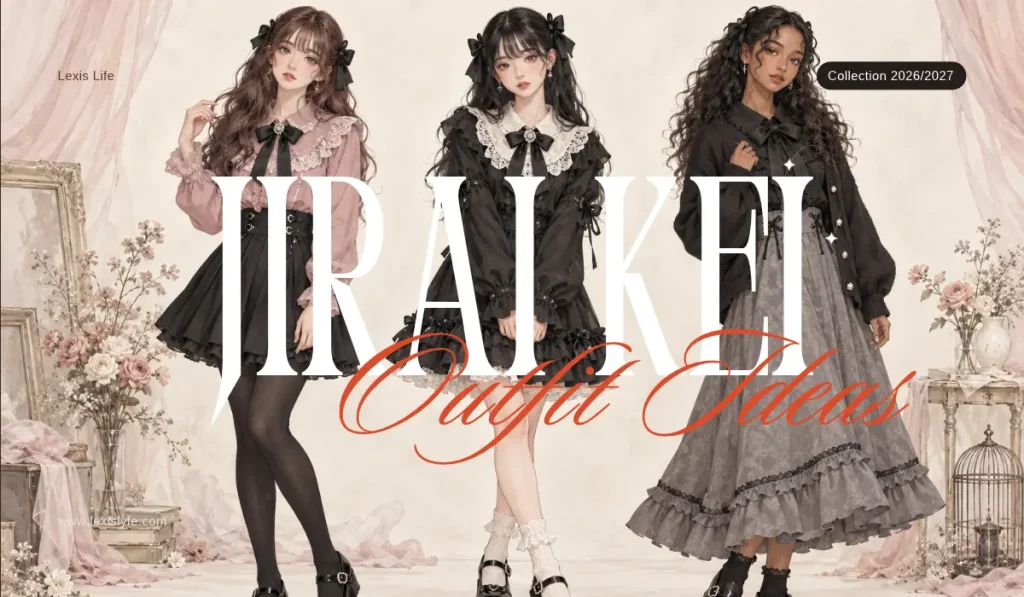
A recognizable dark girly outfit combines a decorative top or dress, a clear silhouette, coordinated legwear, and shoes with enough visual weight to balance the clothing. Lace, bows, ruffles, and heart-shaped hardware are useful signals. Black with muted pink, ivory, or white is an accessible starting palette, rather than an absolute requirement.
Think about the complete look before individual purchases. A blouse with a large bow may need a quieter skirt. An elaborate dress can work with simple socks and a plain bag. Repeated details help unrelated pieces look intentional.
Blouses, dresses, skirts, and coordinated sets
Start with the neckline. A contrasting collar, ribbon tie, lace panel, or ruffled edge creates a focal point near the face. Long sleeves can add cuff details, while a short-sleeved version leaves more room for bracelets or a cardigan.
For bottoms, a high-waisted A-line or pleated skirt gives the top a clear boundary. A ruffled skirt adds volume; a simpler skirt lets the blouse carry the decoration. Neither needs to match a specific body shape to work.
A listing called a set-up may contain a top and matching bottoms, but the wording alone doesn’t tell you what’s included. Check the description. A photographed bow, petticoat, necklace, or bag may be styling rather than part of the sale.
Piece | What to look for | Check before buying |
|---|---|---|
Ribbon blouse | Defined collar, lace, a removable or attached bow | Shoulder room, button strain, sleeve length |
A-line or pleated skirt | Clear waistband and a shape that works with the top | Seated comfort, lining, actual hem length |
Ruffled dress | A coherent neckline, waist, and hem | Torso length, fastening, room to move |
Matching set | Compatible fabric and trim across both pieces | Separate measurements for top and bottom |
Cardigan | Enough sleeve room over the blouse | Cuff friction, snagging, length over the skirt |
Longer skirt | A deliberate waistline and compatible texture | Walking stride, lining, shoe clearance |
Shoes, socks, and tights
Chunky Mary Janes, platform loafers, and substantial boots can anchor an ornate outfit. The useful idea is visual weight, not a required platform height. A low block heel or rounded flat with a strong buckle can support a similar balance when tall shoes don’t suit you.
Choose legwear with the shoe opening in mind. Lace ankle socks add a light border above a dark shoe. Opaque tights create a continuous line. Loose socks add volume and push the outfit toward a more relaxed interpretation.
Before committing to a pair, check:
- Whether the straps hold your foot without pinching.
- Whether your toes have enough space in the socks you plan to wear.
- Whether the sole bends appropriately for your walking needs.
- Whether the closure is manageable for you.
- Whether you can handle your usual stairs and walking route comfortably.
Try footwear indoors while a return remains possible. A photograph can’t tell you how heavy a shoe feels after an afternoon out.
Bags, ribbons, jewelry, and character accessories
A compact handbag, bow clip, ribbon, or choker can finish the outfit. Repeating the blouse’s hardware color is an easy way to connect the pieces. If the neckline already contains a large decorative bow, try earrings or hair accessories before adding another necklace.
Kuromi and My Melody appear in documented styling associated with the scene. The NUFS Times, published by Nagoya University of Foreign Studies, interviewed Spinns staff who discussed those characters alongside collars, socks, and chains.
A character item is optional. You don’t need a designer backpack, an expensive pendant, or a collection of mascots to make a considered outfit. Choose accessories you enjoy and can use beyond one photograph.
For a broader view of cute styling, explore Lexislyfe’s kawaii outfit ideas and styling guide.
Where did the fashion come from?
The fashion developed through overlapping Japanese girly clothing, online stereotypes, makeup trends, and youth communities, rather than one documented invention. Contemporary reporting shows landmine makeup gaining attention in 2020. Later reporting connects the scene with Kabukicho and social media, while participant accounts describe influences and communities that extend beyond one neighborhood.
This is a history with disputed emphasis. A precise founding date or a single inventor would suggest more certainty than the available evidence supports.
What the historical sources establish
Real Sound’s June 8, 2020 article discusses makeup videos, the earlier use of the label, and similarities with ryousangata. It establishes that these terms were already circulating in Japanese beauty coverage at that time. It doesn’t prove that one viral video created the entire scene.
The December 2022 NUFS newspaper includes reporting from Osu in Nagoya, interviews with wearers, and a visit to Spinns. Its fashion feature links the look with Kabukicho while showing how it appeared in another city’s shops and everyday life. That’s useful local reporting, rather than a nationwide census.
Read dates carefully. A reported accessory price, hashtag total, or student survey from 2022 describes that source’s moment and sample. It doesn’t establish today’s prices, current popularity, or what all Japanese people think.
Culture, fandom, and media references
Community accounts describe connections with idol fandom, music, character merchandise, and online outfit sharing. The term oshikatsu refers to activities supporting a favorite performer, character, or other focus of fandom. In a fashion context, that may influence accessories, colors, or what someone wears to an event.
The participant history guide discusses Ashita, Watashi wa Dareka no Kanojo and Needy Streamer Overload among media associated with community conversations. These references can help explain an image board, but a character’s actions aren’t instructions for a wearer. Nor is consuming particular media a condition for trying a lace blouse.
Treat fashion photographs, fiction, personal testimony, and researched reporting as different kinds of evidence. A mood board can show a palette; it can’t establish a social history by itself.
Understanding the stigma without repeating it
The label’s history includes sexist and stigmatizing ideas about emotional instability. Some participants reclaim it; others reject it or prefer a clothing description. The discussion about “jirai” and “jirai kei” shows how sharply interpretations can differ even within one forum.
Describe someone’s outfit without assigning them a diagnosis or a lifestyle. You don’t need to imitate distress, unhealthy behavior, or exploitation to appreciate fashion. Understanding context means respecting people, rather than turning difficulties into accessories.
How does it differ from related Japanese styles?
The most useful comparisons look at silhouette, styling, and cultural context together. Dark girly coordinates overlap with ryousangata through brands, ribbons, and decorative clothing. Lolita follows a different approach to skirt volume and coordination, while subcul looks can emphasize streetwear. These are working distinctions, and individual wardrobes can cross their boundaries.
Color alone won’t classify an outfit. Pink appears across several styles; black doesn’t automatically make something goth or landmine fashion.
Term | Useful starting distinction | What it doesn’t tell you |
|---|---|---|
Dark girly | Feminine clothing with darker color and decorative detail | The wearer’s identity or health |
Ryousangata in this context | Coordinated girly looks associated with fan culture | A fixed palette valid in every era |
Lolita | A coordinated fashion with deliberate skirt volume and established silhouette conventions | That every lace dress belongs to it |
Yami kawaii | Cute imagery combined with darker or illness-related themes | That every participant shares an experience |
Menhera | A context-sensitive term associated with mental health and community identity | A precise garment silhouette |
Subcul | Fashion discussions involving subculture influences, including streetwear | That all oversized clothing has one identity |
Coquette | A broader contemporary label emphasizing flirtatious or romantic styling | Japanese cultural origins or community membership |
Ryousangata and the limits of the pink-versus-black shortcut
The familiar shortcut places pastel girly clothing on one side and darker girly clothing on the other. That can help someone sort two reference images, but it misses changing usage, shared garments, and people who wear both.
The community megathread connects ryousangata with idol-fan circles and notes that the word’s referent has changed. Real Sound likewise describes earlier usage and its later association with fan styling. Use the distinction to understand context, rather than to police someone’s wardrobe.
Lolita and subcul silhouettes
Look at how the outfit distributes volume. A Lolita coordinate typically gives a supported skirt silhouette a central role. A dark girly blouse-and-skirt look can have a shorter or less voluminous outline, though hem length alone never settles the classification.
Subcul references may use oversized tops, layered sleeves, loose legwear, graphics, and heavier shoes. Community members can combine those elements with girly details. A change of silhouette doesn’t automatically mean someone has left a community.
Menhera, yami kawaii, and personal identity
These labels carry context beyond buying clothes. Avoid using menhera as a diagnosis, a substitute for “cute but sad,” or a category to assign to a stranger. A medical motif on a print also doesn’t explain what a wearer believes or experiences.
If your goal is describing an outfit, start with visible details: ribbon blouse, oversized graphic top, lace skirt, or dark girly styling. Specific descriptions are more useful than forcing every combination into a contested label.
How can a beginner build a small wardrobe?
Build a small wardrobe around one complete outfit, then add pieces that create genuinely different combinations. Start with a top or dress that establishes the look, choose compatible bottoms and comfortable shoes, and repeat one detail through accessories. Check fit before adding duplicates, and use existing clothes wherever they work.
A useful original styling check is to ask three questions: Does it establish the look? Does it combine with what I own? Can I wear it comfortably? An item that answers only the first question may become an expensive photograph rather than useful clothing.
Assemble an eight-piece starting capsule
Try the following as a planning exercise, adjusting for your existing wardrobe:
- A decorative blouse in a color you like near your face.
- A simpler second top that fits the same bottom.
- A black or otherwise compatible skirt or pair of shorts.
- A dress or second bottom that changes the silhouette.
- A cardigan with room for the blouse’s sleeves.
- Comfortable black shoes.
- A pair of socks or tights that works with those shoes.
- One bag with enough capacity for your actual essentials.
Treat ribbons and jewelry as optional finishing pieces. You may already have suitable ones. The point of a capsule is repeated use, rather than reaching a prescribed shopping total.
Before ordering a second statement blouse, write down three outfits it would create. If those outfits are effectively identical to combinations you already own, a practical layer or better-fitting bottom may be the more useful purchase.
Check your outfit before buying another accessory
Photograph the full outfit in ordinary light, including your actual coat and bag. Look first at the neckline, then the waist or main silhouette break, then the shoes. This sequence reveals mismatched proportions more clearly than examining each accessory separately.
Use a short checklist:
- A focal point near the face or neckline is visible.
- The top and bottom create an intentional silhouette.
- A color, texture, or hardware detail connects separate pieces.
- The shoes work with the legwear and planned walking.
- The bag and outer layer fit the outfit’s practical purpose.
If the outfit looks unresolved, change one thing at a time. Try a different sock length before buying new shoes, or remove a competing necklace before deciding the blouse doesn’t work.
What outfit ideas can you actually wear?
Wearable outfit ideas begin with recognizable details and adapt them to the setting. A ribbon blouse with a black skirt is an accessible starting point; a lace dress simplifies coordination. For walking, work, warm weather, or greater coverage, adjust fabric, hem length, and footwear while preserving a clear neckline and coordinated finish.
The following are styling suggestions, not claims that every variation has an agreed community name. Some are deliberately subtle adaptations of the recognizable dark girly look.
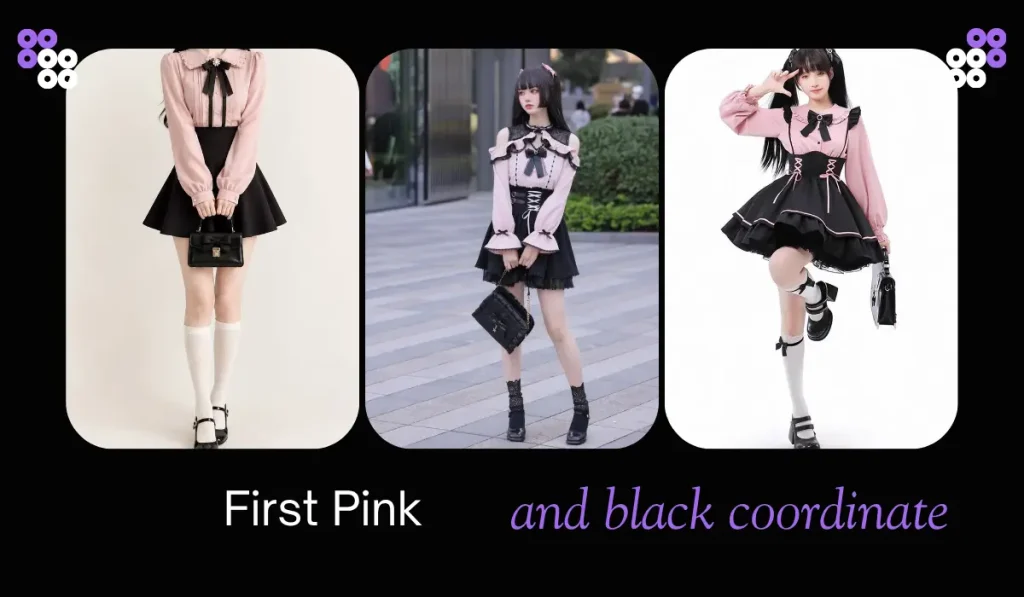
A first pink-and-black coordinate
Pair a dusty pink ribbon blouse with a black A-line skirt, black or white lace socks, and black Mary Janes. Choose a small black bag so the blouse remains the focal point. Repeat the blouse’s bow color in one hair accessory.
If the blouse has puff sleeves, try a skirt without several bulky tiers. That gives the sleeve shape room to show. Change the socks to tights when you want a more continuous line below the skirt.
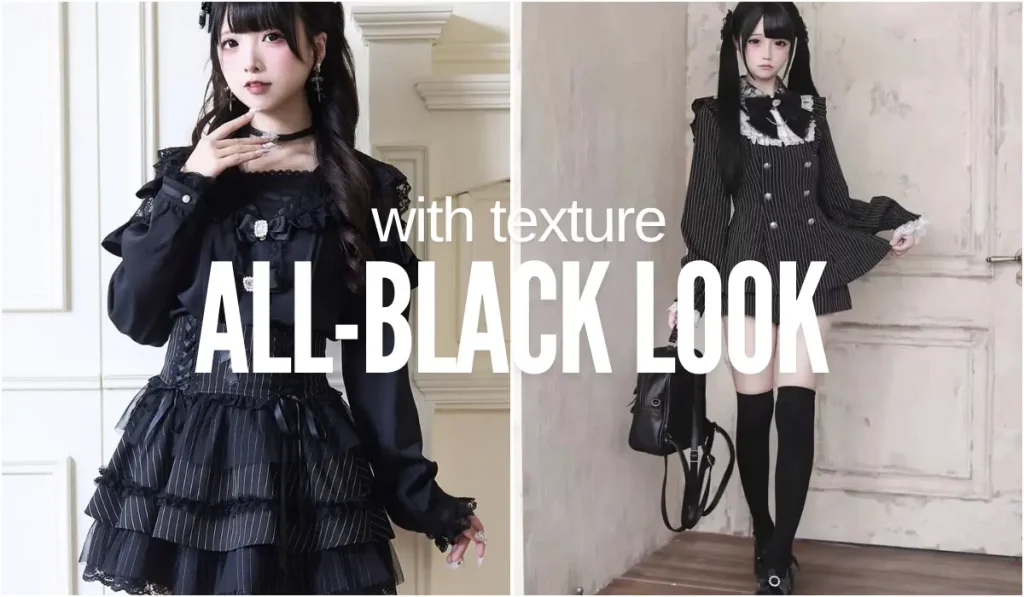
An all-black look with texture
Combine a black lace-trimmed blouse, black skirt, dark tights, and buckle shoes. Use differences in surface to keep the pieces legible: matte fabric beside lace, smooth shoes beside a textured bag, or a satin ribbon at the neckline.
Check the outfit in daylight. If every detail disappears, introduce a narrow ivory collar or silver hardware rather than adding another black accessory. The aim is visible structure, even within one color family.
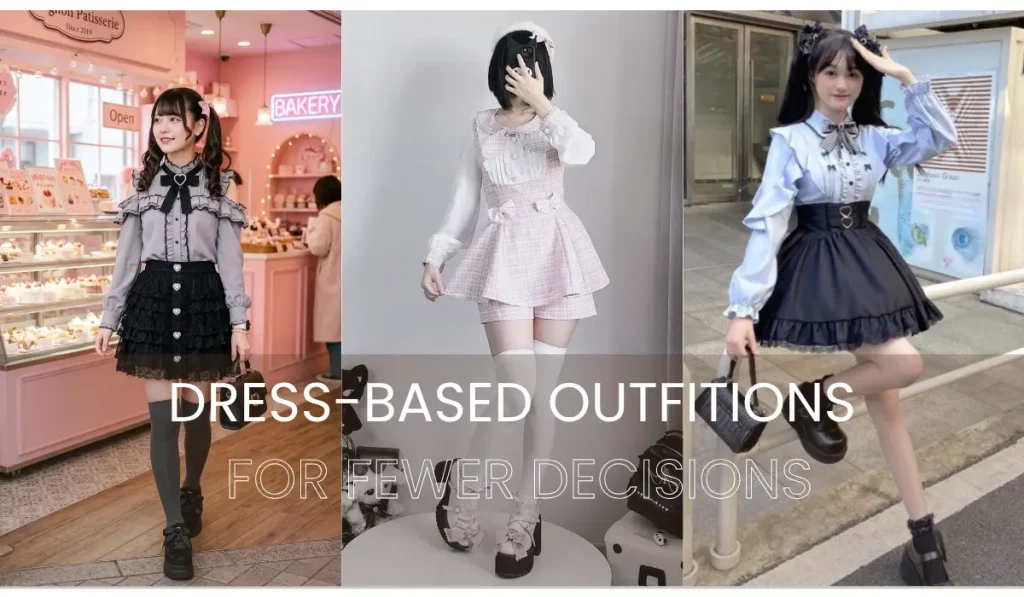
A dress-based outfit for fewer decisions
Choose a dress with a neckline and hem that already work together. Add simple legwear, comfortable shoes, and a bag in a repeated color. A single clip can finish the styling without competing with the dress.
Watch where the waist falls on your torso. A dress can technically close and still sit awkwardly because its bodice is too short or long. If that happens repeatedly, separates offer more control over the proportions.
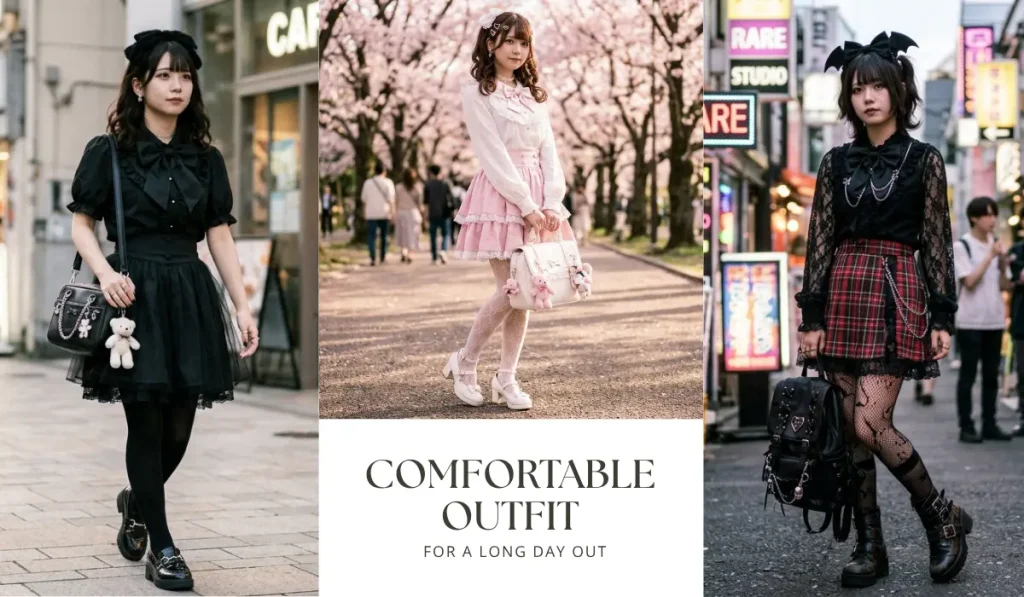
A comfortable outfit for a long day out
Wear a ribbon blouse with a lined skirt or shorts, tights if wanted, and low chunky shoes you’ve already tested. Use a shoulder bag or backpack that carries your phone, keys, wallet, and any daily supplies without straining its closure.
Keep dangling jewelry clear of bag straps. A detachable bow can make it easier to manage a coat or scarf during travel. Comfort is part of styling because the outfit needs to function while you move.
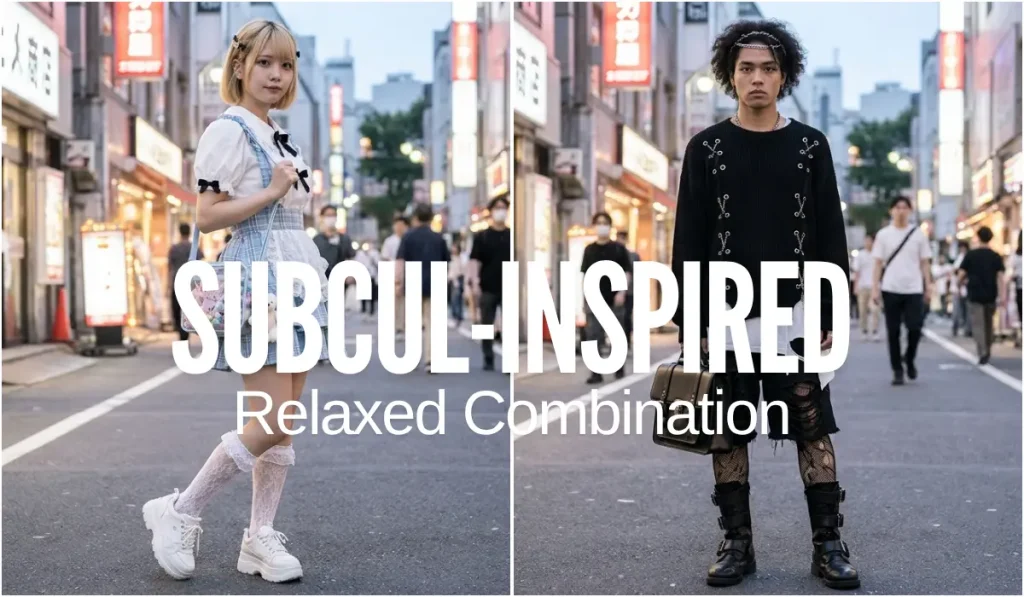
A relaxed subcul-inspired combination
Try an oversized dark graphic top with a clearly visible bottom, loose socks, and substantial shoes. Add one girly detail, such as a ribbon clip or small lace accent, rather than layering every recognizable motif together.
Pay attention to length. If the top hides the bottom entirely, decide whether that is the silhouette you want. A shorter layer or different hem can make the proportions feel more deliberate without changing the overall mood.
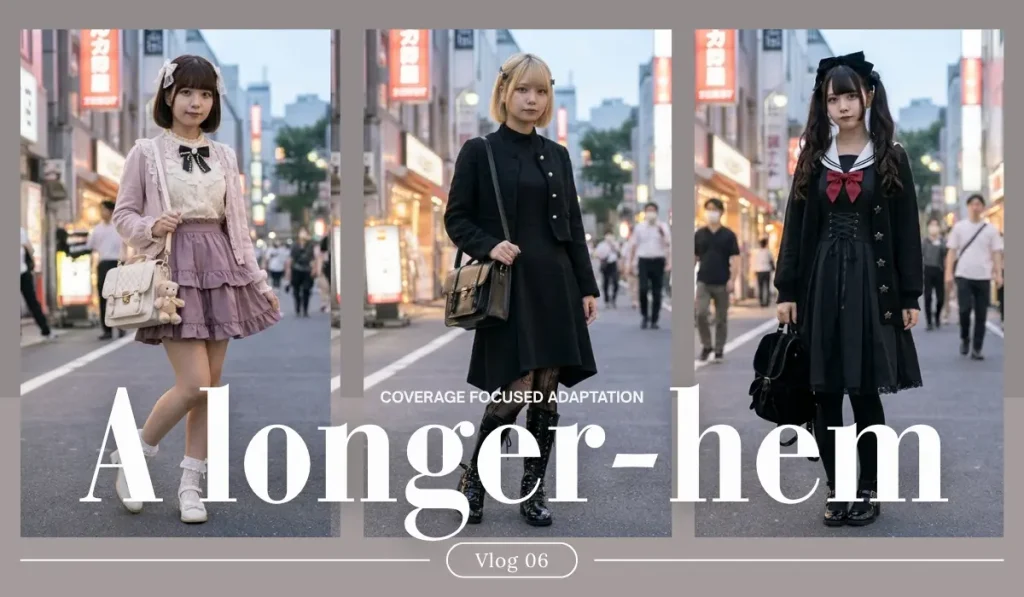
A longer-hem or coverage-focused adaptation
Wear an opaque bow blouse with a longer A-line skirt, tights or socks, and black buckle shoes. A neat cardigan can repeat the blouse’s darker details. The illustration above shows one example of a longer skirt working within this broader palette.
Describe this as a dark girly adaptation if that feels more accurate than claiming a specific substyle. Choose the coverage you want first, then coordinate the collar, texture, and footwear around it.
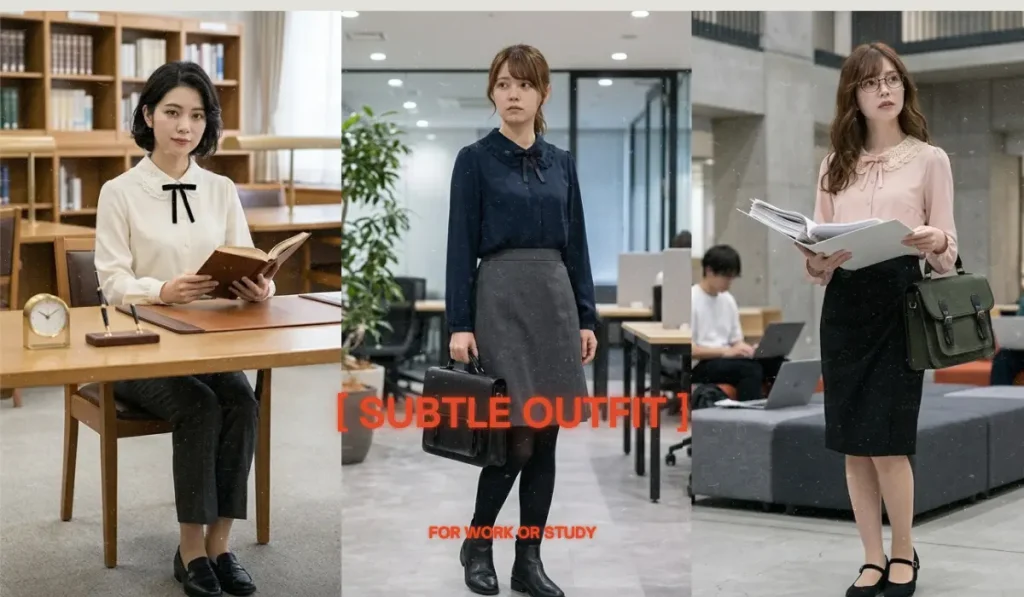
A subtle outfit for work or study
Pair a restrained ribbon blouse with a plain skirt or tailored trousers and comfortable closed shoes. Keep accessories compact and check the actual dress code. One lace collar can communicate your preference without requiring a full event outfit.
Avoid buying an entire second wardrobe for this purpose. A removable bow, plain cardigan, or less decorative shoe may let the same blouse serve several settings. The result is an adaptation, with expectations set by your workplace or institution.
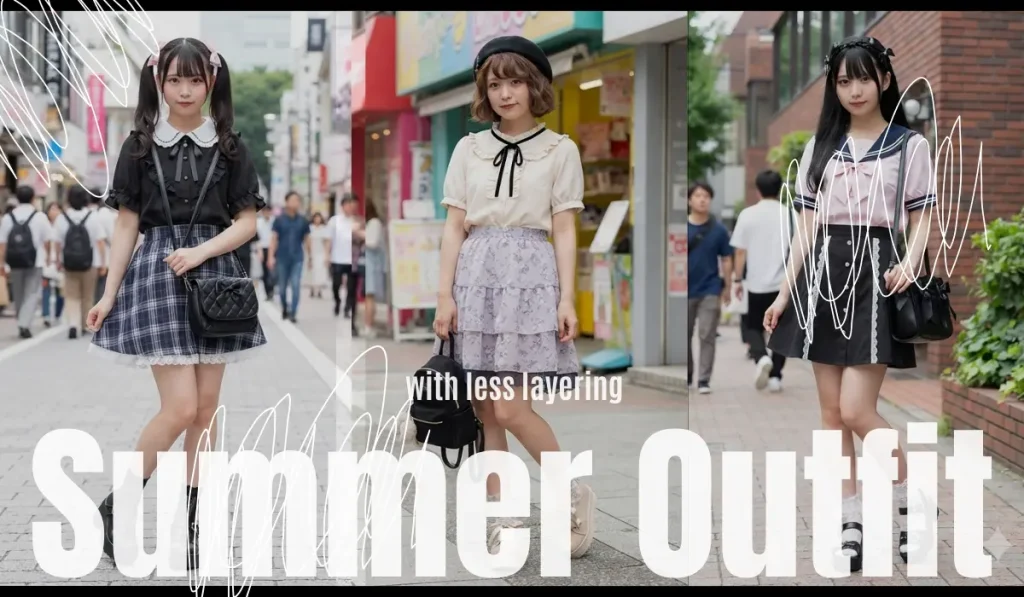
A summer outfit with less layering
Choose a short-sleeved blouse with an opaque body, a light skirt, lace socks, and shoes you can wear comfortably in warm weather. Check the fiber content and lining instead of assuming that a delicate-looking fabric will feel cool.
Use hair ribbons or a small bag charm for decoration when another clothing layer would be uncomfortable. If you prefer trousers or more coverage, prioritize a breathable fabric and a loose enough fit for your climate.
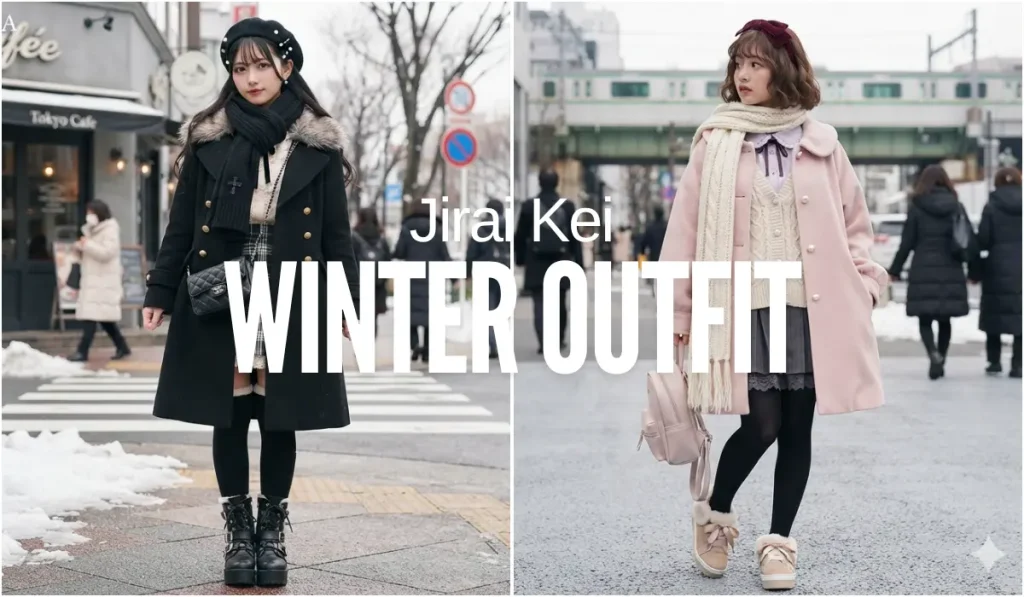
A winter outfit built from the outer layer
Start with the coat you’ll actually wear, then test the blouse, cardigan, and skirt beneath it. A fuller sleeve needs room through the coat’s upper arm. Tights, a scarf, and weather-appropriate footwear can connect the colors while keeping the outfit functional.
An ornate indoor coordinate won’t solve wet pavement or cold temperatures. For harsh conditions, wear suitable outdoor footwear and change indoors if practical. Treat this as a weather decision rather than a test of commitment to the style.
How do you approach the makeup and hair?
Jirai kei makeup is associated with an emphasized lower eye area, rose or red tones, rounded highlights, and eyeliner that can create a downturned impression. Interpret that effect with products suited to your face and skin tone. Contact lenses, a lighter foundation, straight bangs, and twin tails are options rather than requirements.
The aim here is a stylized makeup effect. You don’t need to change your natural complexion or make yourself look unwell to build a coherent outfit.
A beginner makeup sequence
Start with a familiar base and add the eye details gradually. Test the look in ordinary light before deciding that it needs more pigment.
- Apply your usual moisturizer and a base that matches your skin if you want coverage.
- Blend a small amount of rose, pink, or berry shadow on the lid and below the lower lashes.
- Add a soft highlight to the natural under-eye fullness, without drawing a harsh pale stripe.
- Extend liner slightly outward or downward to suit your eye shape.
- Add mascara or optional lashes that remain comfortable with your glasses and blinking.
- Finish with a lip shade that repeats the eye color at an intensity you enjoy.
Treat namidabukuro, the under-eye fullness discussed in tutorials, as a placement reference rather than a shape you must draw identically to someone else. The right highlight and shadow placement depends on your face.
Keep the first version simple. A two-color eye look is easier to assess than a full tutorial with new lashes, lenses, contour, and several glitter products at once. Change one technique after you’ve seen how the earlier step looks.
Adapt the colors to your complexion
Dusty pink can look soft on one complexion and gray on another. Try rose, mauve, berry, plum, or a warmer red that remains visible against your skin. Matching the overall mood matters more than matching another person’s foundation shade.
For a lighter everyday version, use a sheer layer of color and a small outer-corner liner extension. For an event look, build saturation gradually. Neither version needs to imitate a filter or an edited photograph.
Circle lenses are optional
Decorative contact lenses are optional, and their fit is a health decision. The US Food and Drug Administration says decorative lenses require a prescription in the United States, including lenses that don’t correct vision. Consult an eye-care professional rather than selecting a diameter solely for its appearance.
Readers in Canada and the UK should seek local professional advice about suitable lenses and purchasing requirements. Makeup, lashes, and glasses can all be part of the finished look without contacts.
Hair options beyond one reference photo
Twin tails, half-up styling, ribbons, and blunt bangs appear in reference looks. They aren’t the only ways to frame the face. A bob, curls, braids, locs, short hair, or a covered hairstyle can work with a repeated ribbon color or a carefully placed accessory.
Choose clips that hold without pulling, and keep decorative pieces compatible with headphones, glasses, or your head covering. The participant history guide specifically challenges the idea that only one hair color or cut is acceptable. You can research established looks without treating your own hair as a problem to solve.
Where can you buy the clothes?
You can research jirai kei clothes through official Japanese brand stores, established retailers, and secondhand listings. Start with a specific garment and its measurements, then compare ordering routes and total delivered cost. A familiar aesthetic label doesn’t verify a seller, prove a product’s brand, or guarantee that international shipping is available.
Brand names are research leads, not a required shopping list. Check each current product and checkout rather than assuming that every item from a popular label belongs to the same style.
Official brands and stores to research
Dreamvs has an official landmine-style collection, giving readers a useful first-party reference for current retail use of the term. Its DearMyLove brand page describes varied garment and shoe sizing; availability still depends on the individual product.
Research lead | What you can verify | What to check yourself |
|---|---|---|
DearMyLove through Dreamvs | Official brand and category pages | Item measurements, chosen variant, destination support |
LIZ LISA through Tokyo Kawaii Life | The store identifies itself as directly managed by LIZ LISA | Product contents, fit, shipping notice, stock |
Ank Rouge, MA*RS, ROJITA, BUBBLES | Names appearing in community-maintained fashion references | Current official seller, specific item, sizing, checkout terms |
Local alternative-fashion retailers | A possible way to inspect stock or simplify returns | Whether the item is branded, independently designed, or broadly inspired |
Secondhand marketplaces | Access to earlier releases and used pieces | Actual-item photos, measurements, condition, buyer protection |
Tokyo Kawaii Life’s own information page confirms its relationship to LIZ LISA. Its US shipping notice, checked October 22, 2026, specifies DHL for US orders. Treat that as a store-specific policy and recheck before paying.
Direct shipping, a proxy, or secondhand?
Direct shipping lets you purchase from a store that accepts your address. A proxy service purchases on your behalf and handles onward shipment. A forwarding service generally provides a receiving address for an order you place yourself; the available services and responsibilities differ.
Compare the routes before buying:
| Route | Useful when | Questions to answer |
|---|---|---|
| Direct from the brand | Your destination is supported | Who handles returns, and what will delivery cost? |
| Proxy purchase | A store or marketplace needs an intermediary | What are the purchasing, payment, storage, and packing terms? |
| Parcel forwarding | You can place the order but need onward delivery | Can you complete checkout, and what happens if the order is wrong? |
| Domestic secondhand | You want an item already in your country | Are the photos current, and what condition is documented? |
| Local retailer | You value nearby returns or in-person inspection | What is included, and how does the final price compare? |
Community lists are useful starting points, but an old recommendation doesn’t confirm a service’s current operation. Review the provider’s own terms before treating a forum post as purchase advice.
Search more precisely
Use the Japanese category alongside garment and brand terms. Copyable starting points include 地雷系 for the category, ブラウス for blouse, スカート for skirt, and ワンピース for dress. Add a brand name if you want that brand rather than a broadly similar item.
An efficient search sequence is:
- Save a reference and identify the garment you actually need.
- Search the category plus that garment type.
- Narrow by the brand if brand identity matters to you.
- Open the listing and inspect measurements, condition, and contents.
- Compare the full delivered cost with another purchase route.
Search-result wording is not authentication. “Inspired,” a keyword-heavy title, or a familiar-looking stock photo doesn’t establish the manufacturer’s identity.
How do you check sizing and the full cost?
Check the listed garment measurements against a similar item you already wear comfortably, then calculate the full amount needed to receive the order. Size letters and “free size” are insufficient on their own. For international purchases, item price, fees, delivery, currency conversion, and applicable import charges can all affect the decision.
Compare garment measurements, not just size letters. This is especially useful for fitted shoulders, woven blouses, short bodices, and waistbands with limited adjustment.
Measure a comfortable garment first
Lay a comparable garment flat and measure it consistently with the seller’s chart. Record the units and distinguish a flat width from a circumference. A 48 cm flat chest measurement is approximately 96 cm around, assuming the listing really uses flat width and the garment’s shape permits that interpretation.
That is a calculation example, not a universal size recommendation. Don’t double a number already labeled bust circumference. Check diagrams or ask the seller when the measurement method is unclear.
| Measurement | Why it matters | Comparison to make |
|---|---|---|
| Shoulder width | Restricts arm movement if too narrow | A comfortable blouse with similar sleeve construction |
| Chest or bust | Affects button strain and movement | Garment measurement plus your preferred wearing room |
| Waist range | Shows adjustment limits | Relaxed and stretched values, if both are provided |
| Bodice length | Determines where the waist falls | Your preferred shoulder-to-waist placement |
| Total length | Affects coverage | A garment you like while standing and sitting |
| Sleeve length | Affects cuffs and layering | The same sleeve-measurement method |
| Shoe length and width | Both influence fit | Brand guidance and your foot measurements |
Look for separate measurements for each piece in a set. A top may fit while the included skirt doesn’t. “Elastic waist” also doesn’t guarantee an easy fit through the hips, especially if the opening or lining has less stretch.
Fit adjustments for different bodies and mobility needs
Tall wearers may need more bodice, sleeve, or skirt length even when the circumference works. Petite wearers may find that a waistband or collar sits too low. Plus-size shoppers should compare actual charts and usable adjustment ranges instead of assuming every release from a label has the same fit.
For seated wear, check how bows, seams, fastenings, and skirt layers feel against your chair. Test a crossbody strap’s position and make sure sleeves stay clear of wheels or mobility equipment. Easy closures and stable shoes may matter more than matching a reference exactly.
An independent maker or alteration service may help with a specific fit problem, but ask what can realistically be changed. Adding length to a finished garment is different from shortening it. Lace placement and construction can limit either job.
Calculate the amount you’ll actually pay
Use this planning formula: item price + domestic delivery + service and payment fees + international delivery + applicable import charges. Include only charges that apply to your route, and avoid counting prepaid taxes twice.
For example, an imaginary order might total 60 in your chosen currency for clothing, 8 in service fees, 5 in domestic delivery, and 22 in international delivery. The subtotal is 95 before any applicable import charges. These numbers demonstrate the calculation; they are not current shop quotes or exchange rates.
Before payment, record:
- The currency shown at checkout.
- Whether the payment provider adds a conversion charge.
- Which delivery charges are already included.
- Whether duties or taxes are prepaid or may be collected later.
- The return destination and who pays return delivery.
- The policy if a parcel is refused or cannot be delivered.
For a low-cost accessory, a domestic seller may be the better overall purchase once shipping is included. For several items, compare separate shipping with consolidation using an actual quote. A larger combined parcel isn’t automatically cheaper.
Check secondhand condition and authenticity claims
Ask for clear pictures of the actual item, including its label, fastenings, trim, lining, and any damaged area. Compare those with the listing description. If a seller claims a specific brand, product identification needs more evidence than a copied promotional image. Missing accessoriesCheck for detachable bows, brooches, belts, collars, or straps shown in stock photography. Surface wearAsk about pilling, loose lace, snags, discoloration, and stretched elastic. Footwear conditionInspect the soles, straps, closures, and lining rather than relying on an overhead photograph. Return limitationsRead the platform and seller terms before treating a purchase as easy to reverse.
Keep the transaction within the platform’s supported payment route when buyer protection matters. If the seller can’t clarify an essential measurement or missing component, keep looking.
How should you care for detailed clothing?
Care for detailed clothing according to its own label, paying attention to lace, ribbon, hardware, and detachable pieces. Store garments so decorations don’t catch, keep outfit components together, and inspect fastenings before wearing. The right method depends on construction and materials; a shared fashion category doesn’t create one safe washing instruction.
Photograph a detachable bow’s placement before removing it. Keep small parts in a labeled pouch, and avoid hanging heavy accessories from delicate lace. Store necklaces separately so they don’t tangle with trims.
Before washing or cleaning, check:
- The care label and any seller-provided instructions.
- Whether decorative components detach.
- Whether hardware could catch on other garments.
- Whether the lining and outer fabric require different attention.
- Whether a repair is needed before further wear.
Don’t assume every ribbon can tolerate heat or every dark fabric is colorfast. If instructions are missing, ask the manufacturer or a suitable garment-care professional. A cautious inspection is more useful than a universal “hand wash everything” rule.
Keep a short wardrobe note with measurements, care instructions, and which pieces combine well. That makes secondhand comparisons easier and helps you avoid buying a near-duplicate that doesn’t solve a real need.
What mistakes should beginners avoid?
Common mistakes include buying from a photo without checking fit, treating stereotypes as membership rules, and confusing shared decorations with identical fashion categories. An outfit can also become hard to wear when accessories, shoes, and outer layers are chosen separately. Start with a complete practical combination, then refine its details.
Buying accessories before a usable base. A bag full of ribbons won’t solve a blouse that doesn’t fit. Establish the main garments first, then choose the finishes that connect them.
Treating the palette as a rigid test. Black and muted pink are recognizable references, but community accounts describe more varied colors and silhouettes. Learn the context of a look before deciding that one changed color makes it invalid.
Assuming every similar dress is Lolita. Lace, bows, and feminine styling appear in several fashions. Look at silhouette, construction, and coordination rather than a single decoration.
Making pale skin a requirement. Historical looks may emphasize a pale makeup effect, but that is not a reason to prescribe a different complexion. Adapt the contrast and color placement to your face.
Buying “free size” without measurements. The phrase names a retail sizing choice; it doesn’t promise universal fit. The garment’s dimensions and stretch matter more.
Ignoring the coat and shoes. The clothes need to work with weather, walking, and carrying essentials. Test the complete outfit before an event rather than discovering those problems on the way there.
Presenting a disputed identity rule as settled fact. A forum post can explain one community’s usage without settling the word’s meaning everywhere. Listen to the space you’re in, avoid labeling other people, and describe visible clothing precisely.
Frequently asked questions
The most common beginner questions concern identity, required garments, makeup, and access outside Japan. There isn’t one authority that sets every community’s rules. These answers distinguish practical styling choices from disputed terminology, so you can research the culture while making sensible decisions about the clothes, fit, and level of participation you want.
Conclusion
Build your first outfit around a garment that fits, a clear silhouette, and a few connected details. Learn what the name means, recognize the variety within the scene, and compare complete purchase costs before ordering. The most useful wardrobe is one you understand, enjoy, and can actually wear in your daily life.
Try one blouse-and-bottom combination or one dress before buying several statement pieces. Photograph it with your real shoes, bag, and outer layer. Let the next purchase solve a visible styling or fit problem, and leave stereotypes out of how you describe yourself and other wearers.