
How to Earn $100 a Day Online: Methods and Apps With No Upfront Investment
You can earn $100 a day online by selling a useful service, teaching a skill, or combining paid work with occasional research opportunities. No legitimate app can guarantee every beginner $100 daily without skills, available work, or effort.
Searching for “earn money online $100 a day” brings up everything from freelance marketplaces to game rewards. The useful question is how much you keep, how long the work takes, and when the money reaches your account. A $100 order, a $100 gift card, and $100 available to withdraw are different results.
This guide compares service work, tutoring, user testing, research, digital products, and longer-term content businesses for readers in the United States and Canada. You’ll see sample earnings calculations, platform fees, payout delays, common traps, and a 30-day starting plan. The aim is to help you choose work you can repeat, using equipment and internet access you already have.
Platform terms checked October 17, 2026. Unless marked otherwise, dollar examples use USD. Sample prices and workloads are planning examples, not average earnings or promised results.
Can You Really Make $100 a Day Online Without Investing Money?
Yes, reaching $100 in online earnings is possible without buying inventory, ads, or a course. Your strongest starting point is a service you can deliver with existing tools. Consistent results depend on finding enough paid work and keeping a worthwhile amount after fees, preparation, revisions, and other expenses.
The first decision is what “$100 a day” means for you:
| Goal | What it requires |
|---|---|
| One $100 day | One successful day, project, or sale |
| $100 per working day | $500 over five working days |
| $100 per calendar day | $700 per week, including days off |
| $100 deposited today | Money that has already cleared withdrawal rules |
| $100 after income tax | More pretax profit, depending on your circumstances |
At $100 per working day, a 20-day working month produces $2,000. Averaging $100 across a 30-day month requires $3,000. These are arithmetic examples, so define your target before comparing methods.
Calculate What You Keep, Not Just What You Charge
Suppose a client orders $100 of work on Fiverr. Under its published 80% freelancer share, the order leaves $80 before withdrawal costs, other expenses, and tax. To retain $100 after that platform deduction alone, you would need $125 in orders.
Here is a general planning formula:
Required sales = (target pretax profit + fixed costs) ÷ (1 − percentage fees).
With a hypothetical 10% fee and $5 of other costs, a $100 pretax profit target requires about $116.67 in sales. Use your actual fee schedule, since fixed charges, refunds, and currency conversion can change the result.
A freelance pricing calculation should also include unpaid work. If a $120 project leaves $108 after a hypothetical fee, and takes three production hours plus two hours of messages, revisions, and outreach, your effective rate is $21.60 per hour.
Check Whether the Work Exists Often Enough
An advertised $100 research reward only helps if you qualify, get selected, finish the work, and receive the stated payment. Seeing three studies on a dashboard does not mean you have three bookings.
Use four checks before choosing a method: Can you access the work? What will you retain? How much total time will it take? When can you withdraw?
This is a practical way to compare options without relying on headline rates. A smaller project with a repeat customer can be more useful than a large opportunity you rarely qualify for.
Which Online Methods Offer a Practical Path to $100?
Service work and tutoring offer the clearest way to connect a price with a defined amount of paid work. Research and testing can supplement that income, while digital products and content require buyers or an audience. Compare the workload and demand behind each method before choosing your starting point.
The figures below are illustrative offers you might test. They are not verified market averages, and platform fees still need to be deducted.
| Method | Illustrative route to $100 gross | What you need | Main obstacle |
|---|---|---|---|
| Writing or editing | Two $50 assignments | Clear writing and a relevant sample | Finding clients and controlling revisions |
| Graphic design | Two $50 design packages | Design judgment and licensed assets | Standing out with useful work |
| Short video editing | One $100 project | Editing skill and capable equipment | Processing time and client feedback |
| Virtual assistance | Four paid hours at $25 | Organization and reliable communication | Securing enough billable hours |
| Social media support | A $500 package delivered over five workdays | Planning, captions, and reporting | Keeping the package profitable |
| Website fixes | One $100 defined repair | Technical skill and safe access | Diagnosis and unexpected complexity |
| Online tutoring | Four $25 paid lessons | Subject knowledge and teaching ability | Bookings, preparation, and commission |
| Remote customer support | Enough paid hours at the offered wage | Employer approval and a suitable workspace | Hiring and schedule requirements |
| Transcription or captioning | Enough accepted work at the stated rate | Listening accuracy and typing skill | Low effective pay on difficult audio |
| User testing | Qualifying tests whose rewards total $100 | Clear spoken feedback and suitable devices | Irregular matching and screening |
| Research interviews | A qualifying study with a $100 incentive | A matching participant profile | Selection and reward type |
| Digital downloads | Ten $10 sales before fees | An original useful product | Traffic, conversion, and support |
For a beginner with a laptop, start with a service narrow enough to explain in one sentence. For someone with teaching experience, recurring lessons may be a better fit. If you already create helpful resources for an audience, test a small digital product.
Phone-only readers have fewer practical options for sustained production work. Some research, testing, and simple content tasks work on mobile, but a phone does not remove the need for customers or available assignments.
Choose one main method and one optional supplement. Building three samples and contacting suitable buyers gives you more useful feedback than opening accounts on 20 unrelated apps.
How Do You Start Freelancing With Tools You Already Have?
Start freelancing by offering one specific outcome to one type of buyer, then prove you can deliver it with a small sample. Use existing software, define the price and revision limit, and seek a paid pilot. Expand only after you understand delivery time and customer demand.
A useful beginner offer answers five questions: Who is it for? What will you deliver? What inputs do you need? When will it arrive? What changes are included?
For example: “I’ll turn your supplied webinar into three captioned clips, each under 60 seconds, with one revision round.” That is easier to assess than “I do video editing.”
Writing and Editing
Choose work you can judge for accuracy and usefulness. Product descriptions, newsletter editing, website copy cleanup, and article updates are possible starting points.
Prepare a short sample for a fictional business or use material you have permission to edit. Show the original problem, your improvement, and the reason behind it. A sample that fixes confusing delivery information can demonstrate more value than a page full of broad claims about your writing.
For an illustrative $50 editing pilot, define the maximum length, the type of edits, and the delivery format. Research, rewriting, fact checking, and adding new sections are different tasks. Price them deliberately.
Proofreading and editing services also need boundaries around subject expertise. Avoid presenting yourself as a medical, legal, or financial reviewer if you do not have the qualifications for that work.
AI tools can help organize a draft, but you remain responsible for facts, originality, tone, and the client’s instructions. Do not upload confidential client material to an outside tool without permission.
Graphic Design and Presentation Cleanup
Sell something a business can use immediately, such as a menu update, a presentation cleanup, or a set of consistent social graphics.
Build samples around one buyer type. A cafe might need a readable menu, an opening-hours graphic, and a seasonal promotion. Showing those three items together demonstrates that you understand how the business communicates.
An illustrative package might include five graphics at an agreed size, using text and branding supplied by the client. State whether the price includes editable files, stock assets, and one revision round.
Check the licenses for fonts, photos, icons, and templates. Access to a design tool does not automatically give you permission to redistribute every asset inside a product or client file.
Before delivery, inspect spelling, contrast, cropping, and export quality. These checks are part of the service, even if the tool made the first draft quickly.
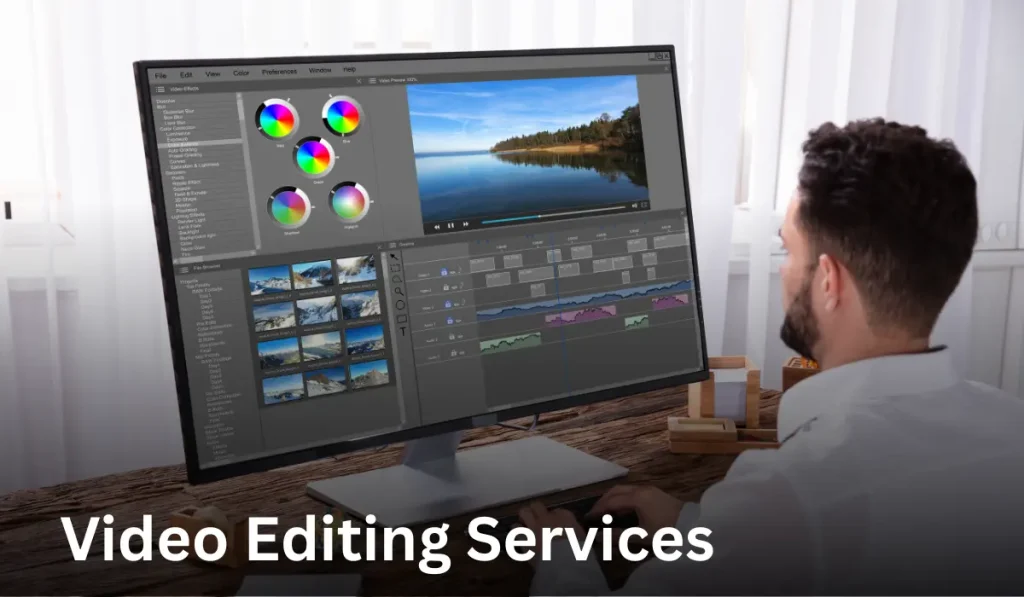
Short Video Editing and Content Repurposing
Begin with supplied footage. Recording original material, finding clips, writing scripts, adding animation, and editing a finished video require different amounts of work.
Offer a small format you can repeat: a captioned interview clip, a product demonstration edit, or a short tutorial. Specify the amount of source footage and the final running time.
For a hypothetical $100 order, estimate every stage: download, footage review, edit, captions, export, upload, and feedback. If those stages take six hours, the price may be too low for your target.
Test your current device before accepting a deadline. A tool may be free while storage, export speed, or your internet connection limits what you can deliver.
Include a clean sample with accurate captions and clear audio. Avoid using music, celebrity footage, or brand assets without the rights needed for the project.
Virtual Assistance and Ecommerce Admin
Virtual assistant work can include organizing files, updating spreadsheets, maintaining calendars, preparing documents, or uploading product information.
Pick tasks you can complete accurately with a checklist. “I’ll clean and format your supplied product spreadsheet” is easier to scope than “I’ll manage your business.”
For an illustrative four-hour block at $25 per hour, confirm which tasks take priority and how the client will approve the work. Keep a task log so both sides can see what was completed.
Accuracy matters more than speed when changing customer information, prices, or orders. Ask for the least account access needed and use the client’s approved sharing process.
Avoid taking responsibility for regulated bookkeeping, tax filings, or other specialist work unless you are qualified. General admin support can still be valuable without stretching your experience.
Social Media and Community Support
A manageable service might combine a short content calendar, captions, scheduling, and a simple performance report. Community support can add approved replies, moderation, or organizing recurring questions.
Define the number of posts, channels, approval rounds, and response hours. Continuous inbox monitoring is a separate commitment from preparing a week’s content.
If you propose a $500 monthly package, estimate the total monthly workload. A package requiring 10 hours has very different economics from one requiring 30.
Tie your work to something the client can assess, such as consistent publishing, faster approved responses, or a clearer record of common questions. Avoid promising a fixed number of leads or sales without evidence.
Recurring work can make income easier to plan, but only when the scope fits your capacity. A retainer is a delivery obligation, not money for unlimited availability.
Website Fixes and No-Code Help
Offer technical work only when you can diagnose the problem and reverse your changes safely. Form testing, broken layouts, product updates, and small page improvements can be suitable defined projects.
Agree on the exact issue before quoting. A button that appears broken may involve a plugin, hosting problem, payment service, or third-party account.
Use a backup or staging environment when appropriate. Record what changed, verify the result, and give the client a short handover.
For an illustrative $100 repair, explain what happens if the diagnosis reveals a larger issue. Stop and agree on additional scope before spending hours on work outside the original price.
No-code tools can support useful services, such as organizing a form and its responses. They still require testing, access control, and an understanding of what the client needs.
Find Clients Without Buying Ads
Start with people and businesses you can understand. Existing contacts, referrals, professional communities, and direct inquiries can help you test an offer without a paid campaign.
Look for a specific, visible problem. Share one relevant sample and propose a small paid task. Keep outreach personal and follow the site’s messaging rules and applicable requirements.
An initial message could say: “I noticed your tutorial has useful material that could work as short clips. I can edit three clips from your supplied recording, with captions and one revision round. Here is a sample of that format.”
Avoid completing an entire custom project as an unpaid audition. A short existing sample and a clearly priced pilot give the buyer evidence while protecting your time.
After delivery, ask whether the same task comes up regularly. Repeat work grows from a solved problem and reliable delivery.
What Should You Know About Freelance and Tutoring Platforms?
Freelance and tutoring platforms can introduce you to customers, but their charges and payment rules affect the amount you keep. Compare the actual contract, application costs, commission, and withdrawal process. A free account can still lead to expenses, and joining does not guarantee a booking or an order.
| Platform or route | Published rule checked in 2026 | Practical implication |
|---|---|---|
| Fiverr | Freelancers receive 80%; standard clearing is 14 days after completion, with exceptions | Price above your desired retained amount |
| Upwork | Freelancer service fees range from 0% to 15% per contract | Use the fee shown for the specific proposal or offer |
| Upwork proposals | Connects cost $0.15 each; free awards vary | Applying can require an upfront budget |
| Preply | Trial-lesson commission is 100%; later lessons carry 18%–33% commission | Trial bookings do not produce tutor earnings |
| Direct clients | Payment terms depend on your agreement and provider | Write down scope, payment stages, and due dates |
Use Fiverr for a Clearly Defined Service
Your listing should explain the buyer’s result, required inputs, delivery time, and limits. Use relevant samples and accurate descriptions.
Optional advertising and paid programs are separate decisions. Buying promotion before you know whether your offer converts can add costs without solving weak positioning.
Track the whole order cycle. Work completed today may still need customer acceptance, clearance, and withdrawal processing before it becomes spendable money.
Treat Upwork Applications as a Cost to Control
Upwork’s published service fee varies by contract. Do not calculate every job using an assumed universal 10% deduction.
Connects are another consideration. The official help page lists them at $0.15 each and explains that free awards depend on eligibility or offers. A zero-budget applicant should check their available balance before planning a proposal campaign.
If your account has no suitable free route, continue testing direct outreach or another channel. Spending money on applications is an option to evaluate after you have evidence that your samples and offer attract interest.
Keep marketplace-sourced contracts within the platform’s applicable rules. Do not move payments elsewhere to bypass fees or protections.
Understand Preply’s Trial-Lesson Economics
Preply says it is free to create a tutor profile, but it takes a 100% commission on each trial lesson with a new student. Commission on subsequent lessons ranges from 18% to 33%, depending on completed teaching hours.
At an illustrative $25 rate and 33% commission, a non-trial lesson leaves $16.75 before other costs and tax. Six such lessons leave $100.50. Preparation and trial lessons add work without increasing that calculation’s paid-lesson total.
Tutoring can make sense when you teach a subject well and retain regular students. Choose a narrow learning goal, prepare a useful lesson structure, and account for cancellations and unpaid preparation.
Direct tutoring has different economics, but you must arrange your own customer acquisition, scheduling, payment collection, and suitable safeguards.
Which Apps Can Help You Work Toward $100 a Day?
Apps that connect you with paid assignments can support a $100 goal, but available work matters more than the app’s name. UserTesting, Prolific, and User Interviews provide different kinds of opportunities. Check eligibility, selection, reward type, and payout timing before counting any opportunity toward daily cash income.
If you are searching for apps that pay $100 a day without investment, distinguish a platform that hosts paid work from one that promises a fixed daily return.
| Platform | Work or activity | Can you plan on $100 daily? | Payment detail to check |
|---|---|---|---|
| UserTesting | Recorded feedback and other qualifying tests | No guaranteed test volume | Displayed reward; payments usually sent 14 days later |
| Prolific | Research studies you qualify for | No guaranteed study hours | Approved balance, currency, and PayPal cash-out |
| User Interviews | Selected interviews and research sessions | Selection is irregular | Cash, gift card, prepaid reward, or another stated incentive |
| Fiverr | Services purchased by clients | Depends on orders and pricing | Platform share and clearing period |
| Upwork | Client contracts | Depends on hiring and paid hours | Contract fee, application costs, and release rules |
| Preply | Lessons booked by students | Depends on bookings and commission | Trial treatment and non-trial earnings |
UserTesting: Paid Feedback With Variable Availability
UserTesting’s contributor FAQ says payment varies by test type, duration, and demand. The dashboard shows the reward for an opportunity. Completed tests are usually paid 14 days later, and applicants need approval of a practice test.
Follow instructions and explain what you think as you use the product. Useful feedback describes what you expected, what happened, and where you became confused.
Do not assume that a displayed high-paying session will be available every day. Qualification and selection come before earnings. Keep screening and waiting time in your own records.
Before a screen recording, close personal tabs and notifications. Use only the data and accounts requested by the test instructions, and protect information unrelated to the study.
Prolific: Research Pay Is Not a Guaranteed Work Schedule
Prolific lists a minimum study payment rate of $8 or £6 per hour and recommends $12 or £9. Its participant guide also describes a waitlist and a cash-out threshold of $6 or £6 in a given currency.
Those hourly figures apply to study work. They do not promise a paid eight-hour shift. At $12 per paid study hour, reaching $100 would require about 8.33 paid hours, and there may not be that much qualifying work.
Prolific’s current eligibility guidance includes both the US and Canada. Country support does not ensure immediate admission or a particular volume of studies.
Keep your profile truthful and current. Do not change your location or identity to qualify for work.
User Interviews: Read the Incentive Before Applying
User Interviews says researchers may distribute incentives directly or have the platform distribute a choice of digital gift cards. Researcher-paid incentives can take several forms, and the study details identify the reward before you apply.
A $100 gift card can help with an eligible purchase, but it is not $100 deposited into your bank account. Record cash and restricted rewards separately.
Selection may depend on your job, purchasing history, software use, or another specific characteristic. Apply only when you honestly match the requirements.
The same guidance allows researchers up to 10 business days to release standard incentives, with some longer timelines disclosed in study details. Check the stated terms before treating a session as a solution to an urgent bill.
Use Research as a Supplement With a Time Limit
Set a limited window for checking opportunities. Spending several hours refreshing a dashboard can crowd out work that develops a repeatable skill or customer relationship.
For a hypothetical day, $85 retained from client work plus $15 in completed cash-paying research equals $100 before tax. The research portion remains uncertain until work is accepted and paid under the platform’s rules.
Build your main plan around work you can influence through quality, outreach, and repeat customers. Let occasional research improve the result instead of carrying the entire target.
Can Digital Products, Courses, and Content Reach $100 a Day?
Digital products, courses, and content can generate $100 days, but they depend on demand, distribution, and a useful offer. You can create a small product with existing tools, then test whether people buy it. Building a catalog or audience takes unpaid work, and sales can remain at zero.
Start With a Small Digital Download
Useful products solve a recognizable problem. Examples include a project checklist, an original lesson worksheet, a client intake form, or a spreadsheet that reduces repetitive work.
Talk to potential users before creating a large bundle. Ask what they currently use, where it fails, and what a better result would look like.
Build the smallest version that delivers that result. Test the file, explain compatibility, and provide clear instructions. A customer should understand what they receive without needing to ask.
Digital product pricing should account for fees, refunds, updates, and support. Ten $10 sales produce $100 gross, not $100 profit.
Compare Gumroad and Etsy Costs Honestly
Gumroad’s pricing page lists no monthly charge, a 10% plus $0.50 fee for direct/profile sales, and a 30% fee for Discover marketplace sales. Payout methods depend on country.
Using the listed direct-sale fee alone, a $10 sale leaves $8.50. Twelve sales leave $102 before any other applicable costs, refunds, or income tax. Check your actual transaction breakdown before treating that figure as take-home income.
Etsy is a different starting point. Its official guidance lists a $0.20 listing fee, a 6.5% transaction fee, payment processing charges, and a shop setup fee that may apply. It therefore does not fit a strict promise of no upfront spending.
Do not choose a platform only because people already shop there. Compare the total cost with the buyers you can realistically reach.
Test a Workshop Before Building a Full Course
If you can teach a skill, a small live workshop can reveal what learners actually need. You can then decide whether a recorded course, supporting workbook, or recurring group is useful.
An illustrative workshop with four participants paying $30 generates $120 gross. That still needs to cover preparation, delivery, fees, and any follow-up you promised.
Avoid recording 40 lessons before testing demand. A clear outline and a paid small-group session can provide better evidence than a large unfinished course.
Paid communities also create ongoing work. Members need a reason to stay, such as useful feedback, organized resources, or reliable sessions. Count moderation and support when assessing the price.
Treat YouTube, Affiliate Content, and Sponsorships as Longer-Term Work
A helpful channel or publication can support several revenue sources: products, services, affiliate commissions, sponsorships, or platform monetization when eligible.
The starting challenge is earning attention and trust. Publish content that helps a specific audience make progress, and use actual questions to choose follow-up topics.
Affiliate income requires people to take a qualifying action under a program’s rules. A commission calculator does not prove you can attract those buyers. Verify each program’s eligibility, payment terms, and disclosure requirements.
Sponsorships also depend on audience fit and a brand’s interest. Do not count a hypothetical sponsor or future ad payout toward money you need this week.
Original books, stock photos, and licensed creative assets follow the same demand problem. They can sell repeatedly, but each needs quality, clear rights, and distribution. Publishing alone does not create buyers.
What Does “No Upfront Investment” Actually Exclude?
No upfront investment means beginning without an additional required purchase, using equipment and access you already have. It does not mean your time is free or that a platform has no deductions. Check application charges, subscriptions, production funding, payout costs, and licensing before describing a method as zero-budget.
| Cost or condition | Why it matters |
|---|---|
| Existing laptop, phone, and internet | Already owning them differs from having to buy them |
| Application credits | You can spend money before securing work |
| Optional software subscription | A free trial can create a later charge |
| Platform commission | Your retained income is lower than the sale price |
| Withdrawal or currency conversion | A displayed balance can shrink when paid out |
| Inventory or supplier payment | You may need funds before a buyer’s payment clears |
| Refunds and rework | A completed sale can still create extra costs |
| Your unpaid hours | A method can cost little cash but consume substantial time |
You do not need a custom website, premium logo, or paid course to validate a small service. A clear sample and a practical delivery process can be enough to begin testing demand.
Some legal or business requirements depend on your location and activity. If meeting a requirement involves a cost, include it in your budget instead of calling the route completely free.
Print on Demand Can Have a Funding Gap
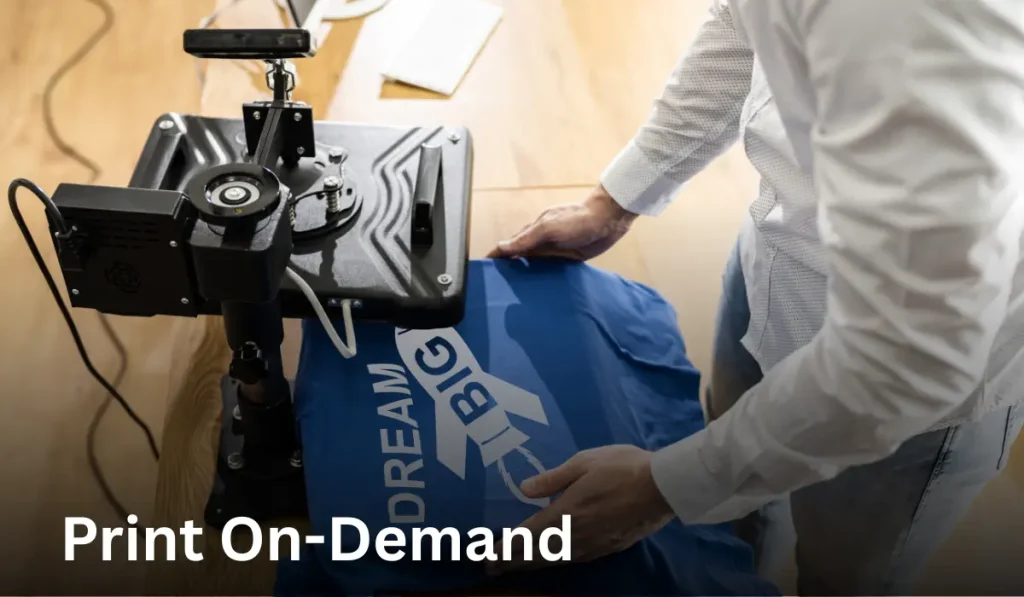
Print on demand avoids buying a batch of stock, but that does not make every setup free of cash requirements.
Printify explains that, for integrated sales channels, it charges production and shipping separately through your balance or payment method. Your sales channel handles the customer’s payment. That can create a gap before your sales proceeds become available.
Its Pop-Up Store works differently and does not charge sellers for products in the same way. Check eligibility and the complete payment model for the route you select.
Dropshipping and physical-product fulfillment also require careful checks for supplier charges, returns, and delivery obligations. No inventory purchase is only one part of the cost.
Keep Local Gigs Separate From Online Work
Delivery, cleaning, pet care, furniture assembly, yard work, and event help may be arranged through an app, but the actual work happens offline.
They can be relevant if your priority is earning through any available route. They do not answer a requirement to work entirely from home.
Vehicles, tools, travel, supplies, insurance, and local requirements can affect the economics. Rentals also depend on owning a suitable asset and accepting responsibilities for its use.
Selling an item you already own can raise cash quickly if a buyer appears. Repeatedly earning from resale requires a sustainable supply and a margin after costs.
Do Not Count Advances, Cashback, or Investments as Job Income
A cash advance changes when you access money or creates a repayment obligation. It does not add another $100 of earned work.
Cashback reduces the cost of a qualifying purchase. Spending extra to trigger a reward can leave you with less money overall.
Investments, lending, property ownership, and buying websites require capital or carry risks outside a no-upfront-work plan. They are not substitutes for a beginner’s paid assignment.
Reward games and paid-entry competitions also need separate scrutiny. Do not deposit money or buy items simply to make an advertised reward look achievable.
How Should US and Canadian Readers Check Eligibility and Payments?
US and Canadian readers should confirm that a platform accepts their current location, supports a usable payout method, and states the currency clearly. Complete legitimate verification through the official service. Keep records of work, fees, payments, and expenses, because a small balance or missing tax form does not settle reporting obligations.
A platform’s US marketing page may not describe every Canadian account. Before spending time on an application, check these points:
- Your country and, where relevant, state or province are supported.
- You meet the age and account requirements.
- You can complete the requested identity or professional verification.
- Your device meets the requirements for the actual work.
- You can receive the offered currency and payout method.
- You understand the approval, withdrawal, and payment schedule.
Prolific’s country guidance includes the US and Canada and says eligibility is based on where you live. Other services have their own rules. Do not assume that support on one platform means support on another.
Write USD and CAD in your income tracker. A USD balance converted into Canadian dollars is not the same as a CAD-priced contract. Record the amount actually received and any conversion charge.
Separate Earned, Approved, Withdrawable, and Received Money
Keep four stages in your records:
| Stage | Meaning |
|---|---|
| Earned or invoiced | Work is complete or a bill has been sent |
| Approved | The client or platform has accepted the work |
| Withdrawable | The platform permits a payout |
| Received | Money has reached your payment account or bank |
These stages can happen on different dates. Checking the payout schedule before choosing work prevents an avoidable mismatch between “earned $100” and “can spend $100 today.”
Keep gift cards and restricted rewards in another column. They may be useful, but they cannot necessarily cover the expense you are trying to pay.
Keep Basic Tax Records From the First Payment
The IRS says gig-economy income must be reported even when it is not shown on an information return. Do not assume that receiving no Form 1099 makes income tax-free.
Canada’s CRA explains that digital-platform income can create income-tax obligations and, depending on the activity and circumstances, GST/HST obligations. Canadian residents generally report worldwide income.
A simple record can include date, customer or platform, gross amount, currency, fees, expenses, reward type, and payment received. Save statements and receipts.
Your tax position depends on your circumstances. Use the relevant official guidance or qualified help instead of applying a fixed tax percentage from a side-hustle article.
How Can You Build Toward $100 Days Over the Next Month?
Use the next month to validate one offer, win a small paid assignment, and measure whether you can repeat it profitably. A useful plan creates evidence at each stage: a sample, buyer responses, a completed delivery, and a clearer price. It cannot guarantee that you will reach $100 daily.
Days 1–3: Pick a Buyer and a Small Outcome
List what you can already do well enough to deliver. Choose a task that fits your equipment, schedule, and communication skills.
Then identify a buyer with a reason to need that task. A creator with recorded interviews might need clips; a small shop with inconsistent product information might need listing cleanup.
Write a short offer with the deliverable, inputs, deadline, and revision limit. Set a provisional price using expected total hours and known fees.
Check any platform’s eligibility before investing time in its profile. If an application requires money you do not have, keep another route available.
Days 4–7: Create Evidence and Test Your Process
Build two or three focused samples. Label demonstration work honestly instead of implying it came from a paying client.
Time yourself from start to finished export. Include file setup and quality checks. Your first estimate may miss a slow stage that changes the price you need.
Prepare a short delivery checklist. For editing, that might cover names, punctuation, and factual flags. For video, it might cover captions, audio, framing, and file format.
Create a basic income and time tracker before your first order. Recording the early work is easier than reconstructing it later.
Days 8–14: Contact Suitable Buyers
Set an outreach goal you can sustain, such as five carefully chosen contacts on a working day. This is a planning target, not a predicted response rate.
Show a relevant sample and offer a small paid pilot. Explain the result without sending a long list of unrelated services.
Track whom you contacted, their apparent need, the sample used, and the response. If people do not reply, examine targeting and the offer before increasing message volume.
Research and testing applications can fit into a limited secondary window. Keep them separate from the work of developing your main service.
Days 15–21: Deliver, Measure, and Improve
For each paid pilot, record production time, messages, revisions, fees, and the amount retained. Ask the client whether the work met the agreed requirements.
If delivery takes longer than expected, identify the cause. Perhaps the source files were messy, your scope was vague, or the price included too much.
Improve one part of the process before taking more orders. A clearer intake form or revision policy can prevent repeated problems.
Request permission before using client work in a portfolio. A satisfied customer may also know someone with the same need, but referrals should follow good work rather than pressure.
Days 22–30: Test Repeatability
Ask whether the customer needs the same outcome weekly or monthly. Build a recurring offer only when you know what each delivery requires.
For a hypothetical five-day workweek, you might aim for five projects that each leave $100 after platform charges and direct expenses. That is a $500 pretax working-week target, not a $700 calendar-week target.
If you have no paid work yet, review the evidence. Zero replies suggests a different issue from several conversations that end at the quote. A project that sells but loses money needs a pricing or delivery change.
Keep the strongest parts of the offer and adjust one variable at a time. Progress means learning what buyers will pay for and whether you can deliver it reliably.
What Common Mistakes and Scams Should You Avoid?
Avoid plans that confuse advertised rewards with available work, ignore unpaid time, or require you to deposit money to release earnings. Use truthful profiles, clear scopes, official payment channels, and your own records. Review both the income and the time cost before repeating a method that appears successful.
Chasing every platform. New accounts can feel productive while leaving you without a strong sample or a clear service. Give one route enough focused effort to produce useful feedback.
Counting only paid minutes. An audio minute is not a minute of labor. Rev advertises transcription and captioning rates per audio/video minute; listening, replaying, correcting, and formatting can take longer.
Assuming remote employment starts immediately. Customer support and other remote jobs require hiring, eligibility checks, and an agreed schedule. Use the employer’s actual wage and terms, not an advertised best-case figure.
Treating AI evaluation as unlimited work. Check the specific assignment, acceptance criteria, payment terms, and available tasks. Passing an assessment does not prove you will receive a full day of paid work.
Accepting unlimited revisions. Written limits protect both parties. If the buyer changes the requested outcome, agree on the additional work before continuing.
Faking results or identity. Invented testimonials, location changes, and inaccurate research profiles can undermine your account and the quality of the work.
Paying to release supposed earnings. The FTC describes task scams where a fake balance grows inside an app, followed by a demand for a deposit, often in cryptocurrency, to continue or withdraw. A small initial payment can be used to gain trust.
Confusing a legitimate charge with a good opportunity. A disclosed marketplace fee may be real, but that does not make the work profitable. Evaluate costs and customer demand separately.
Frequently Asked Questions
The best method depends on what you can deliver, how quickly you need payment, and whether you need recurring income. These answers distinguish a possible $100 day from guaranteed daily earnings. Use them to narrow your options, then check the current terms for the particular platform or contract.
Conclusion
The practical path to $100 days starts with a useful offer, enough paying work, and a clear view of what you keep. Choose one service or teaching method, prove it with a small sample, and measure the full delivery cycle before expanding. Use occasional app earnings to supplement that foundation.
Start with one buyer, one defined outcome, and one paid pilot. Record the time and costs, then improve the offer using what actually happened.
A successful first project gives you evidence. Repeating it profitably is what turns an appealing income target into a workable plan.